International Law Scholar Under Pressure: Kamel Idris Between Domestic Balances and Global Equations
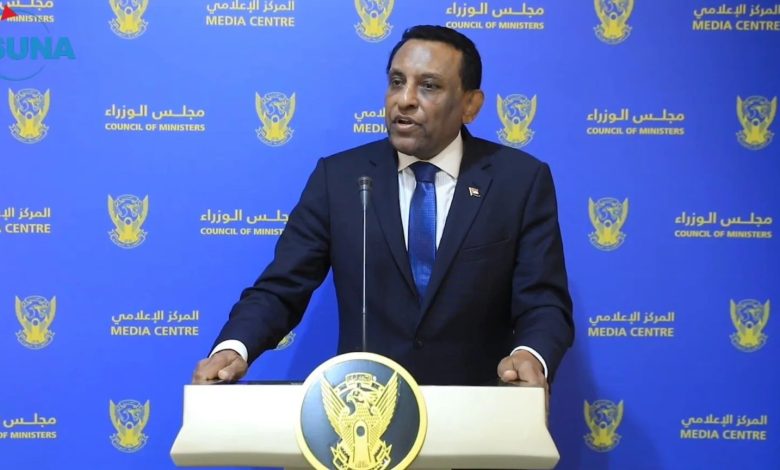
Sudan Events – Agencies
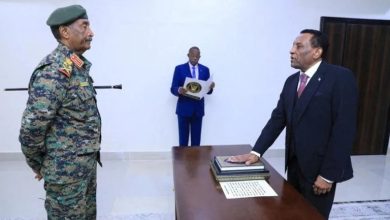
Intense debate and mounting pressures have followed the appointment of Dr. Kamel Idris as Prime Minister of Sudan at an exceptionally sensitive period in the country’s history. Public discourse, as well as political and media commentary, have focused on his capabilities, professional background, and record in public service, questioning his ability to lead a nation engulfed by military operations, regional and international conspiracies, a collapsed economy, fragmented social fabric, widespread infrastructure damage, and rampant public health crises.
Amid competing political currents and a population in displacement, Idris began his term with optimistic statements, branding his government “Hope,” in the hope of steering Sudan and its people toward safety. Yet, observers note that both his domestic and international maneuvers appear incomplete and, at times, scattered, lacking a clear roadmap or definitive plans. On the domestic front, his engagement in matters fundamentally under the purview of ministries and state governors has so far failed to yield tangible results. Similarly, his foreign efforts are seen by some as initiatives whose outcomes may only materialize years from now, while the country urgently requires immediate solutions.
Currently, Kamel Idris is viewed as a flicker of hope whose shine is fading, even as initial optimism greeted his appointment and his credentials were widely celebrated. Idris brings a strong resume: former Director General of the World Intellectual Property Organization, former member of the United Nations International Law Commission, professor of international law, with degrees in law and political science. His standing as a globally recognized figure in international law, combined with relationships within the UN and its affiliated organizations, gives him significant leverage to engage these institutions and countries effectively, especially given his fluency in Arabic, English, French, and Spanish.
However, months into his tenure as Prime Minister, visible achievements remain limited. Internal conditions continue to deteriorate across all sectors despite his careful selection of ministers. Politically, he has yet to make significant headway regionally or internationally, as hostile blocs and external threats persist despite multiple foreign visits.
Professor Ahmed Abdeldaim, an expert in African affairs, asserts: “Without a positive shift in Sudan’s internal power dynamics, no civilian leader, regardless of skill, can deliver meaningful results for the people, because the levers of construction and destruction are controlled by others.” He continues, “Idris has good intentions and qualifications, but he heads an executive apparatus burdened with complexities, facing challenges from infrastructure destruction, the need for reconstruction, maintaining global channels, preventing attempts to partition the country, and averting demographic manipulation.” Abdeldaim adds, “Frankly, I sympathize with him. He assumed office during arguably the toughest period in modern Sudanese history, facing unprecedented challenges. While he promised change and made grand commitments, the reality is that the situation is extremely difficult, and he confronts daily trials amid the collapse of all sectors that require rebuilding, not just maintenance or operation.”
Public perception, however, differs. Citizens who had pinned their hopes on his knowledge and experience express growing disappointment. Lawyer Awad Al-Sayed Mohamed Amin notes, “Kamel Idris bears and will bear the burden of occupying such a high-pressure position at a critical time, but truthfully, he falls short of our expectations. Early movements here and there were followed by complete absence. While people die from dengue and malaria, neither the health minister nor the government acts; meanwhile, the Prime Minister travels abroad without even visiting hospitals or offering condolences to bereaved families.” He adds, “What have we gained from his UN connections and international acquaintances? Nothing. The situation remains unchanged; blocs hostile to Sudan remain in place, and we continue to struggle internationally.” Amin concludes, “Sudan needs a Prime Minister and government ‘with red eyes’—alert, capable of handling all matters at every stage. The current government cannot represent the Sudanese people or the present phase unless we consider it an extension of the previous period.”
Professor Abdeldaim notes that judging Idris too hastily is unfair. “He is working diligently to open channels among domestic, regional, and international currents with longstanding positions on Sudan and its regimes. Navigating these is not achievable in a matter of days or months. Over time, people will recognize his sincere efforts and service to his country.”