How the Spotlight Shifted on Peace and Security Issues at the 2025 UN General Assembly
Sudan Events – Agencies
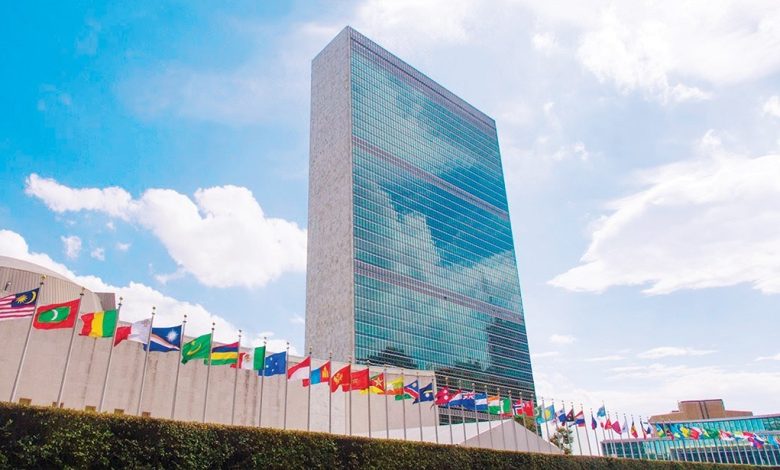
More than 190 world leaders who arrived in New York last month to take part in the high-level debate of the United Nations General Assembly found an institution under strain. Those who took the podium — 81 presidents, 38 prime ministers, six members of royal families, and 66 other distinguished figures — used the stage to address a wide array of domestic and international concerns, ranging from peace and security to climate change and artificial intelligence.
While many leaders, as usual, focused their speeches on national rather than multilateral priorities, a review of their statements offers valuable insight into the foreign policy issues most important to UN member states. The International Crisis Group analyzed 191 speeches delivered during this year’s General Debate to identify trends in how leaders referenced four major peace and security issues: Palestine, Ukraine, Sudan, and UN reform.
Other crises — including those in Syria, Haiti, and Myanmar — also drew attention, but the four highlighted issues dominated the global concerns raised during the discussions.
The crisis in the occupied Palestinian territories was the most frequently mentioned issue during the high-level week, with 151 speakers referring to Gaza or Palestine in their remarks. Despite the joint French-Saudi conference on the two-state solution held just one day before the debate began, the 2025 figures represent only a modest increase from 2024, when the Crisis Group recorded 146 mentions of Palestine or Lebanon (the other pressing Middle Eastern issue last September).
Notably, 44 countries this year described the bloodshed in Gaza as genocide—an increase of eighteen from the 26 that did so in 2024. Most of this shift came from countries in Asia, Africa, Latin America, and the Caribbean. Only three European nations (Bosnia, Ireland, and Slovenia) altered their rhetoric to include the term “genocide,” joining Turkiye as the only members of the Western European and Others Group to do so. One country, Jordan, referred to genocide in 2024 but did not in 2025. Moreover, none of the nine countries that newly recognized the State of Palestine this year used the term “genocide” in their speeches.
The war in Ukraine was referenced by 106 countries — ten fewer than in 2024. Although this still represents a majority of UN member states, it marks a sharp decline from 2022, when 138 countries mentioned the conflict. Similarly, 51 of the 106 countries that referred to Ukraine in 2025 did so without explicitly naming Russia — up from 38 in 2022.
These trends are driven almost entirely by changing positions among non-EU and non-NATO states: only 71 countries outside those blocs mentioned the war in 2025, down from 102 in 2022. Many now frame the war as a purely European issue, despite President Volodymyr Zelensky’s continued efforts to emphasize its global repercussions. Meanwhile, the General Assembly has lost some of its prominence as a forum for shaping international opinion on the conflict.
The war in Sudan was mentioned by 62 countries this year, three fewer than in 2024. Unlike the pattern seen with Ukraine, there was no clear geographic trend among those who raised the issue — now the world’s largest humanitarian crisis. Among African states, 20 member countries mentioned Sudan, roughly matching the 21 that did so in 2024. However, there was considerable variation within the continent: 21 of Africa’s 54 member states mentioned Sudan in only one of the past two years. Despite the continued attention from national leaders, two major side events held on the margins of the debate focused on efforts to de-escalate the war and expand humanitarian assistance.
As the UN faces major political and financial headwinds, institutional reform has swept through many of this year’s discussions. A total of 128 member states raised reform-related issues — up from 100 in 2024. Two subthemes stood out:
First, 73 countries explicitly mentioned “UN 80,” the Secretary-General’s initiative for reform through cost savings, intergovernmental mandate review, and structural transformation. Separately, 100 national statements referred to reforming the Security Council, a longstanding priority for many UN members. Yet the prospect of amending the UN Charter to change the Council’s composition now appears less likely than in 2024, when the Biden administration devoted significant attention to the issue.
Looking Ahead
Beyond the General Assembly podium, side events and bilateral meetings demonstrated that the UN remains a place where global commitments and meaningful back-channel diplomacy can occur. The French-Saudi joint conference on the two-state solution led to nine additional recognitions of the State of Palestine, building on the General Assembly’s overwhelming endorsement two weeks earlier of the New York Declaration, a midterm roadmap for peace.
The Climate Summit drew more than 120 countries — including a surprise Zoom message from Chinese President Xi Jinping — pledging to cut global emissions. The high-level week also featured a special meeting between U.S. President Donald Trump and leaders from Muslim-majority nations, a major step toward advancing a Gaza peace accord, as well as the most cordial meeting yet between President Trump and Ukrainian President Zelensky.
Senior UN officials ended the high-level week relieved that their worst fears — particularly the potential withdrawal of funding by the United States, the UN’s largest donor — had not materialized. In a closed-door address to UN staff, Secretary-General António Guterres struck a cautiously optimistic tone, highlighting areas such as artificial intelligence and climate action where he believes the UN is being called to play a greater role.
However, discussion of peace and security was notably sparse, and some UN staff felt his remarks were detached from the organization’s current realities. Major changes are still on the horizon — many of which will unfold beyond Guterres’s tenure.
With less than fifteen months remaining in his term, intense behind-the-scenes debate has already begun over who might succeed him. The next Secretary-General will face the dual challenge of pushing through tough institutional reforms and shaping how the UN addresses crises like Gaza, Ukraine, and Sudan — guided by the signals emerging from member states’ speeches in the General Assembly and other forums that continue to define the direction of global opinion.