Did the RSF resort to assassinations to disrupt the army’s winter campaign?
Sudan Events – Agencies
After months of retreat to the west, withdrawal from central Sudan and Khartoum state, and with the army’s winter campaign looming, the Rapid Support Forces (RSF) have resorted to assassinating military figures — a move observers say aims to influence battlefield dynamics by boosting fighters’ morale and pressuring Khartoum into ceasefires to hold onto the areas they control.
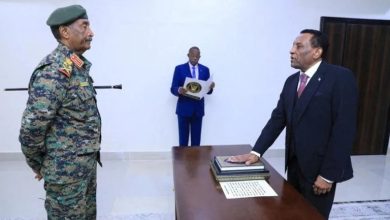
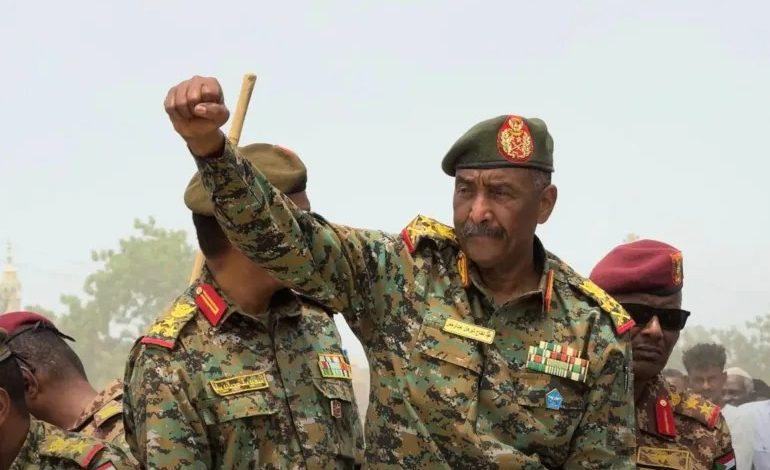
At the end of July 2024, Sovereignty Council head and army commander Abdel Fattah al-Burhan survived an assassination attempt by an RSF drone while attending a commissioning ceremony for military academy graduates in the Jebeit area of the Red Sea state.
A shell also struck a hotel near al-Burhan’s residence in a drone strike on positions in Port Sudan in May, and reports at the time said the army commander was targeted and that some of the drones had crossed the Red Sea from beyond Sudan’s borders.
Why Kikl?
Government-aligned platforms recently published reports about a meeting of RSF leaders in Kass, near Nyala, capital of South Darfur state. They said the meeting approved targeting military and political leaders in the coming phase as part of a plan to confront the army’s post-rainy-season campaign — which ends at the close of this month — aimed at expelling the RSF from Kordofan and pushing into the Darfur region.
Sources close to the commander of the Shield of Sudan forces, Brigadier General Abu Aqila Kikl, told Al Jazeera that an attempt to assassinate him failed in the early hours of last Tuesday after an RSF drone struck a site where he was reportedly present in the East Nile area of Khartoum state.
Al Jazeera sources said Kikl had left the targeted site about an hour before the strike that killed his friend Othman al-Faki Omar and his son — both prominent figures from the ‘Ud Babakr area in East Nile — while two others were wounded.
Hours after the attempt, Kikl appeared in a video among his troops and tacitly acknowledged the attack. He said “his forces would not be affected by his absence if he were taken by death in a car accident, in his bed, or for any other reason.” He stressed his forces’ strength and cohesion and their support for the army, saluted those of them in camps or in the states and on the front lines, and affirmed that anyone of them could take command in his stead.
For his part, Shield of Sudan leader Ammar Nail told Al Jazeera that they are aware “that the outsized influence of the senior commander Abu Aqila Kikl on the balance of the battle in favor of the Armed Forces made him the principal target of the RSF militia, because he knows their fighting methods and has achieved unprecedented success in defeating them; therefore these attempts to target him will not stop.”
Analysts and military experts say Kikl — who for more than a year after the outbreak of war had been one of the RSF’s prominent commanders in central Sudan — played a decisive role in supporting the army’s victories after he sided with the military in October 2024. He helped recapture Al Jazirah, Khartoum and Sennar states, and his forces are now leading “fierce” operations against the RSF in North Kordofan state, vowing to reach El Fasher “even if on camelback to lift its siege.”
An implicit admission
Although the RSF denied for nearly two years that it possessed or used drones, it on Wednesday claimed for the second time responsibility for strikes on military sites in Khartoum, after admitting in May that it had struck several sites in Port Sudan on the Red Sea coast in the east of the country.
The Founding Sudan Alliance (“Tasis”), led by RSF commander Mohamed Hamdan Dagalo (“Hemedti”), announced that its forces “carried out a qualitative aerial operation at dawn on Wednesday that targeted highly important military sites belonging to the army in Khartoum.” The alliance said in a statement that “the strikes — which hit training bases and stores of weapons and ammunition — were in response to the army’s targeting of civilians with aircraft in various parts of Darfur.”
The RSF avoided directly responding to accusations that it attempted to assassinate Kikl. Outlets close to the RSF — notably the RSF-owned newspaper Al-Saiha — published claims that the Shield of Sudan commander is accused of committing violations against civilians in Al Jazirah state and that the army leadership seeks to eliminate him to prevent him from exposing orders given in this regard.
Military expert and former deputy chief of staff Lieutenant General Mohamed Bashir Suleiman believes foreign backers of the RSF are behind the planning of assassination attempts against military leaders because they lack the RSF’s local intelligence and the technical capabilities to operate drones themselves.
Multiple objectives
In an interview with Al Jazeera, Suleiman said those backing the RSF seek to change the course of a war that is not going in their favor and to lift their fighters’ morale, because assassinating a symbolic or influential military commander can affect his troops.
Researcher and military-political analyst Suleiman Abdullah told Al Jazeera that, according to circulating information within influential RSF circles, the policy of assassinating and eliminating military leaders is part of plans to achieve several objectives after losing Khartoum and central states and with battles approaching the RSF’s bases and areas of control in Darfur.
According to the researcher, the RSF has lost influential leaders and much of its core hard power and now depends on hastily mobilized irregulars who received short training and lack combat experience, which has weakened it and prevented gains in the recent period. Although its doctrine is offensive, it has been forced into defense and has tried to compensate by using drones and seeking to assassinate military figures to demonstrate capability and effectiveness.
Using drones intensively without a corresponding ground advance backed by air cover or an offensive plan — Abdullah says — indicates a tactical aim to assert presence, boost fighters’ morale, and pressure the army leadership by showing it can destabilize security and stability anywhere, all in order to gain leverage for negotiating an end to the crisis.
Reported by Al Jazeera