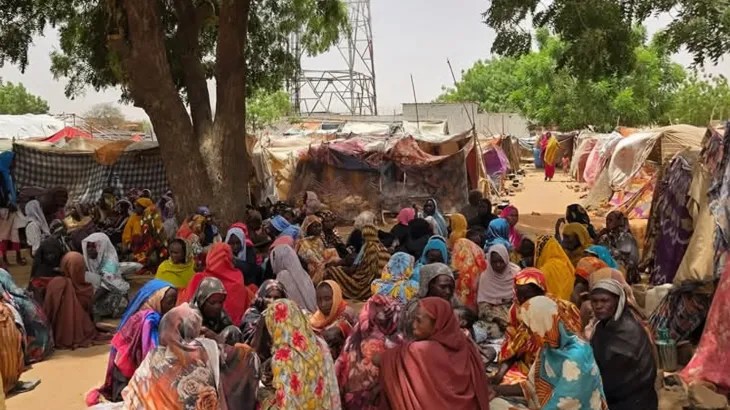
A report published by The Guardian highlighted the worsening humanitarian situation in El Fasher, where the city has been under siege for more than 500 days, with little food or water — conditions that aid organizations have described as “uninhabitable.”
Reporter Mark Townsend wrote that the Rapid Support Forces (RSF) have imposed a suffocating blockade on the city for 549 days, preventing humanitarian aid from entering as part of an effort to seize the Sudanese army’s last stronghold in western Sudan. As a result, about 250,000 people have been confined to a small area with almost no means of survival.
According to Townsend, the U.S.-based medical relief group MedGlobal conducted the first detailed assessment of life inside the besieged city, drawing on testimonies from nearly 900 people who recently fled. The organization described the trapped population as being “on the brink of survival.”
Over 90% of those interviewed said their homes had been destroyed, damaged, or looted before their escape, while one in four families reported losing a member in the past three months.
Seventy-five percent said they had been displaced at least three times within the city, and 81% said they “never felt safe” while moving around.
Half of the respondents said they had personally experienced violence, and 71% reported witnessing acts of violence against neighbors and other residents.
Due to a communication blackout, 86% said they had no access — or only limited access — to phones or the internet.
Medical screenings of those who managed to reach the northern town of Dabba after walking for days revealed severe and widespread malnutrition.
The organization reported that 75% of El Fasher’s residents do not have regular access to food, and nearly half lack sufficient water.
One in five children under the age of five suffers from acute malnutrition, rising to 27.5% among infants under 18 months.
Among women, 38% of pregnant and breastfeeding mothers and 60% of adolescent girls aged 15–19 were found to be malnourished.
MedGlobal’s Executive Director, Joseph Blevvo, said that those who recently escaped to northern Sudan described life in El Fasher as “violence everywhere, destroyed homes, severe shortages of food and water, and almost no healthcare.”