Why Doesn’t the UAE End the War in Sudan?
Sudan Events – Agencies
Independent investigation reveals complicity of foreign actors
By Motasim Ali (Legal Adviser, Raoul Wallenberg Centre for Human Rights) and Yonah Diamond (Senior Legal Counsel, same centre)
29 Months of Tragedy
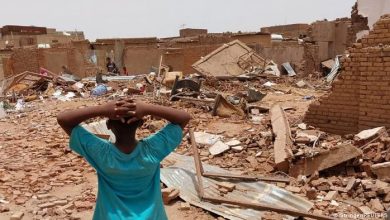
For 29 months, the international community has stood idly by as the conflict in Sudan between the Sudanese Armed Forces and the Rapid Support Forces (RSF) has brought daily devastation—what the United Nations has called the world’s worst humanitarian crisis.
In North Darfur, the situation is dire. For 18 months, the RSF has imposed a suffocating siege on more than 400,000 people sheltering in the state capital, El Fasher. The siege has been brutal, with aid convoys repeatedly targeted by drone strikes as they attempt to enter the city.
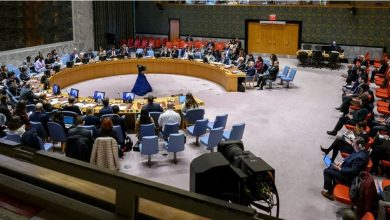
At recent UN General Assembly meetings, not a single world leader mentioned the bloody siege of El Fasher. One regime in particular stands in the way of international efforts to end it — the regime that benefits most from the RSF’s dominance: the United Arab Emirates (UAE).
The UAE’s Role in Blocking International Solutions
According to reports, the UAE was the only member of the self-appointed “Quad” mediation group at the United Nations that opposed both an agreement to lift the siege and a condemnation of the RSF’s latest attack on a mosque that killed 75 worshippers.
The UAE has denied these claims, as well as allegations of arming and equipping the RSF. Yet, evidence contradicting those denials has been widely documented.
A Massive Flow of Weapons
Recent months have seen a surge in weapons deliveries to the RSF—coinciding with the escalation of attacks on El Fasher.
There is little doubt what will happen if the RSF captures the city: a massacre of vulnerable non-Arab communities already facing famine.
Nearly half a million people are trapped, starving, and surviving on animal feed.
Investigation into Genocide
A year after the war began, our team at the Raoul Wallenberg Centre for Human Rights, alongside leading experts, released an independent investigation concluding that the RSF is committing genocide against non-Arab communities in Darfur—particularly the Masalit tribe.
Our investigation documented how RSF fighters systematically expressed an intent to annihilate these groups, using racist slurs and targeting victims solely because of their identity.
One survivor recalled a fighter telling her: “If you are Masalit, we have decided not to leave anyone alive—not even the children.”
The Massacres of Geneina and Zamzam
In 2023, the RSF besieged and attacked Geneina, the capital of West Darfur, directly targeting the Masalit community and killing up to 15,000 people.
In April this year, on its march toward El Fasher, the RSF stormed Zamzam—the largest displacement camp in Sudan—repeating the same atrocities: killing over 1,500 people and displacing more than 400,000. Survivors said the RSF’s objective was “to wipe them all out.”
Now, as the RSF closes in on El Fasher, the city’s entire population has been labelled a military target. RSF orders explicitly call to “wipe out all Zaghawa—those slaves.” Members of other tribes, such as the Berti, have also been targeted; one widely shared video shows an RSF commander executing a civilian after identifying him as Berti.
New Investigation: Crimes Against Children
This week, we are releasing a follow-up legal brief focusing on the disproportionate impact of the war on children and identifying those responsible for crimes against humanity committed against them.
Since the war began, the UN Security Council has issued only two resolutions—both calling for temporary ceasefires and an end to the siege, but without any meaningful enforcement mechanisms.
The Solution Is Clear: Confront the UAE
The real solution is simple: confront the UAE, whose weapons, funding, and political cover sustain the RSF and enable its continued atrocities.
UAE Supply Lines
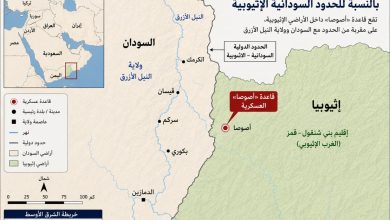
Reports show that the UAE serves as the RSF’s main supply hub, operating an air bridge of cargo flights carrying heavy weapons, artillery, and drones through neighboring countries.
Even the UN Panel of Experts on Sudan—known for its cautious tone—confirmed “intense cargo flight traffic” from the UAE to the RSF, later acknowledging the existence of a “new regional air bridge.”
The UAE has denied these findings to maintain a “plausible deniability” façade while violating the arms embargo on Darfur.
Smuggling Tactics
The UAE has employed tactics typical of illicit arms trafficking operations:
Concealing an air base in Chad under the guise of a Red Crescent hospital.
Falsifying flight documents to mask weapons shipments (The Wall Street Journal).
Refusing to hand over lists of suspicious flights requested by the UN.
Ugandan officials confirmed to the WSJ they were instructed to stop inspecting flights arriving from the UAE to Chad.
A leaked UN experts’ report revealed UAE flights disappearing from radar mid-route or taking off unregistered.
Beyond the Rhetoric: Resources and Power
The UAE claims its actions aim to prevent the return of political Islam in Sudan. In reality, it is exploiting the war to secure access to Sudan’s vast resources: gold, agriculture, livestock, and Red Sea ports.
The UAE is a major global hub for gold. Over the past decade, it has imported $115 billion worth of unrecorded African gold.
The irony is that the RSF itself emerged from Islamist networks—making the UAE’s narrative self-contradictory.
Direct Ties with Hemedti
The UAE has hosted RSF leader Mohamed Hamdan Dagalo (Hemedti) and established direct communication between him, Mohammed bin Zayed, and Mansour bin Zayed.
The RSF’s sprawling business empire is managed by Hemedti’s family from the UAE:
Companies used to buy weapons, sell gold, and evade financial sanctions.
A UAE-based firm recruiting foreign mercenaries to fight alongside the RSF.
An adviser to Mohammed bin Zayed arranged a private tour for Hemedti to meet African presidents aboard a private jet.
Some U.S. officials even disclosed that Mohammed bin Zayed admitted to Vice President Kamala Harris that the UAE had provided material support to Hemedti, justifying it as repayment for RSF forces that fought alongside Emirati troops in Yemen.
The Bottom Line
Without the UAE, the RSF could not sustain its siege of El Fasher or carry out atrocities on this scale.
If the UAE is truly committed to helping war victims, it must call on the RSF to withdraw immediately.
Only then will the nearly half a million civilians trapped in El Fasher—starving and terrified—have a chance to survive.