Continued Circulation of Old and New Banknotes in Khartoum and Gezira Raises Concerns Among Experts
Sudan Events – Rehab Abdullah
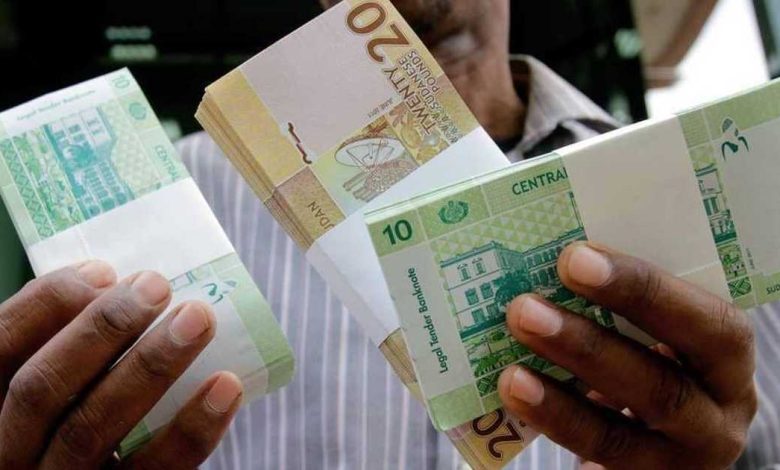
Economists and observers have issued warnings over the continued use of both old and new Sudanese banknotes in Khartoum, Gezira, and other areas recently retaken from the Rapid Support Forces (RSF), while old banknotes remain in circulation across Darfur and other RSF-controlled regions. They cautioned that this dual-currency situation increases the risk of counterfeiting—particularly in remote areas where citizens find it difficult to distinguish between genuine and fake notes. Banks refuse to accept forged money, leaving citizens who unknowingly receive it from markets in financial distress.
Many of these areas also lack functioning bank branches, further compounding the problem. In RSF-controlled states, residents face political and security challenges, with no operating banks, and the militia has banned the use of the new currency in its territories.
Police departments in army-controlled areas have periodically arrested currency counterfeiting networks, while citizens complain that old notes are now torn and rejected by many traders—leaving people unable to purchase their daily needs amid a severe cash shortage and limited income sources.
Effectiveness of the Currency Replacement
There has been growing public debate about the effectiveness of the currency replacement process, amid claims that canceled notes are still in circulation—raising questions over the millions of dollars spent on the operation.
However, former Central Bank Governor Burai Al-Sadiq dismissed such claims in an earlier interview with Al Jazeera Net prior to his dismissal, describing them as “baseless rumors.”
He said the first phase of the currency replacement had been completed successfully under tight coordination between state institutions through a high-level committee established to supervise the process. He denied any circulation of invalid notes, explaining that the process was gradual—starting with eight states where security conditions allowed for safe implementation.
Old SDG 500 and SDG 1,000 notes were withdrawn and replaced with more secure designs to strengthen confidence in the national currency and reduce cash transactions outside the banking system by imposing withdrawal limits.
Al-Sadiq clarified that in states where the process had not yet begun, the old notes remained legal tender under Central Bank authorization—meaning there were no “canceled” denominations in official use. “If a denomination is canceled, it is excluded from the banking system and no longer valid for transactions—and that is not the case,” he said.
He emphasized that the replacement was a necessary step to protect the national currency from counterfeiting following the extensive looting of banks and the Sudan Currency Printing Company by rebel forces.
The former governor confirmed that the replacement process would continue in the remaining states until all old SDG 500 and SDG 1,000 notes were fully withdrawn and declared invalid.
Negative Impacts
Economic expert Dr. Mohamed Al-Nayer described the delay in replacing currency in recently liberated areas—such as Khartoum, Gezira, and White Nile states—as a “major shortcoming.”
Speaking to Al-Ahdath, he argued that the Central Bank’s policies should have aligned with military developments so that newly freed areas could immediately begin currency replacement once secured.
Al-Nayer warned that the delay has had a negative impact and could be one of the main reasons for the depreciation of the Sudanese pound. “These states can now receive money from rebel-held areas, convert it into foreign currency, and further strain the economy,” he said.
He urged the Central Bank to expedite the currency replacement process in the coming phase, noting that the first round was only partial and must be completed soon.
Al-Nayer also proposed that the Central Bank prepare a full review of Sudan’s currency structure, considering a redenomination that would remove zeros from banknotes—making 1,000 pounds equal to 1 pound, and 500 pounds equal to 50 piasters.
He encouraged the bank to quietly begin printing a redesigned currency and to rely more on digital payment systems to minimize the need for large quantities of cash. “This could be a good opportunity to modernize the currency system and relaunch it, perhaps at the start of next year or in the first quarter, depending on the situation and progress toward ending the war,” he said.
An Inevitable Decision
For his part, economic analyst Dr. Haitham Fathi told Al-Ahdath that the widespread looting and theft in the early days of the war—in Khartoum, Sennar, and Gezira—resulted in large amounts of counterfeit and substandard banknotes entering circulation. This, he said, has significantly increased cash liquidity and destabilized prices.
Fathi noted that changing the currency was ultimately a political decision requiring hundreds of millions of dollars, and one that is technically and administratively complex given Sudan’s current political, economic, and security conditions. “Considering the country’s situation, the time taken for the process was not excessive,” he explained.
He stressed that the decision was both necessary and inevitable under Sudan’s circumstances—an urgent move to combat counterfeiting, curb speculative cash holdings, restore economic balance, and reintegrate money into the formal financial system.
Fathi added that successful currency reform must be accompanied by additional measures, including reducing money supply, combating forgery, promoting electronic payments for goods and services, and setting strict regulations for foreign currency use.
He also warned that the government must ensure adequate circulation of the new notes to maintain consumer purchasing power and prevent economic stagnation, especially as some states continue to rely on foreign currencies such as the U.S. dollar or neighboring countries’ currencies—remaining effectively outside Sudan’s national economy.