Causes of Failure in Sudan and South Sudan
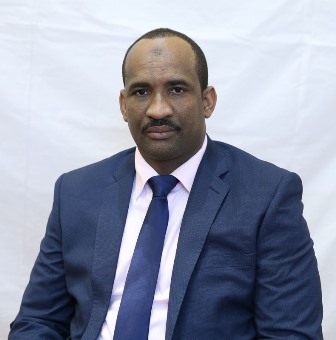
By Yasser Yousif Ibrahim
In its latest report on South Sudan, the UN Human Rights Commission painted a grim picture of the situation in the country, describing it as the poorest nation in the world, with a poverty rate of 92 percent. The report noted that the average per capita income has dropped to a quarter of what it was at the time of independence from Sudan in 2011.
According to the report, poverty in South Sudan stems from “interconnected factors including institutional corruption, an exploitative colonial legacy, weak rule of law, ongoing armed conflicts, and harsh climatic conditions.”
This report comes amid heightened political and security tensions following the arrest of Vice President Dr. Riek Machar and several of his close associates, who are now facing serious criminal charges including murder, treason, and crimes against humanity. The arrests came after military attacks carried out by the “White Army,” an armed militia drawn from the Nuer ethnic group to which Machar belongs. The government accuses him of ordering the militia to attack army positions, killing more than 250 government soldiers, including a senior officer with the rank of major general. These developments now threaten the peace agreement signed in 2018 between the government and Machar’s faction, which had ended a bloody five-year civil war.
The picture in South Sudan mirrors that of Sudan itself, which is also mired in a civil war now entering its third year — a conflict the UN Secretary-General has described as “the world’s worst humanitarian catastrophe.” The war has killed more than 20,000 people and caused immense destruction. Sudan’s health sector alone has suffered losses estimated at $11 billion. Deep political divisions have brought the country to the brink of another possible breakup, with a “parallel government” emerging in areas controlled by the Rapid Support Forces (RSF) in Darfur, and by rebel leader Abdelaziz al-Hilu’s forces in parts of South Kordofan.
Despite international efforts to contain the conflict, there appears to be no realistic solution in sight. The positions of the warring parties remain far apart, regional and international interests continue to collide, and the RSF has failed to comply with key international resolutions — including the Jeddah Declaration signed in May 2023, and UN Security Council Resolution 2736 passed in June 2024, which called on the RSF to lift its siege on the city of El Fasher, the capital of North Darfur. That siege, now in its second year, has caused a dire humanitarian crisis. During this period, the Sudanese Armed Forces and allied joint forces have repelled more than 240 RSF assaults, which were backed by advanced weaponry and shifting combat tactics.
Explaining the Causes of Failure in Both States
When South Sudan declared independence 14 years ago, it possessed all the conditions for success. The new leadership inherited a debt-free, oil-producing state that was pumping nearly half a million barrels of oil per day, in addition to vast agricultural, livestock, and mineral resources. The international community — led by the United States and Israel — offered robust support, viewing South Sudan’s independence as a historic achievement.
Yet all these advantages failed to steer the country toward stability or development. Instead, South Sudan plunged into the same patterns of conflict and fragmentation that have plagued much of Africa. It even fought a border war with Sudan in 2012, after occupying the oil-rich Heglig area in South Kordofan. Ironically, this region contains key oil processing and transport facilities for both countries. Because South Sudan is landlocked, it depends entirely on Sudan’s oil pipeline that stretches thousands of kilometers to Port Sudan on the Red Sea. Oil constitutes around 90 percent of South Sudan’s foreign currency earnings.
Following that brief war — which ended with Sudan regaining Heglig — South Sudan descended into another civil war, this time between the government and Vice President Machar’s faction. But what appears to be a political conflict is in reality deeply ethnic. Behind the government stands the dominant Dinka ethnic group, which represents about 36 percent of the population, while Machar draws his support from the rival Nuer community.
Viewed broadly, the new state seems to have inherited the “pathogens of failure” from its parent country. During South Sudan’s independence celebrations, U.S. official Susan Rice offered a pointed warning to its leaders: “We hope you can live peacefully with your neighbors and work to resolve disputes through peaceful means. This requires building good governance and strong institutions that serve the people. Justice depends on a system free of corruption and bias.”
The very failures that crippled Sudan — the absence of impartial institutions and the inability to transition to a sustainable democratic system — were replicated in South Sudan in an even more distorted form.
For any state to succeed, it must possess strong institutions that apply the rule of law equally to all citizens, curb personal ambitions through accountability, and prevent governments from manipulating justice to serve political ends. Only then can democracy take root, citizens feel secure, and national progress flourish.
This, in essence, explains the tragic outcomes in both Sudan and South Sudan — a point underscored by South Sudanese journalist Atem Simon, who wrote of the widespread practice of appointing relatives to public posts: “This reflects the weakness of political and institutional structures, where the political system relies on personal loyalties and blood ties rather than merit and institutional norms.”
Shared Symptoms of Failure
The symptoms of failure common to both states are numerous, but several central issues help explain the persistence — and deepening — of their crises:
1. The Politicization of Public Life:
Political patronage and personal loyalties dominate public office appointments, marginalizing competent professionals and academics. This has led to institutional decline, widespread inefficiency, lack of transparency, and systemic corruption that erodes the very foundations of statehood.
2. The Weakness of Civil Space:
With political parties and civic institutions enfeebled, armed militias have become alternative vehicles for political and economic influence. These groups, often organized along ethnic or regional lines, have fueled social fragmentation and perpetuated cycles of hatred and conflict.
As a result, both states have seen their national struggles reduced to competitions for power and wealth along tribal and regional lines. Small elite groups claim to represent marginalized communities but in reality serve their own interests, while the majority of citizens remain impoverished. This entrenches inequality and ensures a steady supply of recruits for the politicized militias — perpetuating an open-ended cycle of violence.
What Comes Next?
Both Sudan and South Sudan now stand on the edge of a precipice. Their chronic conflicts and the inability of their institutions to generate viable solutions have brought them to a dangerous crossroads. Yet, despite the bleakness of the situation, there is still an opportunity for recovery — provided that national will is rekindled and selfish ambitions are set aside.
The political elites in both countries must recognize that the public good outweighs private gain. Building independent judiciaries, a free press, and a merit-based civil service would not only strengthen their nations but also safeguard their own legacies and personal security.
They must also understand that the militarization of politics and the reliance on armed militias — at the expense of civic and political life — gravely weakens the state and undermines its coherence. It also erodes the national army, one of the defining institutions of a modern state.
Finally, both elites must realize that inclusive national dialogue remains the only safeguard against fragmentation. Such dialogue should establish shared principles for political life and enshrine them in a respected, enforceable constitution.
Source: Al Jazeera Net