Sudan’s Unaccompanied Minors in Greece: Survivors of War and Sea, Trapped in Exile
Sudan Events – Agencies
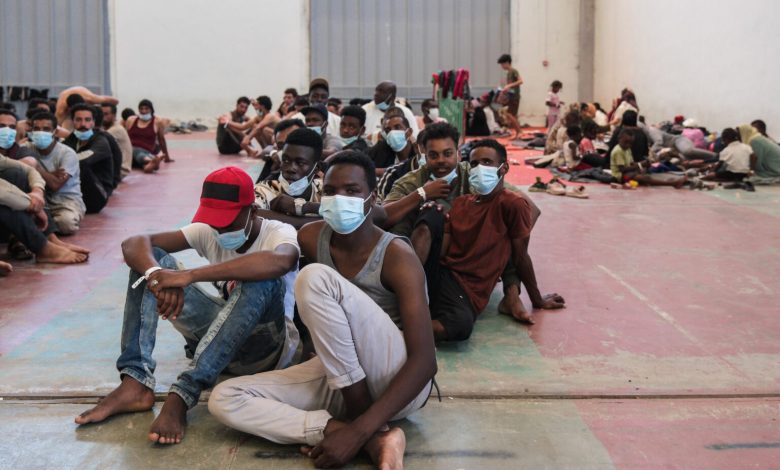
At seventeen, A.A. had dreamt of reaching Britain. Instead, he now lives in Greece, trying to learn the language and spending his days playing football with seven fellow Sudanese boys or scrolling through a battered phone at a shelter for unaccompanied minors.
Behind his calm voice lies a complicated story that began when he was just fifteen. Having completed only four years of elementary school, he left his studies early to take on menial work. Eventually, the hardships pushed him to risk crossing the sea to Europe, departing from Tobruk, Libya.
In Libya, A.A. labored on farms and tended livestock in exchange for food, without identity papers or protection. One day, a Libyan man helped him find a smuggler. One evening, he was crammed into a minibus with thirty others—though it could seat only eight—headed for the coast. From there, he boarded a rickety boat with 95 people, carrying nothing but a bag of dates and two bottles of juice and water. After two terrifying days of violence and overcrowding, the vessel reached the Greek island of Crete. From there, he was transferred to a refugee camp in Malakasa, and later to a center for minors.
Today, A.A. lives in a Greek care home—safe from war and sea, but not from anxiety. There is no school, no family support, and almost no contact with his relatives in Sudan, who live in an area without internet. He doesn’t know if he will be allowed to stay at the shelter or be moved elsewhere. His days blur together—broken only by brief memories of war, the sea, and the long road—before he drifts back into sleep.
A.A.’s case is not unique. He is one of at least fifty Sudanese minors who have recently arrived in Greece.
Unaccompanied in the Battle for Asylum
A staff member at a refugee center, speaking anonymously because he was not authorized to talk to the press, said that one of the main challenges is that many Sudanese minors claim to be older than they really are. Officials are then forced to refer them for medical age assessments. The reason, he explained, is that many want to leave the camps quickly to find work and send money back home to Sudan—thus forfeiting the few benefits and protections available to minors.
Former president of the Sudanese community in Greece—and journalist—Mansour Shashati says these children were victims of war even before they fled Sudan. “They have seen death, hunger, and deprivation. They are willing to risk everything. Their ages and the ways they travel reflect the trauma that has struck Sudanese society since the war began. We don’t know what will happen to them, but their survival might be a small light of hope.”
Shock, Then Relief
The arrival of Sudanese boat migrants in Greece has been a challenge even for adult refugees seeking safety. But the sudden appearance of unaccompanied minors directly from conflict zones has unsettled the community.
It is a phenomenon foreign to Sudanese tradition—where sending a child to cross the sea alone is seen as unthinkable, violating deep-rooted norms of family protection and collective responsibility.
Among the long-established Sudanese in Greece, shock and helplessness prevail. Many ask: how did these children make it across the deserts of Sudan and Libya? How did they survive the Mediterranean in such frail boats? Yet, amid the sadness and disbelief, there is also a quiet relief—that at least some made it ashore alive.
September was a painful month for Sudanese refugees as they followed reports of two separate shipwrecks off the Libyan coast that claimed more than 100 Sudanese lives. On September 15, a boat carrying about 74 people—mostly Sudanese—capsized off Tobruk. Only 13 survived, according to the UN Refugee Agency in Libya.
A week earlier, on September 14, the International Organization for Migration reported that at least 50 Sudanese refugees died when fire broke out on a boat carrying 75 people off Libya’s coast. Only 24 survived.
From War to Prison
The number of Sudanese refugees arriving in Greece has surged since the war began in Sudan. In 2024, around 1,000 Sudanese reached Greece. That number rose sharply in the summer of 2025, totaling nearly 5,000 arrivals, according to Greece’s Ministry of Migration and the organization Refugee Support Aegean (RSA).
But for many Sudanese youths who survive the sea crossing, the dream of safety soon turns into another nightmare. Across prisons stretching from Crete to Volos, more than 300 Sudanese teenagers and young men are behind bars—charged with “human smuggling.” Their only “crime” is steering or assisting in steering the boats that carried them and others toward Europe.
Mustafa Ahmed, an activist with the Metaris group—which brings together volunteers of various nationalities to support Sudanese refugees and emergency efforts in Sudan—told Muwatinoun (“Citizens”):
“There are currently 310 Sudanese detainees in Greek prisons facing smuggling charges—a crime that can carry a life sentence. Most are between 18 and their early twenties, and at least nine are minors.”
Ahmed, who attended several trials as an observer, said: “Sixteen have been acquitted so far, but trials take a long time. Many wait at least six months in prison before their hearings even begin.”
He described dire prison conditions: “They are locked up with hardened criminals—murderers, drug traffickers. Some, at Avlona prison, went on hunger strike demanding to be separated. They were terrified.”
During this report’s preparation, Greek public broadcaster ERT reported that coastguard police in Heraklion, Crete, arrested two Sudanese refugees—aged 16 and 17—on smuggling charges immediately upon arrival on October 15 and 16.
Mounting Problems
As migrant arrivals surged in July, the Greek government suspended asylum procedures for three months, classifying all arrivals from North Africa by sea as “illegal migrants” to be detained and deported.
Under this order, a new group of Sudanese refugees was imprisoned—those who arrived after July 14. More than 80 were transferred to the Amygdaleza detention center near Athens.
By late September, RSA documented harrowing conditions at Amygdaleza: asylum seekers confined in dilapidated metal containers with no electricity or running water, wearing the same clothes they had arrived in weeks earlier, enduring suffocating heat, filth, and no medical care.
However, HIAS Greece—one of the legal aid organizations handling their cases—told Muwatinoun that some Sudanese detainees have since been released and moved to the Malakasa refugee camp to continue their asylum process.
HIAS, along with other rights groups, successfully halted several deportation orders. Attorney and HIAS director Elena Sarandou said the detention issue had “effectively ended” with the resumption of asylum processing in mid-October, though some refugees may need more time to be transferred out.
Recognition, Then Harsh Reality
Despite the hardships, Sudanese refugees in Greece have relatively high chances of being granted asylum. According to the Ministry of Migration, the overall asylum acceptance rate in the first half of 2025 was over 71%, with Sudanese, Syrian, Afghan, and Yemeni applicants receiving approval rates above 98%.
But recognition does not mean relief. Many Sudanese wait months in camps before their applications are even reviewed, despite being eligible for “fast-track procedures.”
Greece hosts 24 refugee camps scattered across the country—some “closed,” where residents cannot leave until decisions are issued, and others more open. Yet even after asylum is granted, new obstacles arise: refugees must leave the camps immediately, without housing, language support, or integration programs.
Many end up squatting in abandoned buildings without water or electricity, or working illegally in low-paid, exploitative jobs. Despite Greece’s labor shortages, language barriers, lack of formal skill recognition, and poor access to information keep most refugees locked out of the job market.
Thus, Sudanese refugees oscillate between two forms of despair: the horrors they fled at home, and the uncertainty of life in exile. Some die at sea before their dream begins. Others languish in prison awaiting trial or asylum. Even those granted protection face marginalization, homelessness, and invisibility.
In the end, the refugee equation remains unchanged: death at sea, imprisonment on arrival, or survival in limbo—a suspended existence in search of the dignity and safety that still seem out of reach.
This report was prepared by “Muwatinoun” in cooperation with the Sudanese Media Forum and its partner outlets, documenting the growing phenomenon of unaccompanied Sudanese minors fleeing war to Greece through irregular migration routes—only to find themselves detained, imprisoned, or stranded in shelters without prospects. While asylum approval rates are high, the daily realities of Sudanese refugees in Greece remain defined by fear, waiting, and marginalization.