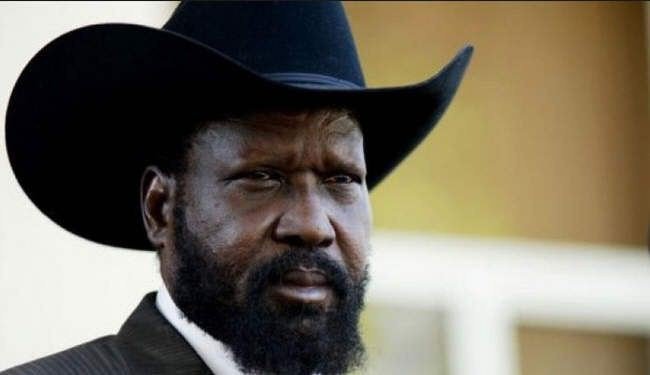
Fearing Imminent Collapse: Salva Kiir Between Sudan’s War, a Collapsing Economy, and the Siege of Former Allies
Sudan Events – Agencies
As pressures mount and the repercussions of Sudan’s war reach Juba—with millions of South Sudanese being repatriated due to residency issues amidst an economic squeeze, the spread of civil conflict, and stalled peace agreement implementation, while Riek Machar remains imprisoned and on trial—historical political tensions are resurfacing.
Nyal Deng Nyal, a veteran politician and long-standing member of the Sudan People’s Liberation Movement (SPLM) for four decades, publicly accused the South Sudanese president and his longtime comrade, Salva Kiir Mayardit, of betraying the principles of liberation and justice on which the movement was founded. Nyal issued an 18-page political declaration, described as the most significant defection in the SPLM’s history since South Sudan’s independence in 2011, potentially igniting a fierce internal struggle.
In his declaration, Nyal launched scathing accusations at Kiir, citing corruption, security deterioration, and obstruction of the electoral process. He claimed that under Kiir’s leadership, the SPLM had lost its revolutionary spirit, becoming a mere instrument of the authorities, likening the party to a state of “coma,” and warned that the country was on the brink of total collapse.
Responding to Nyal Deng’s statement, President Kiir’s son, Wël Kiir Mayardit, argued that the declaration had nothing to do with democracy or political reform as claimed, but represented a political position against the party leadership and the president himself. He added, “His opposition is not ideological or reform-driven; otherwise, he would have implemented reforms when he held a powerful government position. This is merely personal resentment and enmity.”
However, Nyal, who enjoys significant popular support, continued his criticisms of Kiir and announced the formation of a new political party, the South Sudan Rescue Movement. He stated that his party would work within the United Popular Front Alliance led by Pagan Amum, asserting: “Kiir cannot hold free elections because he knows the vote would strip him of his mandate.”
Experts believe Nyal’s declaration comes at a particularly sensitive moment as Juba faces a severe economic crisis, escalating security challenges, repeated delays in peace agreement implementation, and postponed elections. Journalists suggest that Nyal’s break from the SPLM marks a crucial political turning point that could redraw South Sudan’s political map and spark debate over the party’s and the country’s future.
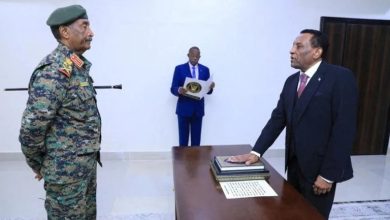
Earlier this week, Kiir oversaw the swearing-in of several new ministers, including defense and transport officials, as well as governors for several states. Kiir stated that the appointments were intended to serve the people, not for political gain, as some critics had suggested.
Sources indicate that Kiir, feeling increasing pressure, is attempting to ease tensions by incorporating various ethnic groups into governance—a strategy he has historically used since South Sudan’s founding.
A United Nations report addressed to the African Union called for urgent action to save South Sudan from total collapse. The report, dated 13 October 2025, warned that the escalating political crisis could trigger a full-scale return to war amid collapsing justice institutions and rampant corruption. The UN mission participating in African Union discussions in Addis Ababa emphasized that South Sudanese leaders had deliberately stalled the peace agreement, leaving the country on the brink of collapse.
Riek Machar, currently detained, faces charges including high treason, crimes against humanity, mass killings, and terrorism—charges his defense maintains are politically motivated, with no evidence linking him to the killing of Major General David Majok and his soldiers during the Nasser incidents.
Meanwhile, Kiir is also grappling with intensifying security challenges in ongoing conflicts with the White Army and armed groups in Jonglei, Warrap, and other volatile regions. Economic analyst Edward Cornelio noted that Sudan’s war has weakened South Sudan’s economy, exacerbated internal tensions that justify electoral and reform delays, and intensified international competition over resources. He added that growing debt, privatization of services, empowerment of elites, marginalization of the poor, and loss of economic sovereignty are reshaping national policies to serve foreign interests rather than domestic priorities.