Sudan Accuses EU of “Double Standards” Over the War
Sudan Events – Agencies
Sudan’s Ministry of Foreign Affairs has accused the European Union Council of adopting “double standards” in its stance on the war in Sudan, responding to a statement in which the EU blamed both the Sudanese Armed Forces and the Rapid Support Forces (RSF) for the ongoing conflict, while expressing readiness to help achieve a just peace in the country.
In an official statement released late Wednesday, the ministry said the EU Council’s conclusions on Sudan “clearly reflected a misguided approach” that demonstrated the overlap of European agendas and the prioritization of EU member states’ own interests “over the pursuit of peace in Sudan as a fundamental principle.”
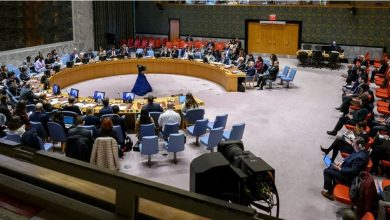
The European Union Council, in a meeting held in Amsterdam last Tuesday, adopted political conclusions on Sudan outlining four main demands of the warring parties: engaging in negotiations for a ceasefire, ensuring unhindered humanitarian access, committing to a genuine and inclusive civilian transition, and strengthening accountability and respect for international human rights law.
The EU described the Sudanese conflict as a “serious threat to regional stability,” warning against any scenario that could lead to the country’s division, and reiterated its readiness to use foreign policy tools — including restrictive measures and targeted sanctions — to pressure the warring parties to end the fighting.
Call for Dialogue
The Sudanese government denounced the EU statement as “biased and unfair,” accusing it of ignoring the fact that RSF militias “continue to besiege the city of El-Fasher and use starvation and systematic violence against civilians as weapons of war.”
The ministry said the EU Council had disregarded UN Security Council resolutions calling for the lifting of the siege on El-Fasher and the cessation of violations against civilians. “It would have been more appropriate for the EU Council to pressure the RSF militias to implement those resolutions, rather than calling for a ceasefire that only grants them more time,” the statement read.
The ministry added that the EU had overlooked “the Sudanese government’s efforts to facilitate humanitarian work and open relief corridors,” efforts that humanitarian organizations operating in Sudan had praised.
Sudan reaffirmed its openness to “constructive dialogue” with the European Union and the international community, but emphasized that such engagement must not infringe upon the country’s sovereignty. “Acceptance of any dialogue does not extend to parties that fail to respect Sudan’s sovereignty, territorial integrity, and the dignity of its people,” the statement said.
It added that “a just peace that meets the aspirations of the Sudanese people and restores their dignity and rights remains the government’s ultimate goal,” and that ensuring security, stability, and the restoration of state authority are prerequisites for engaging with regional and international partners.
Freeze on Hamdok’s Accounts
In a separate domestic development, Sudan’s Central Bank issued an order to freeze the bank accounts of 39 individuals, including former Prime Minister Abdalla Hamdok, former Sovereignty Council member Mohamed al-Faki Suleiman, National Umma Party leader Fadlallah Barma Nasser, Sudanese Congress Party head Omar al-Digair, and Sudan People’s Movement (Revolutionary Current) leader Yasser Arman, along with several other politicians, journalists, and media figures.
Mohamed al-Faki Suleiman described the move as “a media campaign targeting the forces of the revolution, aiming to portray them as suspects at a time when discussions about a political settlement and peace are gaining momentum.” He added: “I don’t have any bank accounts inside or outside Sudan to be frozen. This is part of a broader pattern of political repression, including denying opponents passport renewals and official documents. It reflects an inclination toward escalation rather than preparation for an inclusive political solution.”
The decision is part of a broader campaign by the army-backed government to tighten restrictions on opposition figures, which has included denying passport renewals for many of those whose bank accounts were frozen.
Escalation on the Ground
On the battlefield, as army forces in El-Fasher faced multi-directional attacks aimed at seizing control of the city, the “drone war” between the two sides continued to intensify.
Witnesses reported that combat drones operated by the RSF targeted Khartoum airport and army headquarters for the third time in a week on Thursday morning, while other drones attacked the Wadi Saydna military base.
Pro-army media sources said Turkish-made Bayraktar drones destroyed a cargo aircraft belonging to the RSF in the city of Nyala, western Sudan. Neither side has issued official statements regarding the latest drone strikes.
Source: Asharq Al-Awsat