Sudan: From “Pickup Warfare” to the Era of Drone Battles
Sudan Events – Agencies
The war in Sudan has evolved from the familiar “Toyota pickup battles” that have characterized much of the conflict since its early days, into a new phase that can best be described as a “drone war.” The use of unmanned aerial vehicles and flying bombs has reshaped the battlefield, extending the reach of combat to virtually every corner of the country and deepening instability.
Most Sudanese cities have not been spared from drone strikes — from Port Sudan in the far east to El Geneina near the western border, as well as El Fasher, Nyala, and northern cities such as Merowe, Ed-Debba, Atbara, and Shendi. The capital, Khartoum, along with central and southern cities including Kosti, Sennar, and Damazin, have also come under attack. It has become evident that both sides in the war possess extensive stockpiles of drones of various types, deploying them heavily in direct combat and in attacks targeting both military and civilian facilities. Observers believe that both forces have acquired large numbers of these drones, turning Sudan’s skies into a theater of near-daily aerial clashes.
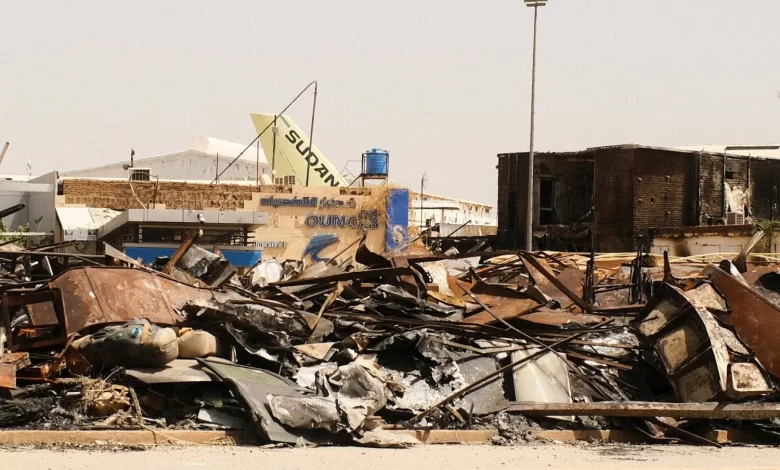
In the early hours of Tuesday, drones operated by the Rapid Support Forces (RSF) launched an airstrike targeting Khartoum International Airport, just hours before the Civil Aviation Authority was set to reopen the facility for operations starting Wednesday. Social media reports suggested that the strikes also hit military zones in southern Khartoum and northern Omdurman.
According to military-affiliated platforms, ground defenses intercepted the drones attacking the airport around 4 a.m. Wednesday, claiming several were shot down, though no details were released on the scale of damage. As of press time, neither the Sudanese army nor civil aviation authorities had issued official reports on the extent of the damage or whether the airport would proceed with its planned reopening for domestic flights on Wednesday.
Eyewitnesses told Asharq Al-Awsat that at least five drones flew over the airport, followed by explosions and plumes of smoke rising from the area. Social media users shared videos purportedly showing the blasts and debris from the attack, though the authenticity of these materials could not be independently verified.
Domestic Flights Resume
The Sudanese Civil Aviation Authority had announced late Tuesday that domestic flights via Khartoum International Airport would resume on Wednesday, ending a shutdown of more than two years caused by the ongoing war.
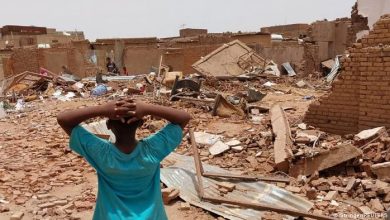
The airport had been the site of fierce fighting between the army and the RSF, which seized control of it on the first day of the conflict. Heavy artillery, airstrikes, and drone attacks caused extensive damage to the runways, terminals, and navigation facilities.
According to a NOTAM (Notice to Airmen), the airport is now “ready to gradually receive flights” following maintenance and technical rehabilitation of its passenger terminals and navigation systems — a symbolic step toward restoring civilian life in Khartoum.
After the army announced it had regained control of the capital, including the airport, authorities began rehabilitation work in preparation for reopening it to commercial and diplomatic flights. While army supporters downplayed the latest drone attacks, RSF-aligned social media accounts claimed the strikes successfully hit their targets, including military sites in northern Omdurman and southern Khartoum.
In what appeared to be an immediate military response, eyewitnesses reported that army drones bombed suspected RSF positions in El Geneina, West Darfur, as well as in Nyala and its outskirts, extending to Seraf Umra — further evidence of the expanding aerial confrontations across Sudan.
In recent weeks, both sides have intensified their use of combat and strike drones. The army reportedly employs Iranian-made Mohajer-6 and Turkish Bayraktar drones, while the RSF is believed to use modified improvised drones, Chinese-made CH-3 aircraft, and advanced CH-95 combat drones.
Both sides have relied heavily on these weapons for direct battles and strikes against military and civilian targets. Neither acknowledges the civilian toll of drone attacks, often insisting their operations are confined to military objectives. However, reports from residents and videos shared by supporters on both sides frequently show explosions and smoke rising from contested areas across the country.
Source: Asharq Al-Awsat