Khartoum’s Struggling Factories Try to Rebound Amid Ongoing War
Sudan Events – Agencies
In the heart of Khartoum’s largest industrial zone, an engineer bends over a broken machine, holding pliers and a bundle of wires, attempting to revive a production line devastated by more than two years of continuous conflict.
After the Sudanese Armed Forces regained control of the capital from the Rapid Support Forces, some of those who fled when the fighting erupted in 2023 have begun returning this year.
Despite ongoing clashes in other regions, a few factories have started tentative efforts to resume operations.
“Asim Al-Amin, manager of CTC Group’s factory in Bahri, said, ‘This plant used to produce integrated electrical equipment. We are now working on rehabilitating it and hope to return to our former production levels.’”
Heavy Losses
Beyond repair work, companies face massive cleanup operations.
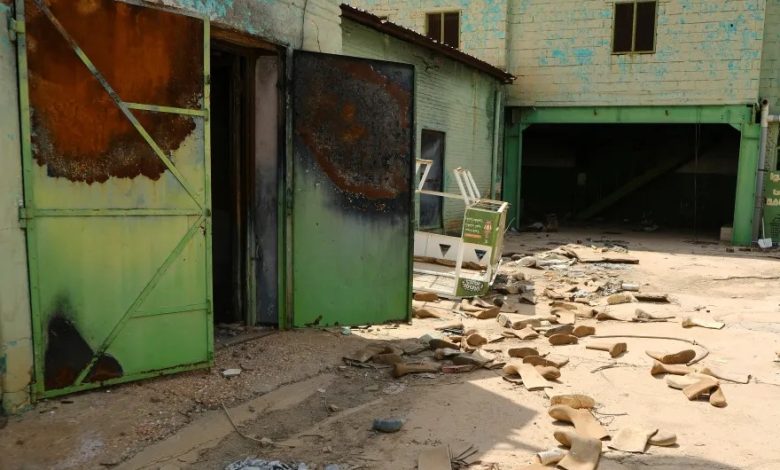
Factories and warehouses across the capital are littered with debris and twisted metal, pierced by sunlight streaming through holes left by shelling and looting in roofs and windows.
Sudan’s economy, already struggling before the war, collapsed after the fighting began.
Gross domestic product shrank by 29% in the year the conflict erupted and by 13.5% in 2024, according to World Bank data.
Although more than a million people have returned to Khartoum, according to the United Nations—reviving local markets—water and electricity networks remain largely out of service.
CTC Group, Sudan’s largest agricultural supplier, told Reuters in a statement: “Our industrial complex suffered extensive damage. Buildings, electrical systems, and vital equipment were looted or destroyed.”
The company added: “We expect production lines to resume operations before the end of this year.”
The Sudanese pound has lost more than 80% of its value during the conflict, with the government struggling to raise revenues to pay salaries and purchase essential supplies such as medicines.
The vital agricultural sector has also been severely affected, while gold smuggling has increased, avoiding official fees.
Mawaia Al-Barir, head of the Sudanese Employers Federation, said the number of factories returning to operation remains limited, estimating industrial sector losses at around $50 billion.
“The biggest obstacles to restarting industrial zones are electricity, high fuel prices, and new fees imposed on us,” he said from his food and beverage factory.
More than half of Sudan’s population now requires humanitarian aid, reflecting the depth of the economic collapse.
Safaa Adam, a factory worker, said, “We lost everything after the war broke out. We endured conditions we never imagined, eating expired food, or sometimes having nothing to eat at all.”
She added, “I fled the fighting, then returned and found work. I now have a steady income again.”