Intersections of the Domestic and the Foreign: What Future Awaits the Sudanese Solution Amid the Pressures of the Quartet!?
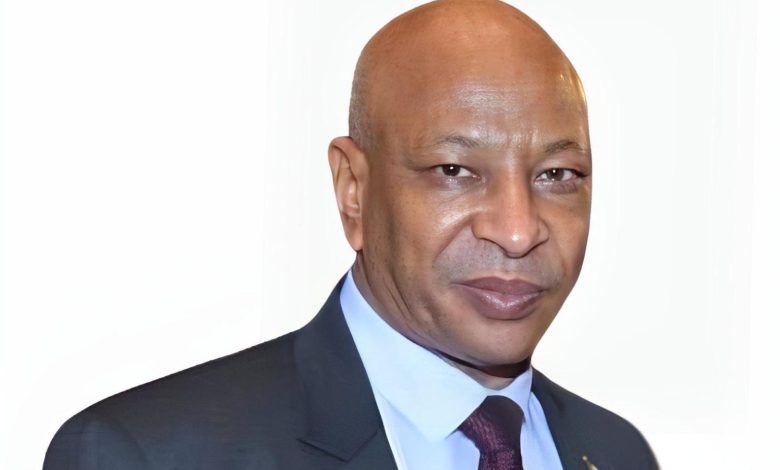
By Ambassador Dr. Muawiya Al-Toum
A series of transformations mark the Sudanese struggle, emerging from various backgrounds yet converging on addressing the crisis and the prospects for a solution—each from its own perspective. Sudan today stands at a fateful crossroads where regional and international political currents intersect with domestic efforts striving to catch their breath amid an extended war that has exhausted both the state and society alike.
Between the latest international movements led by the Quartet (the United States, Saudi Arabia, Egypt, and the United Arab Emirates), the visit of the Chairman of the Sovereign Council, General Abdel Fattah Al-Burhan, to Cairo, the meeting of the Security and Defense Council in Port Sudan, and the government’s call for an all-inclusive national political dialogue that excludes only the warlords—and alongside Musaad Boulos’ meetings with Saudi officials—there appears to be a quietly evolving scene, one shaping a new balance between the internal and external fronts. Yet, the horizon surrounding it remains clouded with speculation.
1. The Quartet’s Pressures and the Rearrangement of the Settlement Cards
The Quartet, which Al-Burhan had previously restrained within certain limits, has been working in recent weeks to reactivate the political and settlement track through dual channels combining field and diplomatic pressures. Washington seeks to establish a ceasefire that could pave the way for a broader political understanding and open the humanitarian pathway. Meanwhile, Riyadh and Cairo wager on restoring regional balance in a manner that ensures a solution which neither excludes the military institution nor allows the Rapid Support Forces militia to entrench a new status quo it aims to impose through drones.
However, the Quartet itself faces a credibility crisis within Sudan, being viewed by many as a principal party in igniting and perpetuating the conflict. It is thus perceived as an actor with vested interests in managing the crisis rather than resolving it—especially given its divergent positions in supporting the warring parties, and its shifting priorities between regional security, economic interests, and the seizure of Sudanese sovereignty, both militarily and politically, on the ground.
2. Al-Burhan’s Visit to Egypt: A Return to the Northern Gateway
President Al-Burhan’s one-day visit to Cairo came at a sensitive time, coinciding with heightened international activity on the Sudan file and with vigorous Egyptian efforts to reshape a regional approach to the war. Egypt—the closest and most reliable neighbor—seeks to steer the compass of this approach in line with the specificity of its relationship with Sudan and their shared border and security concerns.
The visit is read as an attempt to open a channel of political and security support with Egypt, and perhaps to reach understandings about the contours of the forthcoming settlement—particularly as Cairo fears any outcomes that might diminish its influence over the Nile and the Red Sea files, or grant the Rapid Support Forces political legitimacy and other consequential implications.
It also serves as a message that Sudan’s leadership seeks an Arab umbrella to counterbalance Western pressures, in an effort to achieve equilibrium in the formula of the solution and its sustainability by favoring domestically rooted options backed regionally.
3. The Security and Defense Council and the Call for an Inclusive Dialogue
The recent meeting of the Security and Defense Council following Al-Burhan’s return, and the ensuing official statements about openness to a comprehensive political dialogue, represent a shift in the state’s official discourse—from the language of military confrontation to that of national settlement. This highlights the importance of internal political momentum vis-à-vis the externally imposed options.
The war, now surpassing its second year, has led to the erosion of the state’s security and economic fabric, proving that while military victory may be possible, it is viewed by many as too costly and no longer a realistic option given the signals sent by drone warfare.
Hence, the call for a dialogue that excludes no one comes as an attempt to present a national alternative to externally imposed solutions—or those orchestrated in the backrooms of the Quartet and its patrons.
However, the success of such dialogue depends on rebuilding political trust domestically and restoring bridges with civil forces and social actors—away from old power-sharing formulas and alignments—in pursuit of national choices that transcend narrow affiliations for the sake of the larger homeland, surpassing the old, failed experiments.
4. Musaad Boulos’ Meetings with the Saudis: Preparation or Coordination?
The intensive meetings conducted by U.S. Envoy for the Middle East and Africa, Musaad Boulos, with Saudi officials in Rome, carry multiple implications. They come at a time when the Saudis are reassessing their role within the Quartet and attempting to craft a more balanced vision that considers regional security—especially the Red Sea—as well as the humanitarian situation given its cascading impact.
It is believed that Boulos seeks to secure an active Saudi role in facilitating domestic national dialogue to spare Sudan the scenarios of imposed settlements or fragmented centers of power amid the prevailing divisions.
5. Between the Internal and External… What Path for Sudan?
The Sudanese scene today fluctuates between external pressures and domestic efforts to achieve balance through regional backing.
Should Sudan yield to the Quartet’s pressures without firm national guarantees, it risks losing its political independence altogether—especially amid broad military support and growing field and civilian victories that the Quartet seeks to halt through such maneuvers in favor of the enemy.
However, if Sudan chooses to manage a comprehensive and realistic internal dialogue that strengthens domestic power structures and the national project—by integrating civilians, the military, local communities, displaced persons, and all national currents—it will lay the foundation for a strong and enduring platform capable of defeating external schemes and thwarting foreign intervention. This is possible so long as the process draws legitimacy and support from the people rather than external guardianship.
Conclusion: The Equation of Opportunity and Challenge
Sudan today stands at a genuine crossroads:
Either it seizes this historic moment to redefine its national priorities and craft solutions centered on humanity, security, justice, and reparation—
or it relinquishes its initiative to others, allowing the country to become an arena for international and regional bargains that serve foreign interests more than those of its own people. No one can predict the outcomes amid the relentless onslaught.
In all cases, betting on the awareness and cohesion of domestic actors remains the only factor that can turn these pressures into a genuine opportunity for state-building rather than a recycling of crises and failures.
Summary
Wisdom lies in those who can seize the moment and choose between the call of the internal front and the imperatives of the battlefield—where the balance clearly tilts toward the Armed Forces as Sudan’s decisive and rightful choice amid intensifying external pressures aimed at suffocating the nation.
Between the growing pressures of the Quartet—coordinated both regionally and internationally—and the domestic calls for dialogue, Sudan finds itself before a fateful equation testing its capacity to preserve its sovereignty and national security amid an unprecedented humanitarian catastrophe.
The situation on the ground in Darfur, Kordofan, and Khartoum continues to deteriorate at a horrifying pace. Many residents now face hunger, displacement, disease, and the collapse of basic services, as major cities turn into urban ruins and belts of displacement. With humanitarian relief blocked, reconstruction uncertain, and control over crossings, ports, and airports contested, the Sudanese civilian remains the greatest loser in a conflict that transcends the local to the regional and international, with an ever-growing cost.
The rebels and their backers now possess nothing but the drone card—one that can easily be contained, neutralized, and brought under control.
In this context, Sudan faces three main options:
1. The first option: Submission to an externally imposed settlement
This path aims for a rapid end to the war through a familiar settlement sponsored by the Quartet or the United Nations. Yet, it carries the risk of erasing national will and reproducing the crisis in a new form of power-sharing or multi-headed authority.
Such a path might end the fighting on the ground, but it will not establish lasting peace nor ensure national unity, security, or justice for the victims.
2. The second option: Isolation and continuation of war
This is a costly and devastating course that would drain what remains of the state, fragment the national fabric, and empower non-state actors—militias, warlords, and profiteers—amid total economic and humanitarian collapse, evident in rampant gold smuggling and the collapse of the Sudanese pound.
The continuation of war yields no victory; it merely internationalizes the conflict and perpetuates tragedy.
3. The third option: A nationally owned internal settlement
This is the hardest, yet the most realistic long-term path: an inclusive national dialogue that excludes no one except by the rule of law, restores the role of the state, civil society, unions, women, youth, and displaced persons, and prioritizes halting the humanitarian catastrophe, ensuring food, medicine, and voluntary return.
This option requires political courage and mutual concessions from all internal components, but it alone can rebuild the state from the ruins of war and restore lost trust between the government and the people.
A National Test of Will
The current moment places Sudan before a comprehensive national test:
Either its fate will be managed by its own sons and leadership through a courageous and responsible dialogue,
or others will dictate its future under the banners of “settlement” and “guardianship.”
And as the lines of fire intersect with the lines of diplomacy, the voices of victims, displaced persons, the hungry, and the sick remain the moral compass that must guide Sudan’s next decisions.
Meanwhile, the world stands either helpless or indifferent to the tragedies and suffering unfolding in parts of Darfur and Kordofan—burdens that the Sudanese state and its people continue to bear alone.
May God grant us victory by His will and strength.