Sudan’s Children Bear the Brunt of the World’s Worst Crisis
Sudan Events – Agencies
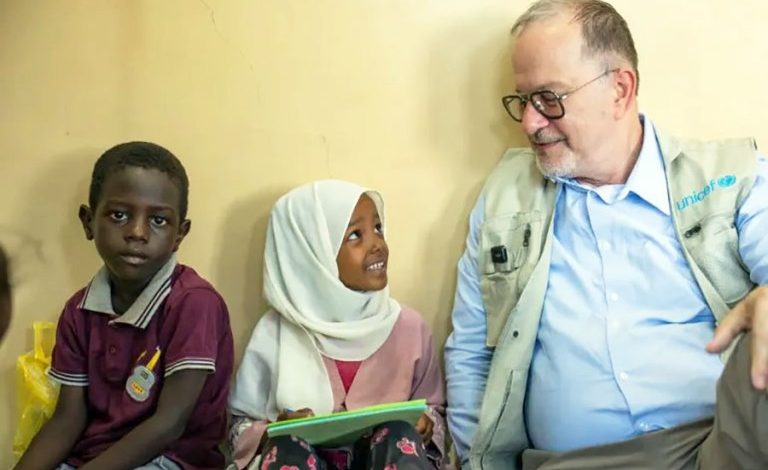
Ted Chaiban, UNICEF’s Deputy Executive Director, has voiced deep concern over what he witnessed during his recent visit to Khartoum and Darfur. Chaiban said Sudan is facing the world’s largest humanitarian crisis, where conflict continues to escalate and children are paying the highest price.
Speaking at a press conference in New York today, Chaiban said that violence is tearing communities apart across Sudan on a daily basis. He recounted meeting women and children in Jebel Marra who had fled the siege of El Fasher, passing through multiple armed checkpoints, stripped of their possessions and money, harassed and attacked, left shattered with nothing remaining.
“I heard horrific stories of families who had gone hungry for days,” he said.
In Darfur and Kordofan, severe acute malnutrition is worsening. Around 1.4 million children live in areas experiencing famine or at risk of it. Thousands will die if they do not receive urgent treatment. In North Darfur alone, an estimated 150,000 children are likely to suffer from severe acute malnutrition this year — the deadliest form. In Tawila, the number of cases has surged from hundreds to more than 2,000 per month since April. Tawila has become a major gathering point for those fleeing El Fasher.
Chaiban added that 14 million children are out of school — equivalent to four out of every five children in Sudan — meaning an entire generation is being lost without education.
“Parents told me their children haven’t seen a classroom in years,” he said.
He also warned that escalating violence is robbing children of their safety, with UNICEF verifying at least 350 grave violations, including killings and maimings, in North Darfur alone over the past six months. Diseases, he noted, are spreading everywhere.
“We must remember that El Fasher has been under siege for more than sixteen months,” Chaiban emphasized. “One hundred and thirty thousand children are trapped — deprived of food, water, and healthcare. There is no safe passage in or out.”
Yet, amid the devastation, Chaiban also witnessed resilience: “Communities are repairing schools so children can resume their education. In child-friendly spaces, I saw children laughing and playing — drawing the homes they lost and their dreams for the future.”