“RSF in El-Fashir: A Tragic Siege, Mass Violations, and an Embarrassing International Response”

Sudan Events — Agencies
El-Fashir, the capital of North Darfur, has entered a turning point that underscores the gravity of the humanitarian situation prompted by the Rapid Support Forces’ (RSF) rebellion against the Sudanese army. After a siege lasting more than 18 months and sustained aerial and ground assaults by the RSF, the Sudanese army and allied forces have carried out a repositioning operation — a move that opens a new phase in the Sudanese and regional picture and turns the city into an issue of public concern.
Scale of violations against civilians
The Office of the United Nations High Commissioner for Human Rights (OHCHR) has documented that the RSF — described by many observers as a militia — carried out attacks on civilians that included shelling, strikes by unmanned aerial vehicles, and on-the-spot executions. For example, between 5 and 8 October 2025, at least 53 civilians were reportedly killed in El-Fashir as a result of strikes on camps and populated areas.
An independent investigation by Amnesty International found that the city has endured a siege that rendered food, water, and healthcare nearly unavailable, and that more than 90% of homes were destroyed or looted, according to witnesses who fled the city.
The UN’s Independent International Commission of Inquiry concluded that events in and around El-Fashir may amount to crimes against humanity, including killings, torture, forced displacement, and the ethnic targeting of communities such as the Zaghawa, Fur, and Masalit.
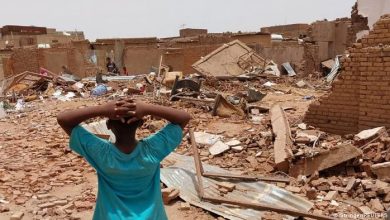
Civilian infrastructure has been deliberately targeted: hospitals, displacement camps, and markets. El-Fashir Hospital, for instance, was struck repeatedly, resulting in dozens of dead and wounded.
Bottom line: Civilians in El-Fashir are living under catastrophic conditions: a prolonged siege and systematic attacks on essential life-support infrastructure have placed the city under immense humanitarian pressure and on the brink of disaster.
Why the Sudanese army and allied forces withdrew
Sudanese military leadership said the decision to withdraw from El-Fashir was taken “to avoid further civilian destruction” after a sharp deterioration in humanitarian conditions. Army Commander Abdel Fattah al-Burhan stated that forces pulled back to protect civilian lives.
The operational reality, however, shows that the army had been effectively encircled for more than a year, losing supply lines and facing signs of RSF superiority across multiple fronts — El-Fashir had been the army’s last stronghold in Darfur.
Logistical exhaustion and mounting pressure on civilians forced supporting forces to reassess their presence; continuing urban combat amid densely populated neighborhoods carried the risk of heavy losses that could undermine the army’s political and moral legitimacy.
Some analysts argue the army chose “repositioning” over protracted urban warfare that it judged too costly in human and material terms under the current conditions.
External support for the RSF: drones and ISR capabilities
UN reports and rights bodies warn of the introduction of drones and advanced surveillance technologies used in Darfur — notably around El-Fashir — by the RSF. For example, the OHCHR has cited the use of drones and airstrikes as part of the siege.
Human-rights sources report tightened control over escape and supply routes, suggesting the RSF — or external backers — possess intelligence-gathering capabilities that enable precise monitoring and interdiction, though full public disclosure of those sources remains limited.
Analyses of several incidents indicate that the RSF has used guided munitions and sophisticated unmanned aerial systems, pointing to the entry of high-cost technologies into the conflict.
Characterization: External support is not limited to conventional arms transfers; it appears to include advanced intelligence and surveillance technology that grants the RSF a tactical advantage in besieging El-Fashir.
British- and American-origin weapons in RSF hands — via third parties
An investigation published by The Guardian and submitted to the UN documented the presence of British-made equipment (such as weapon-training systems and armored vehicle engines) at RSF sites in Sudan, with suspicions that such materiel reached them through third parties.
Other inquiries, including Amnesty’s, have shown that advanced Chinese weaponry (guided munitions, 155mm artillery) arrived in Sudan via intermediaries and was complemented by drone technology — suggesting that Western (British/American) systems may also have entered the supply chain through international dealers or middlemen.
The United States issued a formal determination in early 2025 that the RSF committed “genocidal acts” in Darfur and has imposed sanctions on its leadership amid allegations of arms and technology transfers from international actors.
Conclusion: Credible indications point to the involvement of international arms systems — either directly or through intermediaries — in the Sudanese conflict. Even if supply routes are not fully public, the available information raises serious questions about exporting states’ compliance with export controls and international obligations.
Why this matters — local and regional ramifications
RSF control of El-Fashir could trigger a strategic shift in the balance of power in Darfur and may accelerate de facto partitioning or administrative fragmentation in the context of the civil war that began in 2023.
Humanitarian stakes are acute: a protracted siege and intense pressure on civilians raise the specter of famine or a full-scale humanitarian catastrophe that could demand urgent international action.
Legally and for accountability, thorough documentation of abuses places the RSF and its backers under international scrutiny and could lead to prosecutions or calls to criminalize states found complicit in arms transfers.
Politically, the army’s withdrawal from El-Fashir is a major blow to government capacity and credibility, which may complicate any ceasefire efforts.
Quick recommendations for media, researchers, and policymakers
Track UK and US export records and conduct on-the-ground verification for the presence of British- or American-origin parts and equipment at RSF sites.
Monitor humanitarian aid flows to El-Fashir and verify humanitarian corridors, displacement routes, and risks facing IDPs and refugees.
Urge human-rights organizations and international courts to pursue investigations into violations in El-Fashir and Darfur, and consider whether evidence justifies referrals to the International Criminal Court.
Prioritize investigative reporting on the role and capabilities of drones and ISR (intelligence, surveillance, recon) technologies to show how the character of warfare in Sudan has shifted toward a technologically enabled, urban-centric conflict.
Conclusion
El-Fashir today is a stark testing ground for the evolving nature of war and humanitarian collapse in Sudan: a prolonged siege, near-total RSF dominance, mass violations, and the likely involvement of external weapon- and technology-suppliers. Ignoring this crisis is not an option — the toll on civilians is enormous, international institutions must respond, and journalists and analysts must rigorously unpack the technical and legal dimensions (from armaments to drone strikes) to reveal the full picture of the conflict.