Sudan’s North Kordofan ‘deteriorating’ under RSF as thousands flee
Sudan Events – Agencies
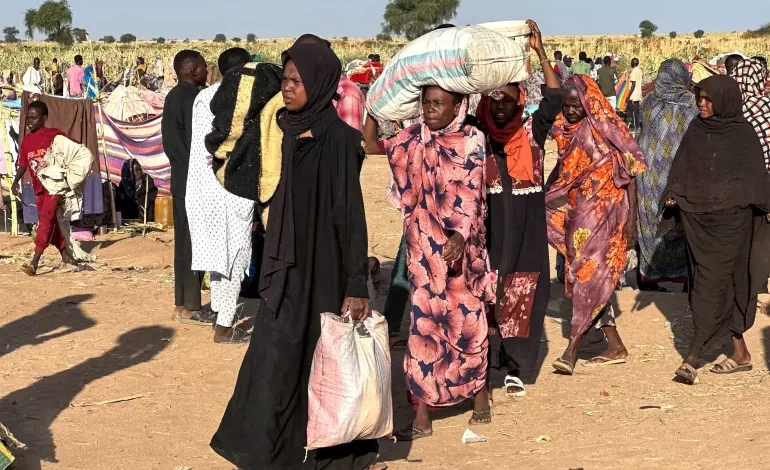
More than 4,500 people have fled Sudan’s North Kordofan state as the paramilitary Rapid Support Forces (RSF) escalate their violent attacks against civilians there and in neighbouring North Darfur’s el-Fasher, a Sudanese medical organisation says.
Field reports from the Sudan Doctors Network (SDN) on Friday indicated that nearly 2,000 people have successfully travelled from the Bara locality, which the RSF recaptured last week, to the state capital of el-Obeid, about 60km (37 miles) to the south.
The rest, however, “remain en route under harsh conditions and facing severe shortages of food, water, and shelter,” the organisation said in a statement, adding that North Kordofan faces a “deteriorating security situation”.
The city of Bara has been a key node of fighting between the RSF and the government-aligned Sudanese Armed Forces (SAF) for months. In July, the RSF raided and set fire to North Kordofan villages in an attack that killed nearly 300 people, including children and pregnant women.
SAF took control of Bara in mid-September, but by last week, it was back in the hands of the RSF.
“Day by day, we see an increase in the intensity of aggression from the RSF forces towards the civilians, people in North Kordofan and Darfur,” said Mohammed Elsheikh, SDN spokesman.
“They’ve been executing people randomly on ethnic basis, on the streets. They’ve been doing very violating acts towards these civilians,” he said.
He called the situation in Bara “one of the major humanitarian crises in Sudan”.
‘Death and destruction’ in el-Fasher
The exodus comes as the RSF commits a wave of atrocities in el-Fasher, the capital of North Darfur state to the west of North Kordofan, including mass killings of more than 1,500 people, summary executions and rapes.
The RSF seized el-Fasher on Sunday, dislodging the army’s last stronghold in Darfur after an 18-month siege marked by bombardment and starvation.
Stephane Dujarric, spokesperson for the United Nations secretary-general, said on Friday that conditions in Sudan had become “catastrophic”, with at least 62,000 people displaced from el-Fasher and surrounding areas in recent weeks.
Reporting from the UN’s headquarters in New York, Al Jazeera’s Gabriel Elizondo said the UN was still “trying to ascertain how many people have been killed in el-Fasher and how many have fled there” as communications with the city had been completely cut off.
On Tuesday, as the RSF rampaged through the city, gunmen attacked the Saudi hospital in successive waves of violence, abducting doctors and nurses and killing at least 460 patients and others, according to the World Health Organization.
WHO head of humanitarian operations Teresa Zakaria told reporters that “following the capture of el-Fasher, there was no longer any humanitarian health presence in the city”.
Mirjana Spoljaric, president of the International Committee of the Red Cross, decried that facilities “once dedicated to saving lives have become scenes of death and destruction”.
In further scenes of horror, fighters riding camels reportedly rounded up a couple of hundred men near el-Fasher, bringing them to a reservoir before shooting them, according to the news agency Reuters, citing a witness.
UN human rights office spokesperson Seif Magango shared other accounts on Friday, estimating hundreds of civilians and unarmed fighters may have been executed.
Al Jazeera has verified multiple videos that document RSF troops standing over piles of dead bodies and executing a row of unarmed young men.
Widening conflict
Experts warn that the RSF’s seizure of el-Fasher – where the paramilitaries had cut off food and medicine access for nearly 18 months – could embolden them to commit similar atrocities in North Kordofan.
Bakry Eljack, a public policy professor and Sudan and South Sudan expert at Long Island University Brooklyn, told Al Jazeera that “the RSF has been out of control” and, as has been “warned multiple times, they need to control their soldiers”.
RSF leader Mohamad Hamdan “Hemedti” Dagalo said on Wednesday he would form an inquiry committee to investigate “violations” by his soldiers in el-Fasher – a promise panned by experts.
On Thursday, the RSF said it had detained several men accused of “violations … during the liberation” of el-Fasher, including one known as Abu Lulu who appeared in multiple TikTok videos committing summary executions. It also pledged to ensure “military discipline during wartime”, and promised a fair trial for those detained.
“If we don’t do anything about this, it’s not going to end in el-Fasher, it’s going to expand to North Kordofan,” Eljack said. “There’s no guarantee what we’ve seen in el-Fasher is not going to be repeated somewhere else.”
The ruinous civil war broke out in 2023, when a power struggle between the RSF forces and the SAF prompted fighting in the capital, Khartoum.
Since then, the RSF has taken control of more than a third of the country in a conflict that has killed tens of thousands and displaced 12 million, nearly a quarter of its population, becoming the world’s largest humanitarian crisis, according to the United Nations.
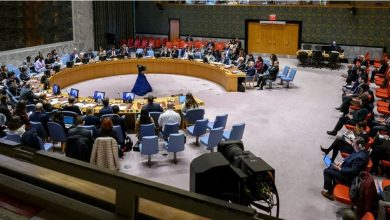
In an emergency session of the UN Security Council on Thursday, the United Nations assistant secretary-general for Africa, Martha Pobee, called the takeover of el-Fasher “a significant shift in the security dynamics” in the region, citing escalating fighting in North Kordofan.
“The territorial scope of the conflict is broadening,” she said.
Source: aljazeera net