Sudan: Rejecting International Tutelage and the Necessity of a Fully Sudanese-Owned Solution!?
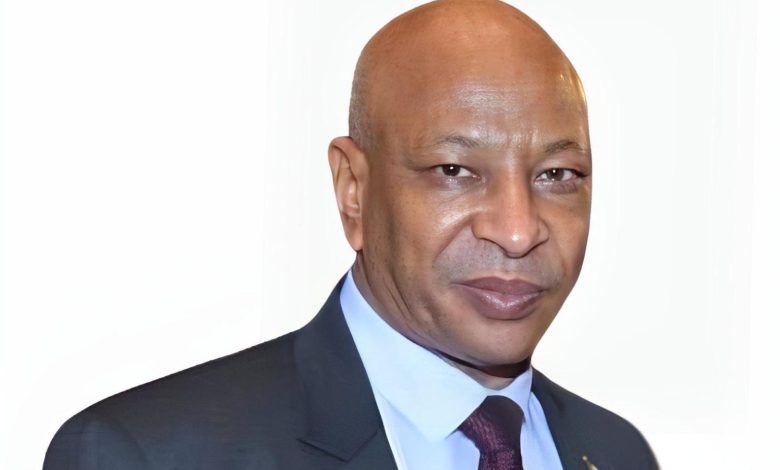
Ambassador Dr. Muawia al-Tom
What happened in El Fasher on 27 October is full of lessons and warnings after nearly two years of siege, humanitarian suffering and blatant violations of international criminal and humanitarian law, and after the historic steadfastness of its defenders amid an external project to fragment the country. Speaking of a horrific tragedy in Sudan that costs innocent lives, destroys homes and shatters communities is no longer mere rhetoric; it is a reality that forces every moral and political conscience to take a clear stand. In recent days, the international split over how to deal with the Sudanese crisis has laid bare entrenched selectivity and a stark incapacity in the mechanisms of international governance: while violence escalates in Darfur and El Fasher, and the use of modern drones and advanced weaponry against civilians is evident, some international actors have limited themselves to expressions of condemnation and lightweight press statements that do not translate into actual protection or deterrent measures. The Security Council session concluded with a press statement that reflected the height of weakness and international failure—both legally and morally. Rebellion: a direct responsibility for the catastrophe The national reality on the ground brooks no leniency in describing what is happening: armed militia forces, rebellious and outside the law—led by commanders who do not recognize the legitimacy of the state or its borders—have committed documented crimes including systematic killing, ethnic cleansing and sieges, looting, rape, the stripping of civilians of basic rights, and sexual and gender-based violence. This is not merely a political narrative but the substance of reports from United Nations agencies, human-rights organizations and major newspapers—the Guardian in the UK, The Wall Street Journal and The Washington Post in the U.S.—and a Yale University satellite report that recorded a systematic pattern of violations and atrocities. The responsibility of these forces for the humanitarian catastrophe cannot be erased by political justifications or by pretexts used to obstruct the implementation of international decisions such as Resolution 2637 issued in June 2024. The role of external actors: no separation between the arena and the arms What exacerbates the suffering and deepens the crisis is that the war—or the open aggression—against Sudan is no longer a purely internal conflict; the country has become a theater for intersecting regional and international interests. Multiple reports and investigations point to the arrival of advanced military supplies—some still held in European ports, notably Spain—including engines, components, drones and radar systems—into the hands of non-state actors via regional logistical networks. Countries such as the United Arab Emirates face mounting accusations of channels of military and logistical support, and questions have been raised about the responsibility of European suppliers for leaks or exports that ultimately ended up in arms depots. In light of these facts, speaking of a “Sudanese solution” cannot be understood in isolation from cutting off external support that fuels the war, given the lack of neutrality and objectivity of those external parties and their intersecting interests, and their support—directly or indirectly—for the rebellion in its military (Rapid Support Forces) and political (Tasis and Sumud) wings, as evidenced by the drone attack on El Fasher and the subsequent arrival of mercenaries. The offensive originated from three African countries simultaneously and reportedly included the use of internationally prohibited nerve agents among its munitions. Herein lies the tragedy of El Fasher, which fell victim to this regional cunning with international drivers—a reality underscored by the Security Council’s press statement yesterday, which, despite unanimously expressed words, fell short of matching the scale of the humanitarian disaster and failed to offer a commensurate remedy. Why a fully Sudanese-owned solution is the only sustainable option 1. Only national legitimacy grants acceptability: any political process imposed from outside or devised beyond the parameters of Sudanese leadership will lack societal legitimacy and will risk reproducing the conflict later. The solution must be formulated and owned by Sudanese themselves, represented in civil institutions, a national army accountable to lawful authority, and community forces that have stood by the army since the outbreak of this open aggression on the morning of 15 April 2023. 2. Dismantling rebel structures and subordinating arms to the state: the crisis cannot be defused while weapons circulate outside state control. Combatants must be reintegrated through disarmament, demobilization and reintegration programs, reparations, and dismantling the war economy. This requires cutting off the hand of states that support and sponsor the rebellion with weapons and materiel. 3. Genuine transitional justice—national and regional—that issues criminal accountability and reform policies: such measures send a clear message that impunity will not be tolerated, and that rebuilding trust in state institutions requires real justice and prudent reconciliation. 4. A national recovery plan: peace needs resources and urgent development plans to restart the local economy, secure food and services for affected communities, and prevent the power vacuums exploited by militias or campaigns that weaken state institutions and authority. A clear, specific message to the international community Sudan has asked the international community to be a partner in relieving civilians—not a partner in prolonging the war. That means: an immediate halt to all unconditional support for rebel parties; pressure on the channels and intermediaries that contribute to arming militias; delivery of protected humanitarian assistance and guarantees for the safety of relief organizations. Supporting the Sudanese state in restoring its sovereignty is not interference but the preservation of an international order that must not permit whole countries to be turned into arenas of external influence. Conclusion: Khartoum’s decisive stance Faced with this reality, Khartoum’s position has been clear and unequivocal: it refuses to sit with the rebellion or to grant it any legitimacy, because doing so would whitewash crimes committed daily against civilians, legitimize violence that threatens the country’s unity and squander claims for restitution of lost property. In its official statement, Khartoum said that there are external parties supplying the rebellion with arms, materiel and drones and named some of them, explicitly pointing to a role for the UAE and certain European entities in these logistical networks—and added that it holds documented evidence. The government said these proofs will be pursued by national and international justice and will be disclosed publicly at the appropriate time to support legal and diplomatic paths against those who finance the war and endanger civilians and the country’s security and stability. These words are not a threat but a declaration of responsibility: those who help keep weapons on the streets and fuel the machinery of destruction will face political and legal accountability, and those who do not want peace must bear the consequences before history and the law. The real solution begins when Sudanese resume making their history with full national ownership, away from foreign projects, tutelage and false promises—through a national project to reclaim El Fasher and all cities of Darfur and Kordofan by a unifying national will, free of sectarianism, ethnicity, regionalism or tribalism—a national mobilization for the homeland under the command and leadership of the armed forces in a united formation and national doctrine, with the slogan that Darfur and El Fasher are among the country’s gateways and its strongest ramparts, defended by the resolve of the Sudanese people in a campaign that returns every agent, traitor and mercenary to their rightful context—raising the banners of victory, dignity and pride despite the tragedy that shrouds the scene—and tying every cause of victory to the supreme right and its sole authority: “If you help God, He will help you and make your footing firm.”