Pathways to Ending the War in Sudan (1–2): Negotiations Between the Army and the Rapid Support Forces
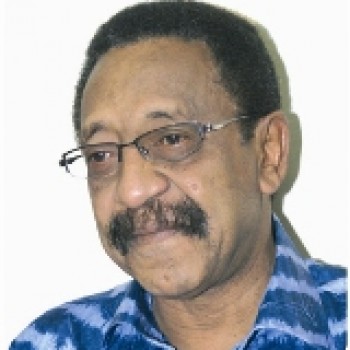
By Dr. Al-Wathiq Kameir
Amid ongoing regional and international efforts—spearheaded by the “Quartet” group—to halt a war now approaching its third year, negotiations between the government/army and the Rapid Support Forces (RSF) have emerged as the central topic in political discussions, both in the media and in private circles, despite diverging opinions. This growing focus on negotiations is accompanied by questions surrounding the role of the United Arab Emirates, accused of aggression and direct support for the RSF, and how best to deal with it. The UAE has shifted from “observer” status during the Geneva talks that never took place in August 2024, to that of a “mediator” within the Quartet Committee since June 2025. Sudanese political opinion is divided—some view the UAE as an aggressor unfit for mediation, while others believe its presence in the Quartet can be leveraged in Sudan’s favor.
In the midst of war and political turmoil, these two intertwined issues have become pivotal to ending the conflict, yet are laden with complexity, making clear answers difficult. I therefore sought to widen the circle of consultation by posing two key questions to a broad group of politically engaged figures, in search of options that serve the national interest. Building on these consultations, this two-part article aims to shed light on these interconnected themes and raise substantive questions that stimulate constructive dialogue—hoping to bridge divergent perspectives and move Sudanese stakeholders closer to a consensual formula for halting and ending the war.
This first part focuses on the issue of negotiations between the army and the RSF; the second will address how to deal with the UAE.
Negotiations
Polarization among political, social, and opinion leaders has intensified around the Quartet-led negotiation process, under the guidance of the U.S. President’s senior advisor, whose shuttle diplomacy and invitation of delegations from both sides to Washington signaled renewed engagement. This polarization reflects a profound divide in Sudan’s political landscape: supporters view the talks as a chance to end the war, while opponents see them as foreign interference and a means of whitewashing RSF atrocities—especially after the fall of Al-Fashir and the accompanying horrors.
No one desires the war to continue except its profiteers and brokers. Since mid-2023, even after the failure of the Jeddah talks, we have urged the government and army to engage in Geneva discussions planned for August 2024, arguing that negotiations should not be rejected outright. Even if one side is forced into submission, talks must follow—as history shows in Japan’s case after World War II. Yet, negotiations must adhere to three guiding principles: (1) identifying the negotiating parties—between whom? (2) defining the topics and agenda—about what? and (3) clarifying the endgame—toward what outcome? Following the Commander-in-Chief’s recent declaration that the army is ready to negotiate “in ways that restore Sudan’s unity and dignity,” this goal may be achieved by applying these principles.
Negotiating Parties: The negotiation track between the government/army and the RSF should be separated from both the dialogue track among political and social forces and the diplomatic track concerning the UAE and other external actors. The government should thus adopt a negotiation strategy for the military-security track, alongside a dialogue strategy for the political and diplomatic arenas.
Negotiation Agenda: Talks between the government/army and the RSF should focus on dismantling the RSF’s institutional presence in both military and economic forms. Crucially, the Dagalo family and RSF leaders should not retain any political or military positions under a future agreement, given the grave violations committed during the siege and fall of Al-Fashir—which could expose them to international and domestic prosecution. Indeed, the Prosecutor of the International Criminal Court has announced immediate steps to collect and preserve evidence of alleged crimes in Al-Fashir as part of ongoing investigations, recalling that under UN Security Council Resolution 1593 (2005), the ICC has jurisdiction over crimes committed in Darfur. These atrocities have gravely weakened the RSF’s moral and political standing, provoking outrage both inside and outside Sudan.
Nevertheless, dismantling the RSF’s military presence will take time—throughout the transitional period or by its end—especially if the security arrangements protocol is properly implemented. Negotiations should also include humanitarian issues such as ensuring aid delivery, protecting relief convoys, safeguarding civilian movement, and deploying human rights monitors in conflict zones. Final security arrangements, including integration, should be handled by military institutions, encompassing the army and all armed movements without exception.
Negotiation Objective: The talks must affirm security arrangements that prevent the re-emergence of any parallel force to the national army, ensuring a single, unified, professional military institution free of political affiliations and subject to reform and modernization, reflecting the country’s diversity. This, however, does not preclude RSF members not accused of crimes or human rights abuses from participating freely in political life under a forthcoming law governing parties and organizations—just as other armed movements have done.
The continued existence of multiple armies and militias is a recipe for Sudan’s disintegration. The “two-army” model under the Comprehensive Peace Agreement led first to “two armies in two separate states” in 2011, and then to renewed war in South Kordofan and Blue Nile that same year. Why, then, should a political party not emerge to include the RSF’s civilian allies? The issues now raised by the RSF—historical marginalization, decentralization, state restructuring, even secularism—can and should be addressed within a comprehensive national dialogue, excluding only those guilty of crimes and corruption, and focusing on Sudan’s constitutional and foundational questions.
Questions for Reflection:
The government’s roadmap submitted to the UN Secretary-General in April 2025, particularly its sections on security arrangements, appears to some as a call for RSF surrender—especially after the RSF’s creation of the “Ta’sis” alliance and self-declared “authority” following the capture of Al-Fashir. Will the RSF engage positively with this plan, or reject it outright, insisting instead on talks between the Port Sudan government and the Ta’sis authority in Nyala? Some political and civil forces even propose a tripartite negotiation model involving pro-army forces, pro-RSF forces, and war-suspension advocates. If the government’s roadmap proves unworkable, what alternative remains? A political settlement involving power- and wealth-sharing along the lines of past agreements? But if so, what guarantee exists that this would not fail as previous accords did—producing neither lasting peace nor unity, and perhaps this time leading to full state collapse?
If the RSF accepts a military-to-military negotiation, will it do so alone, or demand the inclusion of allied armed groups—such as the SPLM-North and splinter factions that have joined the Ta’sis alliance? And if the process focuses on ceasefire arrangements, how will the government treat the RSF vis-à-vis those same allied movements? It seems likely that splinter factions might allow the RSF to represent them, while the SPLM-North under Abdelaziz al-Hilu would refuse, insisting on two conditions: first, that negotiations begin with a comprehensive declaration of principles governing the process, and second, that issues be sequenced—starting with political root causes, followed by humanitarian matters, and concluding with security arrangements and a comprehensive ceasefire.
Conversely, do the armed movements fighting alongside the army under the joint force share a unified stance on negotiations—or on the Quartet and the UAE’s role? The RSF, for its part, would certainly reject any talks that include those same joint forces.
If both the army and RSF were to agree on a temporary ceasefire, implementation would prove difficult. Despite the RSF’s nominal centralized command under Hemetti and his brother, credible reports indicate that several field units act independently, guided by local realities, tribal loyalties, and economic interests such as control over mining zones and supply routes. This fragmentation of command would complicate enforcement, as some units might defy orders if they perceive the truce as undermining their influence or survival. Similarly, many joint-force factions dispersed after the fall of Al-Fashir, making adherence to a ceasefire potentially perilous. Politically, some actors have exploited the city’s fall to deepen rifts between the army and the joint forces, threatening cohesion within the pro-army bloc.
Previously, the Sovereign Council Chair accepted a one-week humanitarian truce proposed by the UN Secretary-General on June 27, which the RSF rejected. The Quartet’s new roadmap, however, envisions a three-step plan beginning with a humanitarian pause—a step likely to falter amid ongoing offensives in Kordofan and Darfur and the RSF’s hold on Al-Fashir, reinforced by cross-border supply lines. Continued fighting without even a brief truce could worsen the humanitarian disaster and weaken the army’s international standing, yet any ceasefire acceptance would hinge on strict guarantees preventing RSF redeployment and ensuring robust monitoring mechanisms.
Under intense domestic and international scrutiny, the Defense and Security Council held a critical meeting to discuss the Quartet’s truce proposal. Yet the ensuing statement was terse—omitting any mention of the ceasefire or mediation plan—and merely announced the formation of a committee to explore humanitarian relief while thanking the United States for its efforts. This ambiguity fueled confusion across political and media circles, especially after upbeat remarks by the U.S. President’s senior advisor suggesting that both parties were close to signing a truce. Some interpret the statement as an effort to avoid direct confrontation with Washington amid rising international pressure, while others believe the government is still weighing the Quartet’s terms amid internal divisions over its feasibility.
Ultimately, the army faces a complex, multidimensional dilemma—military, political, and popular. Its leadership knows that any step seen as “concession” could cost it crucial domestic support. The army’s hesitation toward a ceasefire stems not only from fears of RSF regrouping but also from concern that such a pause could consolidate RSF control across vast areas of Darfur and Kordofan, thereby weakening the government’s negotiating position.