Sudanese Diplomacy Deals a Decisive Blow to the Rebellion: Lies Exposed and the Mask of a “Deceptive Truce” Falls
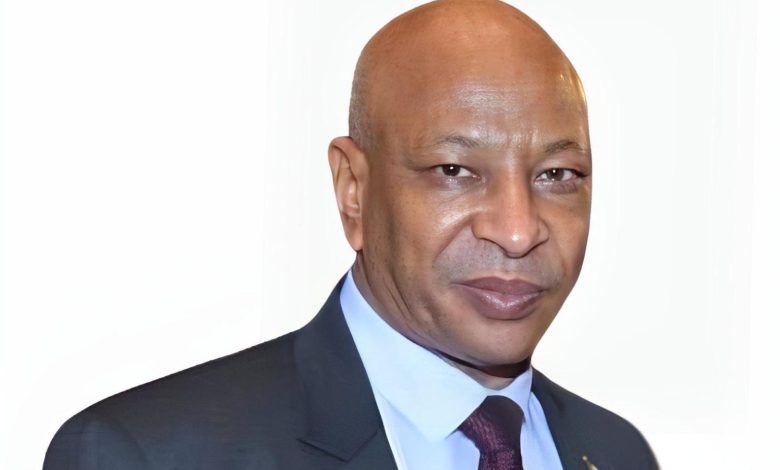
By Ambassador Dr. Muawiya Al-Toum
In a scene that restores the prestige of Sudan’s soft power, the country’s national diplomacy has recently re-emerged with remarkable vigor, presenting a new and assertive face. It has positioned itself as a leading front in the battle for awareness and truth amid the ongoing War of Dignity.
Over the past days, Sudan’s diplomatic missions abroad have intensified their activities and communications — both bilaterally and through multilateral platforms — engaging influential capitals, international human rights and humanitarian organizations, media institutions, academic bodies, and policy think tanks. Their objective: to present an accurate account of the humanitarian catastrophe and atrocities committed by the Janjaweed militia following its invasion of El-Fasher, which left behind widespread destruction, forced displacement, and systematic suffering that has now extended to Kordofan.
1. Sudanese Diplomacy: A Soft Offensive in the Battlefield of Awareness
Sudanese missions moved with coordinated strategic awareness, organizing press conferences, meetings with senior UN officials and diplomats, and extensive outreach to global media and public opinion platforms.
In a striking display of harmony, these efforts complemented the mobilization of Sudanese communities and diaspora groups who took to the streets in peaceful demonstrations across several cities — raising the voice of free Sudan against aggression, and exposing to the world the true nature of the war being waged against the state and its people, as well as the deceptive agendas driving external interference.
2. The Security and Defense Council: Affirming the National Position
By declaring a firm and unambiguous stance, Sudan’s Security and Defense Council drew clear lines: any talk of a ceasefire is meaningless while cities remain occupied and civilians suffer atrocities. The national priority now is to rescue victims through a comprehensive mobilization, expel the invaders, and maintain general readiness until full sovereignty over national territory is restored.
This decisive position dealt a fatal blow to the rebellion’s agenda, stunning its sympathizers and thwarting attempts to exploit humanitarian pressure or media narratives to internationalize the crisis or impose incomplete solutions that undermine state sovereignty.
Gradually, the world began to understand that Sudan is not rejecting peace—but rejecting the falsification of its meaning and the manipulation of its narrative to legitimize aggression.
These integrated diplomatic and political moves significantly curtailed the insurgents’ efforts—and those of their regional backers—to promote a so-called “humanitarian truce” that, under the guise of mercy, sought political and military entrenchment, rewarding brutal crimes with legitimacy.
Sudan’s official position—clearly articulated by the Security and Defense Council and echoed by the Ministers of Foreign Affairs and Information—set the tone: No ceasefire before the militia withdraws from occupied cities, surrenders its weapons, and assembles in designated camps under state supervision.
This unified national stand, embraced by the Sudanese public across all sectors, dismantled the propaganda narrative that sought to depict Sudan as an obstacle to peace, while field realities prove that the militia is the aggressor. Meanwhile, foreign supporters—chief among them the UAE—have attempted to whitewash its crimes through intensive media campaigns and paid propaganda platforms.
3. The Army: Firm on the Ground, Evolving in Tactics
On the battlefield, the Sudanese Armed Forces continue to execute a precise strategy to reclaim areas overrun by the Janjaweed militia—while maintaining strict adherence to rules of engagement and protecting civilians.
Recent operations have demonstrated that the army is waging a disciplined, principled war grounded in a national doctrine, blending professional military conduct with intelligent operational management. These actions have diminished the militia’s field capacity, cut its supply lines, and exposed its external dependencies—both logistical and media-related.
It has become evident that what was once portrayed as an “internal movement” is, in reality, a proxy instrument for a broader regional project seeking to subjugate Sudan within a network of foreign-financed influence.
4. Popular Mobilization: The Nation’s Voice at Home and Abroad
As the battle for land and sovereignty continues inside Sudan, the country’s diplomacy—alongside its global diaspora—is waging a complementary battle abroad: the battle of truth and narrative.
Sudanese expatriates have proven to be powerful ambassadors for their homeland, amplifying the voices of victims, confronting disinformation, and debunking claims propagated by the militia’s media arms and its chief sponsor, the UAE, which has sought to portray the aggression as an internal conflict rather than the organized external assault it truly is.
5. A Unified National Epic
Sudan today stands before an exceptional national tableau:
An army fighting with honor, a diplomacy moving with intelligence, a media voice strengthened by truth, and a people rallying around the state in defense of order against chaos.
This unified front has restored national confidence and demonstrated Sudan’s capacity—despite deep wounds—to recalibrate the balance of power both domestically and internationally.
When the rifle aligns with the word, the battlefield with the podium, and the people with the state, the nation becomes unbreakable—immune to surrender, no matter the scale of conspiracy or the cost of struggle.
The will of Sudan’s national project—rooted in unity and resilience—remains capable of defeating aggression, crushing rebellion, and restoring security and stability as the nation moves toward recovery, reconstruction, and development.