Port Sudan in the eye of shifting negotiating tables — Pauls asks Burhan for help while Foreign Ministry opens file on foreign mercenaries
Sudan Events — Agencies
Port Sudan has witnessed a flurry of diplomatic activity in recent hours with the arrival of Egyptian Foreign Minister Badr Abdel-Aati and UN Under-Secretary-General for Humanitarian Affairs Tom Fletcher. Both met with Chairman of the Sovereignty Council and Commander-in-Chief of the Sudanese Armed Forces, Lieutenant General (Ret.) Abdel Fattah al-Burhan, before taking part in trilateral talks that included Abdel-Aati, Fletcher and senior officials from the Ministry of Foreign Affairs and International Cooperation, headed by Mohy al-Din Salem.
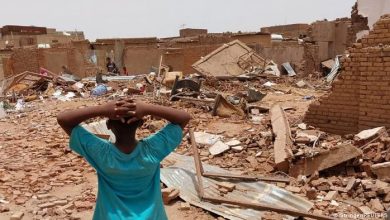
The discussions focused in large part on the humanitarian situation that has emerged following the militia’s advance into al-Fashir and the subsequent mass displacement driven by fears of killings and sexual violence spreading across the region.
Pressure on the militias
The meeting examined in detail the humanitarian plight of the displaced as well as conditions faced by people besieged in the towns of Abu Nausa, Kadugli and Dalang. According to the Foreign Ministry, the talks produced convergent views and called on the international community to assume its responsibilities by exerting pressure on the militias and the states that support them.
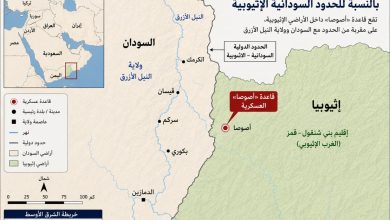
One of the principal files discussed was the role of foreign mercenaries in the Sudanese war. Most are believed to come from West Africa, Colombia, South Sudan, Ethiopia, Chad and the Central African Republic, and reports say there are also Libyan and Palestinian fighters among them. The Foreign Ministry delegation urged that these practices be addressed in accordance with international law and international humanitarian law.
Sudanese Foreign Minister expressed cautious optimism after the talks, saying the visits would be followed by serious on-the-ground steps. He pledged that the Sudanese government would act to expel the militias and mercenaries from the country, describing the phenomenon as an “external invasion.” He said that if the international community is to deal seriously with what is happening in Sudan, it must view the situation in those terms and at that scale.
He also commented on the so-called “Quad,” saying: “The Quartet was not formed by a Security Council resolution or any international organization, and therefore the government does not treat it as an official body. We are dealing bilaterally with our brothers in Egypt and Saudi Arabia and with friends in the United States, and we find full understanding and coordination with them.”
Leaked response to the Quad
Leaks indicate that the Sudanese government has submitted a response to proposals previously put forward by the Quad. The response reportedly contains four main points: the withdrawal of militia forces from occupied areas — including territories seized recently — to protect civilians from violations and the mass atrocities the militias have committed, as seen in al-Fashir; deployment of Sudanese police in all towns and areas vacated by Rapid Support Forces (RSF) units; the assembly of RSF elements in agreed locations; and the establishment of an international monitoring mechanism to oversee the ceasefire and prevent external re-armament during the truce.
Interests and concerns
Dr. Saeed Salama, director of the Vision Centre for Strategic Studies, said the matter is not just a question of the Sudanese government’s response but of the Quad’s political will and its ability to propose concrete points that could serve as the basis for a ceasefire leading to a negotiated settlement. “The issue is not only a humanitarian truce — that has been tried before and often the fighting resumed even more ferociously and opened up into new areas. What is needed is more than a pause or a temporary cessation of hostilities: the Quad must present a comprehensive plan for resolving the crisis, beginning with a temporary ceasefire for humanitarian needs, followed by military arrangements for a ceasefire and political negotiations with specified timetables — a full proposal for a settlement,” he said.
He added that current negotiations suggest the Quad is not united, with each country advancing bilateral concerns and interests, making talk of a complete settlement at this stage unrealistic. “Everyone is pushing for their own interests. Some states have concerns tied to national security and cannot deal purely in economic terms — such as Egypt and Saudi Arabia, which know that militia control over Sudan would affect their national security. But in the end, every country is looking after its own interests,” he said.
Recovering al-Fashir
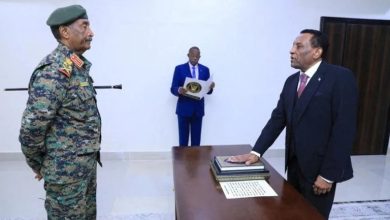
In a meeting with former minister Hassan Ismail, which Ismail later described in a Facebook post, the Sovereignty Council chairman said U.S. envoy Masud Boulos had asked for his assistance to succeed in mediation and that he had told the envoy the approach being followed would not work. “It would be better for him to adopt the roadmap the Sudanese government presented for settling the crisis,” Burhan told Ismail, according to the post.
Burhan added: “You are mistaken if you think the fall of al-Fashir will make us weaken and accept a truce. We will fight to retake it — you will see.”