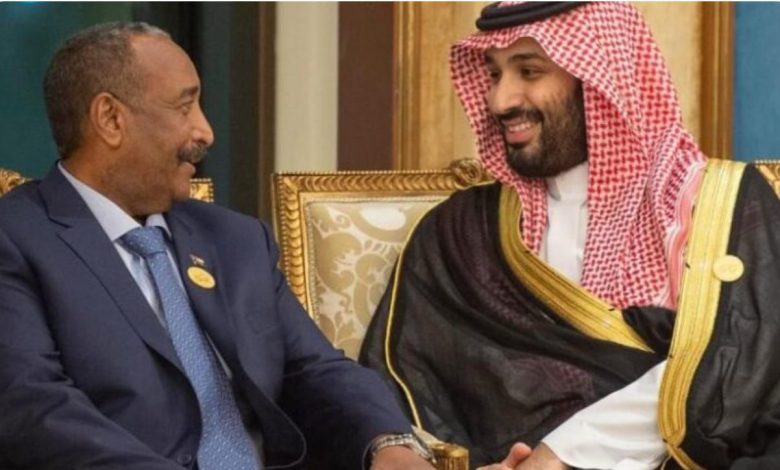
Sudanese and Western sources told Middle East Eye that a high-level phone call took place last week between Sudan’s Sovereignty Council chief Abdel Fattah al-Burhan and Saudi Crown Prince Mohammed bin Salman, during which the escalating Emirati role in Sudan’s war was discussed directly. Burhan reportedly described Abu Dhabi’s actions as “ongoing aggression” against Sudan.
According to a Sudanese source familiar with the call, Burhan told the Crown Prince that ending the war is impossible without clear and decisive U.S. pressure on the UAE, adding that “all de-escalation channels have been exhausted, and Abu Dhabi continues to arm and finance the rebel militias despite the humanitarian toll and regional risks.”
The source said Mohammed bin Salman pledged to raise the issue directly with U.S. President Donald Trump during his upcoming visit to Washington—an unprecedented move in terms of its frankness toward a long-time ally of both Riyadh and Khartoum.
A regional Arab diplomat told the outlet that Abu Dhabi is concerned the Saudi Crown Prince’s visit to Washington could turn into a platform for pressuring its Sudan policy. He added that the UAE “recognizes the unique influence Riyadh holds in Washington, and any shift in Saudi policy could reshape the military and political landscape in Sudan.”
A Western official involved in Sudan discussions said the Crown Prince sees the issue as an opportunity to drive a political wedge between President Trump and Abu Dhabi Crown Prince Mohammed bin Zayed—especially amid a growing body of international reports accusing the UAE of fueling the war through arms, fuel, and logistical support, exacerbating the sieges and mass killings in western Sudan.
Saudi Arabia’s moves come at a moment of major geopolitical repositioning around the Sudan conflict, with regional powers diverging sharply in their approaches while international efforts continue to fail in imposing a ceasefire or allowing adequate humanitarian access—particularly to the besieged city of al-Fashir.