Rahad Farmers Suffer Heavy Losses Due to Seed Issues
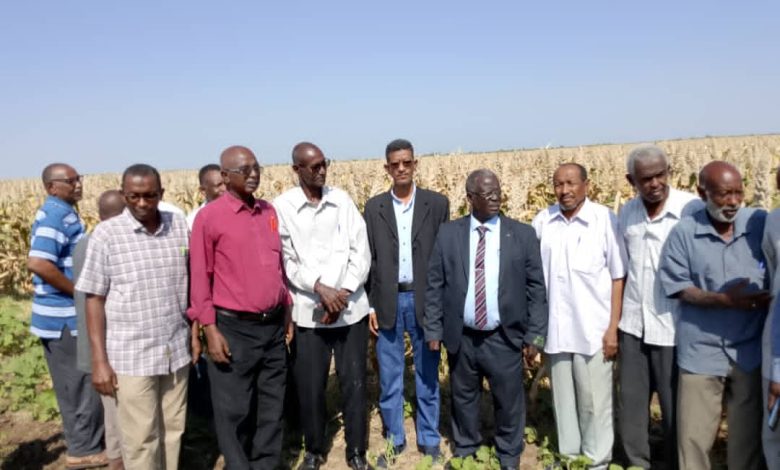
Director of the Rahad Agricultural Authority, Dr. Hani Ahmed Mustafa, has called for all seeds from the Rahad Research Authority to be allocated to Rahad farmers. The call came during a tour by Dr. Ahmed Hassan Abu Assar, Director of Agricultural Research, of irrigated projects.
Dr. Hani complained about the involvement of individuals with no connection to seed production, saying their interference has created severe chaos within the Rahad Project and resulted in massive losses for farmers. “Seed production has become a field for those who have no profession,” he said.
He provided a detailed briefing on the current agricultural season, outlining the challenges and obstacles.
Dr. Hani praised the Rahad Research Authority for producing soybean and sorghum seeds despite the difficulties caused by the war, adding that agricultural research seeds will form a launchpad for next season’s cultivation, supervised by Rahad researchers.
He also commended the farmers of Rahad for their strong attachment to their land and for their commitment to applying recommended agricultural packages, despite facing shortages in financing, irrigation issues, and production inputs.
He further praised farmer Dafallah Bashir Ka’oura in the northern sections for consistently implementing full agricultural packages for cotton, beans, wheat, rice, soybeans, and sorghum—achieving top yields—along with the successful experiments of farmer Al-Taif Al-Tayeb in the southern sections.
Regarding bean crops, he applauded Section Seven for repeatedly achieving the highest productivity, affirming that Rahad farmers across all sections are capable of achieving peak yields if the necessary support and resources are provided—support the authority is striving to secure.
For his part, Dr. Ahmed Hassan Abu Assar stressed the Agricultural Research Corporation’s commitment to rehabilitating the Rahad area, particularly in seeds, irrigation, and improving crop varieties suitable for irrigated agriculture, in addition to offering technical recommendations, farmer training, and advisory support. He highlighted ongoing coordination with the Arab Organization and other relevant parties to further develop agriculture within the Rahad Project.