Mercenaries in the Sudan War: 85% of Militia Forces on the Ground Are Foreign Fighters
Sudan Events – Agencies
A meeting held earlier last week in Port Sudan, the country’s temporary administrative capital, brought together the Sudanese foreign minister, the UN under-secretary-general, and the Egyptian foreign minister to discuss the issue of foreign mercenaries. It was perhaps the first time the matter formally surfaced at a political level, after it had been widely discussed militarily and politically through statements by Sudanese officials.
A Foreign Invasion
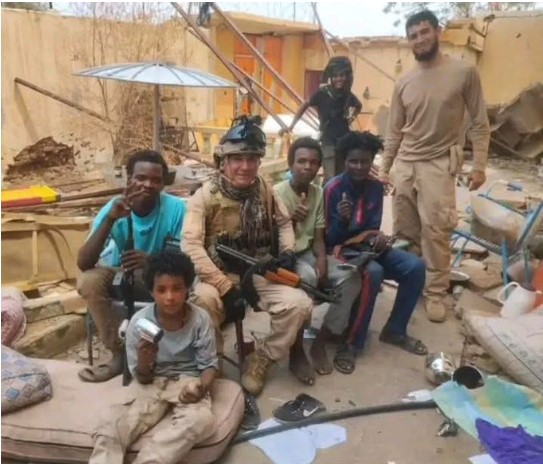
Multiple sources have indicated that the real and substantial presence of foreigners within the militia ranks accounts for nearly 85% of the fighters on the ground—a staggering figure that has led the government to describe the situation as a “foreign invasion.” Intelligence sources within the Sudanese army revealed that most foreigners killed in and around El Fasher were drone experts who operated mostly Ukrainian-made drones. Regarding their nationalities, the source said, “They are from Ukraine,” adding that there are also Colombians active in drone operations.
An army soldier who had infiltrated the militia as an informant confirmed that the mercenaries were not only from Chad, South Sudan, Niger, Colombia, and Ukraine. He added:
“In late July of the first year of the war, I was with a group based west of Al-Nuzha Police Station when the commander of the eastern armored axis arrived and informed us of an attack planned for the next morning. That was not unusual, but what caught my attention were the two young men with him in civilian clothes carrying sniper rifles. I moved closer and saw they were speaking with a Yemeni accent.”
He continued, “There are also Ethiopians present, as well as the Seleka group—mostly from the Central African Republic—and South Sudanese Nuer fighters. Their numbers are much larger than other foreign groups.”
He added, “Describing what’s happening as a foreign invasion is accurate because the number of foreigners is enormous.”
The informant also recalled asking one of the men involved in sabotaging the Zain telecommunications exchange in Al-Sajana why they were destroying it so deliberately. “He said Khartoum meant nothing to him—it wasn’t his country and he had no home there. He was from Adré in Chad.”
Currently, reports suggest that around 2,000 individuals from South Sudan are being transported to fight in Babanoosa. Some who were offered the opportunity said they were promised $600 per fighter, and many accepted. According to sources, elements within the South Sudanese authorities and the SPLA are facilitating the movement of these mercenaries and providing large transport vessels to move them into Sudan.
Supply Lines
Major General (Ret.) Salah al-Din Khalid stated that the intense pressure from Sudanese warplanes and drones on supply routes in West Darfur and around the Triangle region has likely pushed supply lines toward South Sudan and the Central African Republic. These had been key supply routes at the start of the war, but joint forces’ activity in those regions has restricted their capabilities.
He added, “I would not rule out the involvement of senior officials in South Sudan in smuggling foreign mercenaries into Sudan. This has been happening throughout the war. Even the Ethiopian mercenaries mostly entered Sudan through smuggling routes from South Sudan into areas held by Abdelaziz al-Hilu, and from there into Darfur. They are now being mobilized to participate in battles in Kordofan and Darfur. This has been ongoing since the start of the war and will likely intensify with the return of Tut Gatluak.”
He continued, “These large numbers, while significant and prolonging the war, are not the primary danger. The real threat lies in the technical mercenaries—the specialists. Their impact is enormous because they are experts in their fields: drone operations, electronic jamming, communications, establishing military bases, training, and more. They are currently present in Nyala, El Geneina, and even Kutum. Their contribution to death and destruction is substantial and evident. These are not mercenaries from South Sudan, Ethiopia, or the Central African Republic. They come from technologically advanced countries.”
According to him, the largest group consists of Colombians, many of them former soldiers in the Colombian army or veterans of drug cartels and smuggling networks with long histories as mercenary fighters. “They are the highest in number and widely deployed. They fight and train RSF fighters in training camps they have set up in Darfur cities, in addition to operating drones and other systems.”
“There are also Ukrainians and Serbs, mostly working in drone operations, communications, and jamming devices. Their numbers are not small. They are spread across most of Darfur’s states. In El Fasher, they were seen driving vehicles marked with their insignias, suggesting they belong to a single entity contracted by the militia.”