Resorting to Flooding Platforms: Sudan’s Collective Mind Takes Over Social Media and Exposes the UAE’s Role
Sudan Events – Agencies
The Sudanese online campaign has succeeded in bringing the voices of millions of victims to the world, highlighting the bloody role of the rulers of the United Arab Emirates—described as the official sponsor of the Rapid Support Forces (RSF). The UAE has allegedly supplied the militia with tools of death, financial and logistical support, and even personnel from its security forces who reportedly took part in the war and were killed in Darfur after arriving there to assist in the killing of civilians and the spilling of Sudanese blood.
Images of Atrocities
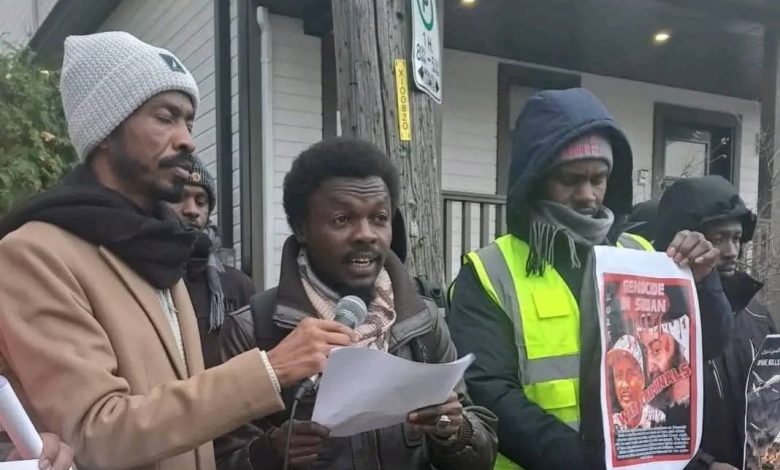
Emirati media outlets and government ministries on social media were forced to close their comment sections, with some filing complaints to Meta—owner of Facebook—against Sudanese commenters who exposed the UAE’s bloody role in Sudan. This coincided with the widespread circulation of images and videos from El Fasher after the militia seized the city—material that made its way into several international newspapers and shocked global public opinion. At the same time, Sudanese communities across Western cities and the United States organized demonstrations in front of UAE embassies, drawing further attention to the country’s role in Sudan’s war.
Dr. Osama Hanfi, a political science professor at the University of Sudan, says the reclaiming of social media platforms by “non-ideological Sudanese” was striking and influential, especially in light of the massive presence of organized groups affiliated with public-opinion–shaping firms contracted by Abu Dhabi. These groups worked intensively during the first year of the war, mobilizing public opinion against the Sudanese army. “Without ideology and without organization,” he adds, “Sudanese users redefined the narrative, took control of the media space, and forced Emirati media outlets, ministries, and companies to shut down comment sections and even file complaints. Some bloggers inside the UAE were even arrested.”
The Machine of Death
Social media content specialist Saif Al-Bahai explains that what is happening is nearly impossible to control. The conditions of war have turned these platforms into the only outlet for millions of Sudanese inside and outside the country. Over time, users transformed from mere consumers into content creators—sharing their stories, publishing images of what they witness, and voicing their opinions. This shift unsettled those who once believed influencing Sudanese public opinion was easy.
“They succeeded at first because people were desperate for any information about what was happening around them,” he says. “But after a year or two, the picture became clearer. As real stories—lived or heard from close relatives—were shared among users, people became more capable of distinguishing reliable content from fabrications.”
He adds that as atrocities mounted, stories circulated not only from victims but often from perpetrators themselves, contributing significantly to the formation of an unorganized collective consciousness that defends the country and its citizens while criticizing the aggressors—primarily the RSF. This criticism naturally expanded to target the entities supporting the militia’s ‘machine of death,’ namely the UAE, which now finds itself confronted by Sudan’s collective mind. “The UAE believes some organized group is coordinating campaigns against it, but that is untrue. What it faces now online is the Sudanese people themselves—the same people being killed by the tools it provided to the militia.”
Al-Bahai notes that companies contracted by the UAE to manage its official platforms resorted to a known tactic: flooding pages with rapid-fire posts. This method is used when an entity is under constant criticism and finds itself on the defensive. “They change the post every minute or two so comments disappear quickly, giving critics fewer opportunities to engage. This tactic—known as ‘flooding’—is meant to avoid sustained pressure. It clearly shows these platforms have become completely defensive and incapable of shaping public opinion or producing effective content. This is a major victory for Sudanese users, as even the platforms of pro-UAE activists have shifted to justification and defense.”
Dr. Osama Hanfi adds that livestreams by activists supporting the UAE—and by extension the militia—were never spontaneous but part of a coordinated media strategy. “Someone was managing this from the shadows for years, but their influence has now faded as Sudanese voices grow louder and dominate the platforms.”
He stresses that the marches and vigils organized by Sudanese communities in Western capitals also have a strong impact, as they draw the attention of local societies and media to the UAE’s bloody role—bringing more exposure that unmasks the “evil hands” responsible for killing Sudanese civilians.