The UAE’s Tarnished Reputation Sinks Bid to Buy the UK’s “Telegraph”
Sudan Events – Agencies
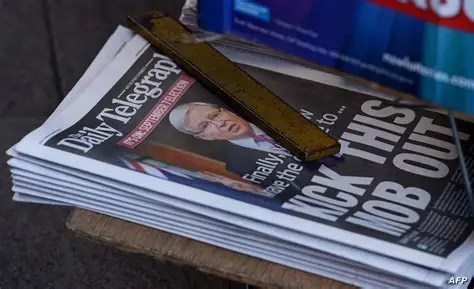
Dramatic developments in the attempted acquisition of Telegraph Media Group have reignited debate in Britain over the limits of foreign influence in national news organizations. Although multiple factors contributed to the collapse of the deal, well-informed sources say the Emirati role was the decisive element—making it politically and regulatorily impossible to approve any offer linked to Abu Dhabi.
In a surprise move, U.S.-based RedBird Capital Partners announced it was withdrawing from its £500 million joint bid with International Media Investments (IMI), one of the media arms of the UAE government. The withdrawal came after it became clear that the offer would face unprecedented regulatory scrutiny from Ofcom and the Competition and Markets Authority (CMA), as well as mounting pressure from Parliament and several government departments.
RedBird said in a statement:
“We have withdrawn our bid for the Telegraph today. We remain confident in the future of the institution and will act in the best interest of its staff and readers.”
Despite RedBird’s attempts to restructure the offer—reducing IMI’s stake to a “non-controlling” 15%—regulators concluded that the issue was not the size of the stake but the identity of the investor. The presence of a state with significant political and security activity in the Middle East raised serious concerns about editorial independence.
Fears of Foreign State Influence Inside the Newsroom
Within the Telegraph newsroom, senior editors voiced direct objections, including Editor-in-Chief Chris Evans, who told staff:
“It has been clear that senior editors and many of our writers have concerns about this bid… The Telegraph deserves an owner who cares about journalism and invests in it.”
Observers note that state ownership—even by an allied nation—strikes at the heart of press independence in the UK, especially as new laws aim to curb foreign governments’ influence on national media.
Political Tensions Between London and Abu Dhabi
The deal created significant political sensitivity within the British government, reaching a point where Prime Minister Keir Starmer personally phoned Sheikh Mohammed bin Zayed amid clear tensions.
According to Downing Street, Starmer “underlined the importance of the relationship with the UAE,” but was unable to dispel concerns about the acquisition’s impact on press freedom. Meanwhile, Cabinet minister Lisa Nandy stated plainly:
“We will look at any deal with an open mind… but with the aim of protecting the public interest and ensuring high-quality journalism.”
A History of Pushback Against Emirati Influence
This is not the first time such a deal has faced resistance. In spring 2024, Parliament—across party lines—blocked a similar attempt by RedBird and IMI due to concerns about free expression and the influence of a foreign state over a major political newspaper.
Emirati involvement was not the only issue: RedBird also faced criticism over its chairman John Thornton’s ties to the Chinese Communist Party, prompting further alarm among rights groups.
What Comes Next?
Although RedBird has withdrawn from the revised offer, the original, more heavily Emirati-funded bid technically remains on the table. This leaves the government facing two options:
1. Reject the bid and trigger a government-supervised public auction led by the CMA.
2. Accept an alternative offer, should a buyer emerge with no Emirati financing.
IMI stated that it is “still in contact with other parties” and that interest in the deal remains “strong,” but it has disclosed no information about potential new bidders.
Lord Young, a prominent freedom-of-expression advocate, said:
“This is good news… Foreign states should not influence British journalism. The Telegraph must be sold through a transparent auction overseen by the CMA.”
The Bottom Line
All recent developments underscore that the issue was not financial or technical—it was fundamentally political.
The involvement of a state like the UAE—whose record on media control and political leverage through investment is controversial—was enough to sink the deal outright.
London appears to be sending a clear message:
British journalism is not for sale to foreign governments, no matter how strong the diplomatic ties.
While the next steps remain uncertain, the Telegraph’s future now points toward a regulated auction, with strong internal and external insistence that its next owner must be free of foreign political influence.