Southern Mercenaries: Domestic Militias and Battalions Arriving from Abroad
Sudan Events – Agencies
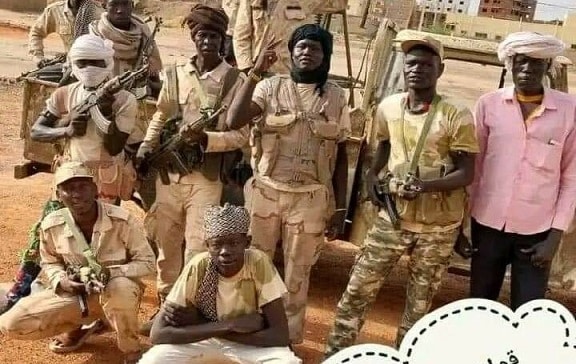
Fresh political, military, and security-related appeals emerged in Khartoum yesterday, highlighting growing concerns over the expanding presence of large groups from South Sudan who have surged into several areas following government campaigns to demolish informal settlements. Since South Sudanese nationals constitute the majority of foreigners residing illegally in Sudan, these groups fled their makeshift dwellings, unfinished structures, and other removed encampments in search of new areas—areas that are now sounding the alarm about a massive influx.
In Al-Fitayhab, for example, residents report that entire groups of South Sudanese have occupied homes abandoned by their Sudanese owners due to the war. These houses, they say, have been turned into closed-off zones for selling alcohol and drugs, as well as staging thefts targeting remaining homes in the area. Similarly, districts such as Al-Jarif are now witnessing the return of large numbers of South Sudanese who had previously joined the Rapid Support Forces (RSF) when the militia controlled the area, committing atrocities against civilians. These groups have returned and are attempting to reestablish themselves in the same hideouts and zones they operated in for years.
The situation is mirrored in areas of East Nile, Jebel Aulia, and Kalakla, where large numbers of South Sudanese remain. Authorities had also imposed a cordon around Dar Al-Salam in western Omdurman—one of the last areas liberated from RSF presence—only to discover stockpiles of heavy and light weapons, looted civilian property, and numbers of collaborators and foreign mercenaries, most or nearly all of whom were South Sudanese nationals.
Amid rising reports that large contingents of South Sudanese fighters have moved toward the Babnousa area and taken part in current clashes there—and given their extensive presence in the battles of El-Fasher and across almost every frontline from Khartoum to Al-Jazira—the question arises: Is it plausible that such a massive mobilization could occur without the knowledge of the South Sudanese government? And what drives this phenomenon? Is it merely money, or are there deeper motives that explain such large-scale participation in a conflict that is not their own?
Security expert Major General (Ret.) Yasser Saad Al-Din argues that the Government of South Sudan routinely resorts to denial as a means of avoiding the realities it helps shape. He explains that the political system there was built on a narrative of grievance against the North—a narrative still deeply embedded despite secession and the establishment of a new state. “Look, for example, at the deportation of South Sudanese residing illegally in the North who were directly involved in killing and robbing civilians,” he says. “How did South Sudanese citizens and their government react? They condemned what they described as an ‘abusive act’ by the government in Port Sudan. They said nothing about their illegal presence, their possession of weapons in a sovereign state, or their crimes against civilians. They reverted to the same old grievance narrative.”
He adds: “The South Sudanese government is not detached from the flow of mercenaries. The entire issue is right in front of them. They have known since day one of the war that their citizens were involved in killing and looting. I am referring here to those who lived for years in northern Sudan—some were even born here and know nothing of their own country. These individuals behaved more brutally than the RSF itself toward civilians, killing in cold blood, before others later arrived from South Sudan to join the militia. Their numbers now constitute the largest contingent among all foreign mercenaries. This is why I believe the government’s decision to regulate their status and deport those without documents or permits is entirely logical.”
As for the motivations behind such large-scale involvement, he concludes: “I believe money is the primary driving factor.”
For his part, Mr. Al-Madani, who served for many years in the police department responsible for foreign nationals, believes that demolishing informal settlements in Khartoum and other Sudanese cities will reduce their numbers and disrupt the zones they traditionally inhabit. He adds that eliminating marginal, unregulated jobs and imposing penalties on anyone employing foreigners without residence permits will further curtail their presence—provided that enforcement campaigns continue to target immigration violators.
He concludes: “I support establishing a specialized unit under the Sovereignty Council to manage this entire portfolio, given how many institutions intersect within it. And I do not mean South Sudanese alone, but all foreigners. The departments responsible for these issues have long suffered from political interference and overlapping authorities pushing their agendas outside the framework of the law.”