The Dead of El-Fashir Do Not Eat, Mr. Fletcher!
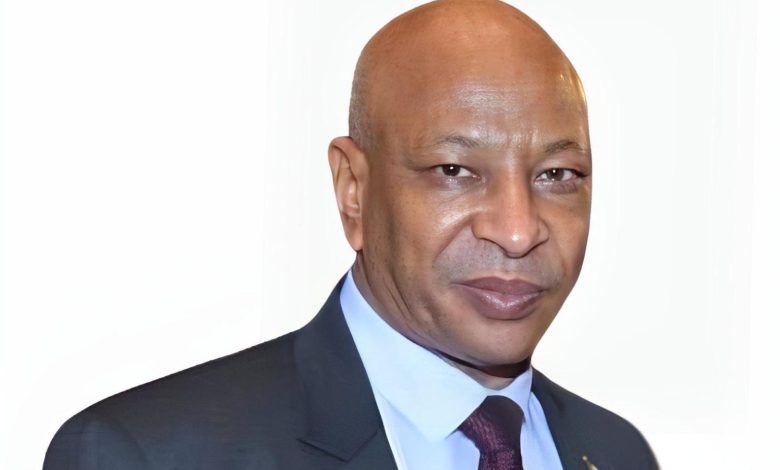
Ambassador Dr. Muawiya Al-Tom
Since El-Fashir turned into a blood-stained mirror reflecting the tragedy of Sudan’s war—this barbaric invasion carried out by the Tatars of our age and their patrons—UN and human-rights reports have continued to document the horrific violations committed by the rebel Rapid Support Forces militia against civilians in the city and its surroundings, as well as in several towns and rural areas of Kordofan. These violations have triggered waves of forced displacement and humanitarian suffering of a magnitude that would break mountains.
These reports are no longer based solely on victims’ testimonies or field monitors and broadcaster accounts; they are now corroborated by the militia leaders’ own public admissions on multiple occasions. This has placed the international community in deep embarrassment, alongside its legal and moral responsibilities under the UN Charter.
Yet despite this mounting, well-documented record of violations, the UN response has remained faint, faltering, and largely absent—as if the conscience of the international system were itself in a state of collapse, choosing its victims according to geography, race, and interests rather than universal humanity.
As the militia plunged further into mass killing, ethnic cleansing, rape, starvation as a weapon, systematic looting, and repeated atrocities, UN missions limited themselves to statements of “deep concern” and timid calls for “restraint and condemnation”—without naming the perpetrators or demanding their accountability as required by international norms and conventions.
It is as though the global networks that produce these reports come from a distant planet, far removed from what is unfolding in Gaza and Ukraine, while Sudan’s catastrophe enters its third year as the world’s third-largest crisis.
National Justice and the Primacy of Accountability
Against this grim backdrop of crimes, abandonment, and complicity, the Sudanese Public Prosecution took a step in the right direction by announcing comprehensive national investigations into the violations that occurred in Darfur and Kordofan, classifying them as crimes against humanity and war crimes.
The Attorney General’s insistence on exercising this sovereign national legal right—investigating crimes committed on Sudanese soil—confirms that the state remains capable of enforcing its judicial authority despite the war. It also affirms that national justice is not a luxury to be postponed but a duty that does not expire. The failures of international justice in the face of Sudan’s suffering will stand as yet another stain on its record.
These investigations also take on added significance as the militia persists in deceptive narratives—speaking of a “parallel government” or “civil administration” in areas under its control—in a bid to legitimize its occupation and conceal its crimes through burning, mass graves, and erasing evidence. Such fabrications cannot be accepted under international humanitarian or criminal law, nor under the logic of a modern state.
Tom Fletcher’s Visit: Between Hope and Embarrassment
At this critical moment came the visit of UN Under-Secretary-General for Humanitarian Affairs Tom Fletcher to Sudan and his meeting with the Chairman of the Sovereign Council. It is only the second visit by a high-level UN official since Martin Griffiths’ trip in May 2023, shortly after the conflict erupted.
Both are British, and Britain has long been the “penholder” against Sudan and its interests at the UN Security Council, a leading member of the “Quad” then and the “Quintet” now. Sudan has not forgotten the last British-sponsored resolution that was blocked by a Russian veto—an event that laid bare the layers of British scheming and relentless pressure against the country.
However, Fletcher’s visit carried multiple implications. It signaled a belated UN acknowledgment of the scale of the humanitarian catastrophe while simultaneously placing the organization in a position of painful embarrassment—for it failed to act with the necessary seriousness when action might have prevented the crisis from spiraling.
This is the same UN that issued Resolution 2736 demanding the lifting of the siege on El-Fashir, and the same system that has a personal envoy of the Secretary-General for Sudan—yet these mechanisms have become tools for political pressure and vehicles for foreign agendas undermining Sudan’s sovereignty and security, rather than instruments of relief and protection.
More than a year ago, the UN Secretary-General proposed a ceasefire initiative welcomed by the Sudanese government in the interest of civilian protection. The foreign-backed insurgency rejected it outright. That rejection was met with no firm response from the UN, emboldening the militia to escalate its crimes and leaving El-Fashir to face its fate alone—besieged, starved, and subjected to systematic massacres carried out with drones, advanced technology, and toxic gases.
El-Fashir: A Wound in the Conscience of the World
Today, nearly two years into this relentless ordeal, the extent of the tragedy in El-Fashir is becoming undeniable: a devastated city; hundreds of thousands of civilians killed, displaced, starved, detained, or missing; destroyed hospitals without cover or medicine; refugee camps overflowing with the displaced—all amid glaring UN failure and a global humanitarian scandal.
All this unfolds in full view of the Security Council and UN agencies, which have failed to translate their statements into meaningful action commensurate with a disaster that has claimed the lives of El-Fashir’s people—victims of politicization, selectivity, financial influence, and great-power agendas.
Sudan, facing this brutal reality, asks for nothing more than respect for its sovereignty, its land, its people’s dignity, and their right to justice. It demands that the United Nations treat its population according to the principles of civilian protection and human rights—not through the lens of geopolitical bargaining or regional pressure. The true enemy reveals itself every morning through its functional proxy.
Humanitarian principles cannot be selective. The UN system will not regain the trust of nations unless it demonstrates integrity and consistency between its rhetoric and its actions, without discrimination.
Conclusion
The greatest UN embarrassment is that El-Fashir is no longer merely a stricken city—it is a standing indictment of the international system’s inability to protect human beings crushed under the boots of militias. Meanwhile, shameful “initiatives” are woven as paternalistic schemes that complicate solutions, deepen suffering, and reward perpetrators—as seen with the so-called “Quad.”
Sudan’s commitment to justice and legal sovereignty is the true answer to the chaos of arms—a clear message that there can be no peace without accountability, and no humanity without respect for life and dignity.
Sudan also upholds its constitutional right to repel its enemies, drive them out, and defeat them militarily to restore security and stability, in line with its national, constitutional, and moral duties toward its people.
Because the dead do not eat, Mr. Tom Fletcher.
Source: Aljazeera net