From Inside Khartoum… Sudanese Revive the City’s Pulse and Vitality
Sudan Events – Agencies
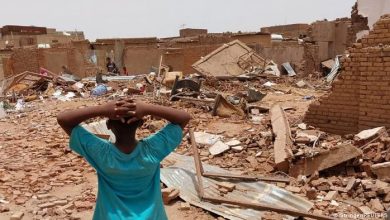
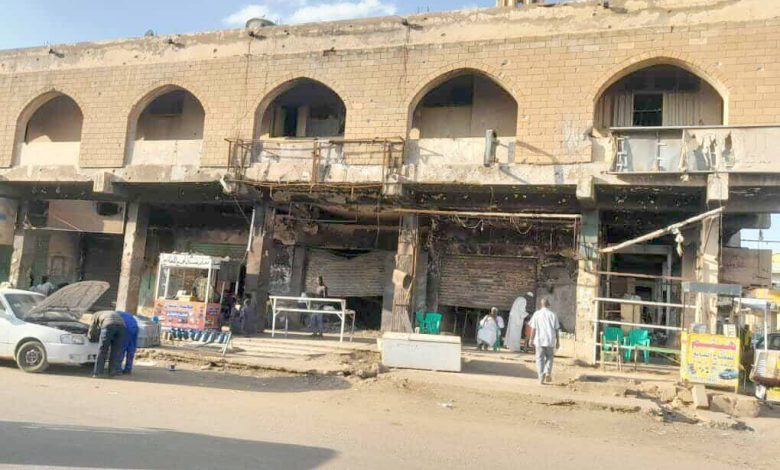
Despite the losses, destruction, skies darkened by kamikaze drones, the spread of epidemics and disease, and the shortage of essential services such as electricity, water, and medicine, thousands of displaced Sudanese are returning to the capital, Khartoum. They are clearing rubble, rehabilitating their homes, and reopening a window of hope—reaffirming their attachment to their land and resuming their daily lives, with all their hardships and small joys.
In the northern suburb of Kadro, about 18 kilometers from central Khartoum, Tayeb Musa stands inside his shop, which he restored after a long displacement following the outbreak of armed clashes between the Sudanese army and the Rapid Support Forces (RSF) in mid-April 2023.
Musa, a man in his forties, told Asharq Al-Awsat: “From the very first shot of the war, I fled to Sennar, then to Damazin for nearly two years, and later to Gedaref, Kassala, and Atbara. Three months ago, I returned to Bahri. It was an extremely difficult and painful period.”
He added: “I struggled throughout that time just to earn a living… displacement is a bitter experience, but we faced the hardships with resilience and a fighting spirit.”
He continued: “Since returning, we now confront the risk of kamikaze and strategic drones, and the lack of electricity, water, and medicine. But the home where we were raised—even if damaged or destroyed—is still better than rented houses in displacement cities.”
Patience and Determination
Amid shells and stray bullets during the early days of the war, Eihab Ahmed was forced to leave her home in Omdurman’s Umbada neighborhood for Jabal Awliya in search of safety.
She said in an interview with Asharq Al-Awsat: “I used to run a small printing and photocopy shop in Souq Al-Shuhada in Omdurman, but I had to abandon it because of the war. It was looted, burned, and destroyed.”
“When the fighting reached Jabal Awliya, we left again, heading to northern Omdurman. When the Sudanese army took control of Khartoum and security improved, I returned to my shop and started from scratch with a single printing machine, overcoming every challenge.”
She added: “We returned amid destruction by our own choice to reclaim our lives. Everything is harsh and difficult, but our hearts and memories are here.”
Facing Hardship
Abdel Bagi Ismail, 50, who runs a ready-made clothing shop, said: “In the first months of the war, I left Khartoum and fled to Kosti in White Nile State. But I recently returned to Doctors’ Street in Omdurman to resume my business, which had been halted by the violence.”
He told Asharq Al-Awsat: “I’ve been in this trade for more than 30 years. We managed to continue despite the enormous difficulties, and more than 20 shops in the area have reopened.”
He added: “The biggest challenge now is the lack of essential services, the collapse of hospitals and health centers, the spread of disease, soaring medicine prices, and the rising cost of living.”
International Reports
On October 21, 2025, the International Organization for Migration reported that an estimated 2.7 million of the more than 3.77 million people displaced from Khartoum may return to the city despite harsh living conditions and limited services.
Across Sudan, the organization recorded the return of 2.6 million people to their areas of origin during the same period—nearly half of them children. This included more than two million internally displaced people, and 523,844 returning from abroad, mostly from Egypt, South Sudan, and Libya.
Government Assurances
The Khartoum State Minister of Social Affairs, Siddiq Farini, revealed ongoing government efforts to meet the needs of the growing number of returnees, providing essential services such as water, electricity, medicine, and security.
Farini told Asharq Al-Awsat that around 87 shelters had been established in Khartoum to host 15,000 displaced people from Darfur and 12,000 from North, West, and South Kordofan, ensuring their needs were addressed responsibly.
He added: “One of the most important decisions was appointing Sovereignty Council member Ibrahim Jaber to head the Higher Committee for Preparing the Environment for the Return of Citizens to Khartoum State. The committee was granted broad powers to restore essential services—including water stations, electricity supply, and clearing war debris, which is present in volumes larger than what we see in movies.”
Drones Threaten Returnees
Farini said: “Khartoum State is now targeted, as we’ve seen in recent weeks with ordinary and strategic drones. Yet people are still returning from inside and outside Sudan to their homes and neighborhoods.”
He noted that health institutions are being rehabilitated, major hospitals revived, and Khartoum International Airport and other strategic facilities restored.
Farini stressed that national, regional, and international organizations are working in close coordination, and that activity is returning to the capital. Neighborhoods are filling up again—with Karari locality in northern Omdurman now having virtually no vacant homes and rents rising sharply.
He added that social development centers have resumed providing psychological support for war-affected individuals, especially women who suffered severe abuses.
He explained that “the Sudanese war is highly complex, with political, cultural, and profound psychological dimensions. Much of it was designed to inflict psychological damage—its effects can last for years. The war sought to uproot people, attack their history, heritage, museums, and knowledge built over centuries—foundations that shaped the Sudanese state.”
Farini affirmed that for the first time, agricultural, livestock, and horticultural products are entering Khartoum markets again, and security agencies are working to remove remaining obstacles.
He added: “The threat from the Rapid Support Forces—supported by external actors—still exists. We have moved from a threat to development and stability to a threat to existence itself. We are now in the phase of rebuilding the identity and structure of the Sudanese state.”
Rehabilitating Service Centers
Khartoum State government spokesperson Tayeb Saad Al-Din said specialized authorities had begun initial operations involving clearing, sterilization, and recovery of bodies, followed by removing debris and reopening streets.
He told Asharq Al-Awsat that the Higher Committee, led by Ibrahim Jaber, coordinated with the state government to prioritize repairing power stations and transmission lines. Residential areas and service facilities had consumed around 15,000 imported transformers.
Saad Al-Din revealed major efforts to restore water stations and operate groundwater wells using solar power to provide safe drinking water.
He added that public and private health institutions were heavily looted and vandalized, but the Ministry of Health had begun restoring service to many hospitals. Work is underway to reopen Ibrahim Malik, Al-Durra, and Al-Shaab hospitals in Khartoum; Ahmed Gasim Heart and Kidney Hospital in Bahri is partially functional; the Children’s Hospital is operating; Bahri Teaching Hospital will soon resume operations; Haj Al-Safi Hospital is returning to service; and Omdurman Teaching Hospital and Al-Walidayn Eye Hospital are already operational.
“There are extensive efforts to improve sanitation, combat disease vectors, and address related risks,” he added. “The health situation is now highly stable. Dengue fever was eliminated, and cholera was contained months ago. The health sector is entering a recovery phase.”
Saad Al-Din said road repairs have also begun, including filling potholes and resurfacing some streets. Bridges damaged by the war are being rehabilitated, though the road sector requires substantial funding, especially as Khartoum State has lost most of its revenue.
He added that the state is seeking funding solutions with the Higher Committee. Other committees are working to reassert state authority, enhance security, remove armed groups and militias from the capital, regulate motorcycles that posed security threats, reopen police stations, increase patrols, and strengthen the security apparatus to ensure a safe environment for citizens returning to rebuild their lives.
Source: Asharq Al-Awsat