After the Bin Salman–Trump Meeting: Requirements, Scenarios, and Abu Dhabi’s Dilemma
As I see
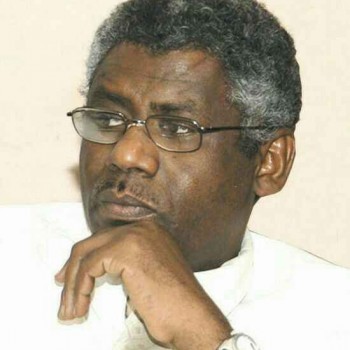
By Adil El-Baz
-
The political developments surrounding the Sudanese issue yesterday, following the meeting between Saudi Crown Prince Mohammed bin Salman and US President Donald Trump and the statements that followed, require careful consideration. It is necessary to examine what is required to turn those statements into reality so they do not remain suspended in thin air, as well as to consider potential scenarios and accurately read the current and upcoming challenges.
The most notable development is Trump personally entering the Sudanese crisis, which he had previously stated was not a priority but engaged in at the request of his visiting guest, Crown Prince Mohammed bin Salman. This means that President Trump has returned the Sudan file to American institutions, whether in the White House or the State Department, as also hinted by US Secretary of State Rubio in recent statements, after Paul and Rehta’s manipulations.
-
Before considering potential scenarios, we must look at what is required from President Trump for his intervention in Sudan to succeed and yield results that could stop the war.
The first requirement is for the Trump administration to move toward designating the Rapid Support Forces (RSF) as a terrorist organization, a measure already being pushed in Congress by three members of the House of Representatives. As confirmed by the Prime Minister’s adviser, Mohamed Mohamed Khair, this step is expected by late December.
If taken, this action would completely paralyze Abu Dhabi, potentially halting its military support for the militia, as at that point the UAE would be supporting a terrorist organization. It would be impossible for them to lie to the US, as they currently do, or deny supporting the criminals of the al-Daglo family, since the US knows all details and monitors everything happening in Sudan.
Fortunately, the US or President Trump would not need to exert much effort, as there is a UN Security Council resolution (1556) prohibiting arms supply to Darfur. All that is required is to enforce this resolution and monitor arms shipments, as Spain did recently by stopping ten weapons-laden ships heading to Libya and then Sudan. Additionally, there are three essential steps to end the conspiracy of supplying weapons and mercenaries to the militia.
-
The second requirement is to pressure neighboring countries that host training camps for mercenaries, stockpile arms, and supply the militia with everything it needs. These countries and locations are well-known, from Um Jaras base to Kufra base, to Bosasso in Somalia, in addition to storage centers in Ethiopia, South Sudan, and Central Africa. Once the RSF is designated a terrorist organization and the UN arms resolution enforced, these countries will face the international community—this time under Trump’s personal leadership—and will be branded as harboring and sponsoring an organization accused of genocide. At that moment, Abu Dhabi will not be able to protect them or provide international cover.
-
The third requirement is to implement the roadmap submitted by the Sudanese government to the UN, which contains five points closely aligned with the Jeddah Declaration. This roadmap calls for the militia to leave cities and regroup in designated areas until its fate is determined. These steps require no new decisions—only executive will: international decisions already exist, and evidence is documented.
-
These three requirements face major challenges. First, the UAE will not surrender easily and will fight to the end. However, this time its battle is on three fronts or more. The most important is the US front itself. Abu Dhabi will seek to mobilize the pro-Israel lobby in Washington and Congress to prevent the RSF from being designated a terrorist organization, using all known media consultancies and political lobbying networks.
Another scenario involves its agents inside and outside Sudan launching a campaign of lies to misrepresent the conflict as one between Islamists and civil forces, while raising the “Iran threat” to alarm the pro-Israel lobby and pressure Trump internally.
A third scenario involves Abu Dhabi pretending, under increasing international pressure, that it has stopped its unlimited support for the militia—which it originally denies—and then pushing other countries into the conflict. This would aim to expand the conflict from a militia rebellion into a regional confrontation. The recent frantic visits of Faustin Archange Touadéra, President of Central African Republic, and Mahamat Déby Itno, President of Chad, to the UAE, and the promises made to them, were steps toward this regionalization of the conflict.
Media reports last week about camps in Ethiopia near the Blue Nile are not far from this scenario, which aims to expand the war, a development from which Abu Dhabi would benefit, as igniting the entire Sahel region and the Horn of Africa shifts the pressure away from the UAE alone.
Abu Dhabi could also pursue a political alternative, seeking gains it could not achieve through the billions spent in the war, by imposing a solution that reinstates its allies to power, portraying itself as having made concessions and convinced the RSF to surrender and disarm. The payoff would be controlling the next government in Sudan through its agents.
Another scenario is using Abdel Aziz Al-Hilu after abandoning the globally discredited RSF. This “old-new” card allows maneuvering time by reframing the conflict along ethnic lines—from a “Zarqa vs. Arabs” narrative to “Northerners vs. Nubians”—knowing that the West is receptive to such lies, all to continue the war under another pretext to achieve Abu Dhabi’s impossible goals.
Abu Dhabi may not yet realize that the Sudanese conflict has a different logic than its other proxy wars: it is not about money or influence. Sudan resists defeat, and its long history has taught its people to rise whenever attempts are made to bring them down. Between the sands of Darfur and the Red Sea borders lies one truth: the fire set by a ruthless power may spread slightly, but it does not establish sovereignty, preserve glory, or achieve victory.
-
The UAE’s most difficult problem is that this time it is not fighting Sudan alone, but also the US and Saudi Arabia, which will play a major role in ending the war, and Egypt, which will take an active role in securing its western borders, effectively curbing the flow of weapons, mercenaries, and oil from the Libyan border—this time under global authority and US backing.
-
How will Abu Dhabi escape its Sudanese quagmire? It has not won through fire, iron, or the billions spent and lost, nor can it confront the high-pressure wave from Saudi Arabia, the US, and the region. This is a major dilemma unmatched in all its proxy wars in the region.
Yet its greatest dilemma has not yet arrived… after the war ends, and that will be the true major quagmire.
-
They say a wolf once entered a pen at night and ate until its belly was full. When it emerged, rain fell, the ground became muddy, and it could not move. A fox observed the trapped wolf. The wolf called for help: “Save me, I am stuck!” The fox replied: “No… your real dilemma will come when the sun rises, the mud dries, and people gather—that will be your true crisis.”
When the war ends, truths are revealed, international investigation committees form, and courts pursue the perpetrators of genocide and their supporters and agents—that will be Abu Dhabi’s moment of true crisis.