After the Trump–Bin Salman Meeting: U.S.–Saudi Pressure Redraws the Sudan War Landscape as Abu Dhabi Faces “the Great Predicament”
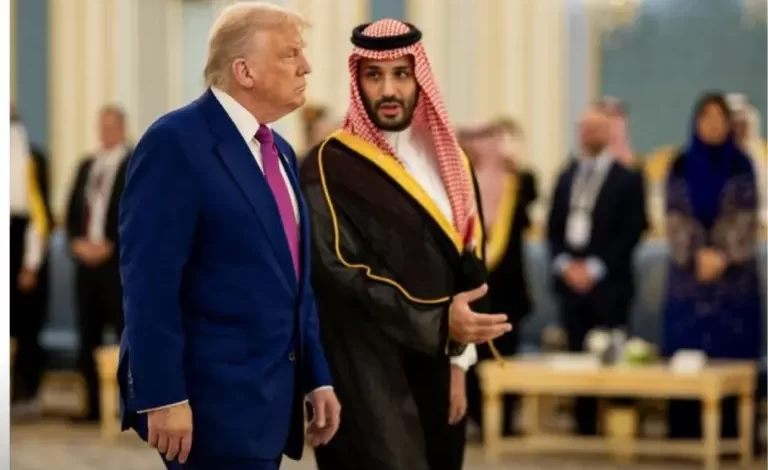
The meeting between U.S. President Donald Trump and Saudi Crown Prince Mohammed bin Salman in Washington — followed by firm statements stressing the need to end the war in Sudan — has reshaped the priorities of the Sudanese file on the international stage, in what observers describe as “the most significant political shift” since the fall of El-Fasher last October.
According to an analysis by political writer and commentator Adel Al-Baz, published yesterday, Trump’s personal involvement in the crisis marks a genuine turning point, bringing the Sudan file back to the center of U.S. institutions. This comes particularly after statements by U.S. Secretary of State Marco Rubio confirming that serious steps have begun in Congress to designate the Rapid Support Forces (RSF) as a “terrorist organization” by the end of December — a development noted by Sudanese Prime Minister’s adviser Mohammed Mohammed Khair.
Observers believe that such a designation, if finalized, would completely reshape the dynamics of the war. It would significantly restrict the UAE — accused of supplying the militia with weapons and mercenaries — from continuing its interference, especially in light of the earlier UN Security Council Resolution 1556 prohibiting arms transfers to Darfur, which would allow the Trump administration to activate sanctions and international monitoring immediately.
Al-Baz notes that Washington and Riyadh are moving toward three parallel steps:
Designating the RSF as a terrorist organization.
Imposing international monitoring on supply lines and training camps in Chad, Libya, Somalia, Ethiopia, and South Sudan.
Implementing Sudan’s UN roadmap, including the withdrawal of the militia from cities and regrouping them in designated locations.
In contrast, Al-Baz expects Abu Dhabi to wage a fierce battle to obstruct these initiatives by activating lobbying networks in Washington, shaping international public opinion with narratives of a supposed “Islamists vs. civilian forces” conflict, and raising “the Iran scare” to unsettle U.S. decision-making centers. According to his analysis, the UAE may also seek to expand the war regionally by dragging neighboring states into the conflict, or attempt to leap toward a political settlement that secures power for its allies after billions of dollars invested militarily failed to deliver results.
However, the most critical development, according to the same analysis, is that the UAE now faces a unified international front that includes the U.S., Saudi Arabia, and Egypt — at a regional moment that no longer tolerates a prolonged conflict affecting the security of the Red Sea, energy supplies, and trade routes.
Al-Baz concludes his analysis with a striking comparison: “Abu Dhabi’s predicament is not now, but when the war ends, international investigative committees are formed, and courts begin pursuing perpetrators of genocide and their supporters… that will be the day of the great predicament.”
The region now appears to be entering a new phase that may bring the first real breakthrough in the war that has continued since April 2023 — while at the same time placing alleged supporters of militias under mounting international scrutiny and pressure.