Sudan, the Prince, and the President… What Comes Next?
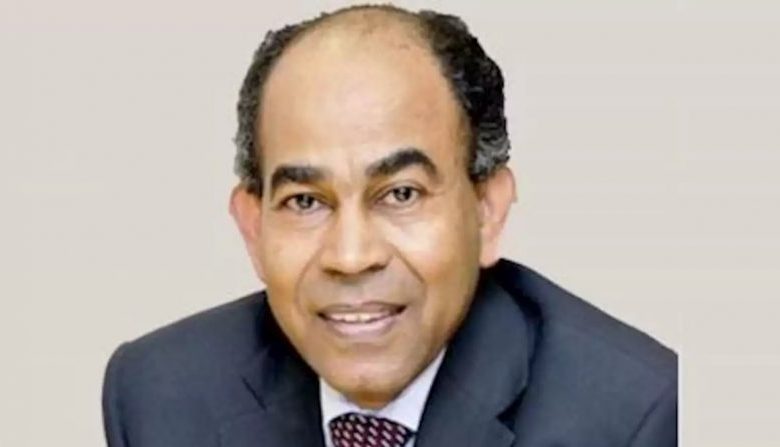
By Othman Mirghani
Despite a schedule packed with pressing global issues, Sudan had its share in the discussions between Saudi Crown Prince Mohammed bin Salman and U.S. President Donald Trump. The Crown Prince’s intervention appeared to have an immediate and direct impact, as evidenced by President Trump’s announcement that he began taking action just half an hour after their talks. The initiative was widely welcomed by various Sudanese parties, raising expectations about what this move could bring to the Sudanese war dossier in the days ahead.
Among the many images and comments circulating on Sudanese social media platforms, one scene stuck in my mind: a Sudanese man took to the streets in Saudi Arabia to express his joy following the Crown Prince’s intervention with President Trump and the resulting shift it sparked. Waving the Saudi flag, he began performing a Sudanese-style traditional dance in the middle of the road. A Saudi citizen stopped his car, stepped out, and joined the Sudanese man in his celebration.
This widely shared scene was a spontaneous expression of sentiments that need little explanation. Beyond that, it reflected how the Saudi move came at a moment when the Sudanese situation needed someone to lay it out directly before the U.S. president—at a time when many matters had become entangled, facts distorted, and interests intertwined, adding layers of complexity to the picture and prolonging the war and the suffering of Sudanese people, who are living through one of the harshest and most painful experiences in their modern history.
Sudanese people certainly long for an end to the war and the return of peace. No rational person would wish for its continuation. But the question remains: How can that point be reached? And what kind of peace can be achieved—one that endures and does not dissolve into a short-lived truce, only for Sudan to return to the cycle of war again, perhaps even more ferociously?
The picture remains complex, given the divergent positions, leading to the conclusion that no easy or imminent solution exists. The central obstacle will be the future of the Rapid Support Forces (RSF).
The Sudanese government, at all levels, welcomed President Trump’s statements following his meeting with Crown Prince Mohammed bin Salman. It reiterated its commitment to working earnestly toward peace, while also outlining its vision for a solution that would secure lasting stability for Sudan and the region.
This vision is based on rejecting any future role for the RSF in the security or political landscape. It emphasizes that the force must be dismantled and dissolved, while allowing for the integration of some of its members into the national army under professional military standards—provided they were not involved in the widespread violations committed against vast numbers of Sudanese civilians.
How the RSF issue is handled will undoubtedly shape Sudan’s future. Dismantling the force should serve as an entry point to addressing the alarming proliferation of armed groups and weapons. This means disarmament, demobilization, or integration of armed actors so that no weapon remains outside state control and the national armed forces. Any failure or hesitation in this matter would render any war-ending agreement a fragile, short-term truce, after which Sudan would plunge back into even more brutal conflicts and chaos—further eroding an already exhausted state, threatening its unity and sovereignty, and spilling instability into neighboring countries and the wider region.
The demand to dissolve the RSF is, in fact, one of the core demands raised by Sudanese protesters during the December Revolution when they chanted: “Soldiers back to the barracks… and the Janjaweed must disband.” After the war, this demand has only grown more urgent and indispensable.
Some may hasten to ask about the parallel demand for the army’s return to the barracks—an issue that remains central to the vision of post-war Sudan. Army leaders have repeatedly affirmed their commitment to transitioning to civilian rule and allowing the people to choose their leaders through elections. Such a transition would not only serve the interests of the country and its people but also benefit the army itself, which has been harmed greatly by the quagmire of politics and its endless disputes.
The important question now is how Sudan can overcome this turning point and find its path toward ending the war and beginning a long and difficult journey of recovery. Much will depend on how the thorny issues are handled—chief among them stopping the flow of weapons and mercenaries to the RSF, and charting a roadmap that helps the Sudanese state end the phenomenon of parallel armies and weapons outside state authority, paving the way for the long-awaited civilian rule.
Any path other than this will not lead to real or lasting peace for Sudan.
Source: Asharq Al-Awsat