The Killer and the Killed Are Both Militia Mercenaries.. RSF Fighter Executes a Groom in Chad’s Za’afaya Area, Sparking Clashes That Leave 57 Dead
Sudan Events – Agencies
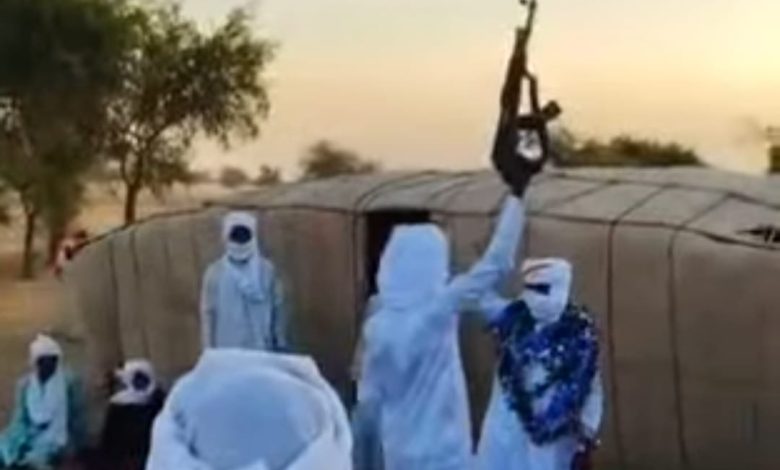
What seemed like a small, isolated incident occurred in a Chadian village called Za’afaya. It was an ordinary wedding celebration—the family rejoicing, music and singing filling the air, henna being applied—when suddenly a man wearing the official uniform of the Rapid Support Forces (RSF) entered and began firing celebratory shots into the air.
But the groom’s expression changed; something was clearly about to go wrong. One of the bullets went astray and struck him. The singing immediately turned to screams. Before anyone could react, the gunman walked directly toward the wounded groom and finished him off at point-blank range.
The wedding circle instantly became a battlefield. Gunfire erupted between the groom’s family and comrades of the shooter, leaving 57 people dead and a large number wounded—an incident widely reported by Chadian media, who focused on a pressing question:
Who was the man wearing RSF uniform, and how did he penetrate so deeply into Chadian territory, fully equipped with RSF attire and weaponry, without being detected by security forces?
Chadian outlets also asked whether the conflict had effectively spilled into Chad—normalized to the point where RSF fighters roam openly in official uniforms and vehicles, killing and dragging bodies in front of everyone. The killer entered with his weapon raised, fired celebratory shots, then deliberately shot the groom multiple times in front of his family. So who was the groom—and was the RSF-uniformed killer Sudanese or, like the groom, Chadian?
According to Salami Ahmed of Chad News:
“What we feared is now quietly creeping into Chadian territory. What the authorities claimed they could prevent is clearly happening now.”
Regarding the details, he said:
“The groom, Mohammed Ali Omar, a Chadian from the Awlad Rashid in rural Bahr Shari, fought in the Sudan war as part of Group 145 under Habib Harika. He was in Al-Ailfun with a Chadian commander named Sharif. He tried to leave Khartoum after the army entered the city, fleeing in a stolen pickup truck. But when he found the Jabal Awliya Dam bridge closed, he abandoned the vehicle and escaped on foot back to Chad.”
This is one version. Another says the groom was a field commander who requested leave to get married, but his superiors refused because fighting was ongoing. He allegedly defied orders and returned home to marry—so the RSF sent someone to execute him for insubordination.
This second version seems more plausible, as the groom’s relatives stated they knew exactly who sent the killer and “would not let it pass.” They also said the killer received direct orders to carry out the execution but was caught off guard by the massive retaliation.
Despite differing accounts, one fact is consistent: both the killer and the killed had participated in the Sudan war. The killer was part of RSF groups stationed in Al-Manshiya and the Arab Market areas of Khartoum, and had reportedly left shortly before the army took control of Nyala—after which he traveled in a combat vehicle deep into Chadian territory and executed Mohammed Ali.
Journalist Moussa Jerjar says the incident has inflamed public opinion against the Déby government:
“Not because a man killed a groom—deliberately or accidentally. That’s not the issue. The issue is that the killer was wearing the official RSF uniform and roaming the area freely, as though the militia were part of Chad’s security forces. No security personnel intervened to question him, disarm him, or understand what was happening.”
He added:
“What’s alarming is that RSF vehicles and uniforms have been moving in and out without restrictions—and now they are pushing westward without limits. Today or tomorrow, the war will spill into Chad. We’ve warned of this repeatedly. This time, the situation is different: the RSF is equipped with capabilities that do not exist in Chad, and Chad cannot handle such a force if the conflict shifts onto its soil. And I believe that moment is quietly approaching.”
He continued:
“The government said it closed the border when fighting moved into Kordofan and Darfur, but it’s clear the border closure is nothing more than a media statement. The RSF is entering, killing, and leaving without being questioned, and the government issues no clarifications about what is happening.”
He concluded:
“The public here is extremely tense. The state simply does not have the capacity for war. And from what I see, it is only a matter of time before Sudan’s fire reaches us.”