Northern Governor Cuts Off Militia Lifeline
Sudan Events – Agencies
The National Umma Party said in a statement yesterday that the decisions issued by the governor of Northern State—banning commercial movement between his state and areas under militia control in Darfur and Kordofan—were “unjust.” The party described the measures as an attempt to starve the people of western Sudan and warned against what it called the use of food as a weapon.
However, activists from Darfur argued that the Umma Party’s call to open trade routes between the Northern State and these areas would, in practice, create a supply line from army-controlled territory. They said food, fuel, and other goods are routinely smuggled under the pretext that they are destined for civilians, while in reality they go directly to the militia—often with traders closely linked to its networks. These activists describe the new decision as “too late,” noting that the militia has long benefited from supply routes connecting it to northern towns, receiving vegetables, pulses, sugar, and even fuel through smuggling networks that authorities tolerated for humanitarian reasons. But as fighting expanded into these areas, authorities tightened their grip.
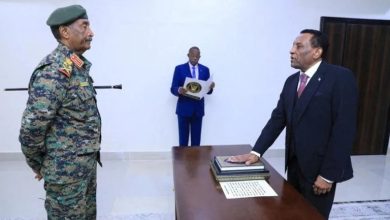
The Northern State governor announced a ban on trade with militia-controlled territories, effectively imposing a blockade that has cut off their access to food and fuel. The move provoked loud protests from the militia’s supporters, who called for reopening the routes under a humanitarian pretext—a position echoed by the Umma Party. Many Sudanese, however, questioned why the Umma Party remained silent when the people of El Fasher were besieged, surviving on animal feed, only to object now.
Elyas Mohamed Nour, a political analyst and director of the Nour Center for Strategic Studies, said the measure is not unprecedented. “This happened in Khartoum and in Al-Jazira. When the army reaches or engages in fighting in a particular area, it usually imposes such a cordon. This is not about starving civilians—it is about starving the militia,” he said. “The militia is now struggling to obtain fuel, for example. Civilians don’t cook fuel, and although it is important for transportation, do you think the quantities intercepted by the army were going to ordinary citizens?”
He added: “In areas under Rapid Support Forces control, they do not allow civilian vehicles—only their own and those of their collaborators. Our experience with them is clear: the fuel goes directly to them. They themselves control the sale of goods and trade in essential commodities. Even those they send to purchase goods are often coerced—either through intimidation, such as detaining relatives, or through incentives and partnerships that usually end with killing them and stealing their money if they are not from the militia’s allied tribes.”
Nour continued: “The Northern State governor’s decision is correct. I believe it is linked, in part, to ongoing operations in Kordofan and preparations for the Darfur campaign. The army has eyes assessing the situation and gathering information inside militia-held areas.” He accused the Umma Party of political opportunism: “If they were speaking from a genuine humanitarian standpoint, they wouldn’t have waited for the governor’s decision. Why didn’t they speak up about the starvation in El Fasher? Did they demand that the militia open routes for food and fuel to reach civilians whose voices went hoarse calling for help and ended up eating animal fodder? Are those people not human? Or does the Umma Party—and the parties aligned with the militia—consider only its supporters in these cities to be human, and now the Northern governor has deprived them of food?”
Mohamed Saeed Sondos, an activist involved in voluntary work and among those who helped establish IDP camps in Al-Dabba, said: “For a long time, we saw people engaged in trade between northern towns and areas in Darfur, including major cities like Nyala and even Ed Daein and others. They never admit where their goods are actually headed—often they use the names of small villages as cover. But the volume is large, and most of it goes through well-known smuggling routes in the state.”
He added: “Fuel is among the most problematic items because the quantities being smuggled are significant. With the army determined to block supply routes from Libya and Chad, it makes sense to tighten control over smuggling routes inside Sudan as well. And it is simply untrue that residents of cities like El Fasher, Bara, or even En Nahud are suffering from this measure—most of the population had already fled, some before the militia arrived and some afterward. Many are here in large numbers, and others have relocated to Khartoum or White Nile State.”
Sondos concluded: “Accusing the decision of starving civilians is a political statement with no real humanitarian basis.”