Return of Ministries to Khartoum… Is the City Ready to Receive Them?
Report – Sudan Events
The Transitional Council of Ministers has issued Circular No. (18) for the year 2025 directing several ministries to begin procedures for relocating to Khartoum. These ministries include: Justice; Agriculture and Irrigation; Minerals; Livestock and Fisheries; Infrastructure and Transport; Digital Transformation and Telecommunications; Education; Higher Education and Scientific Research; Human Resources and Social Welfare; Religious Affairs and Endowments; and Culture, Media, Antiquities, and Tourism.
The directive, issued in line with instructions from the Prime Minister, means that key ministries such as Finance, Foreign Affairs, Trade, and Industry will remain in Port Sudan. Notably, the circular makes no mention of relocating the Cabinet itself—an omission that appears puzzling. This raises the question: if the government intends to relocate, why not move all its institutions to Khartoum according to a clear timeline, instead of repeatedly hinting at relocation and issuing decisions that ultimately go unimplemented?
The idea of transferring ministries back to Khartoum is not new. The Prime Minister had previously announced a relocation plan, yet nothing has changed. Another lingering question is tied to the broader issue of relocation: Is Khartoum itself ready—at the level of basic services such as water and electricity? Are there residents and functioning neighborhoods, or is population concentration limited to specific pockets?
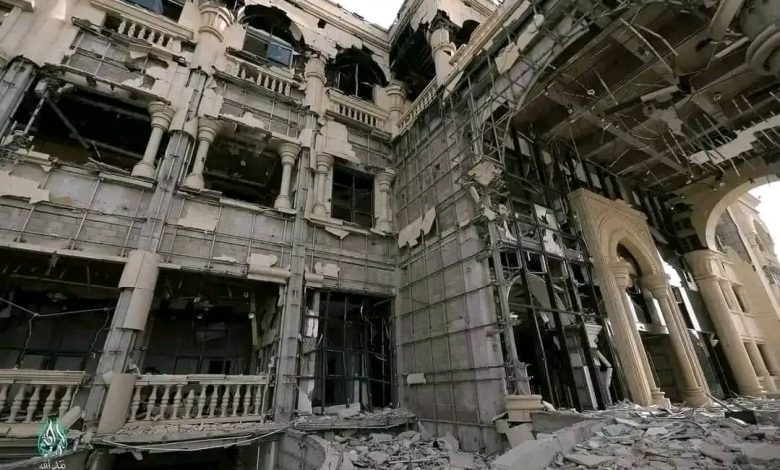
Can these ministries return to their destroyed headquarters, or will they move into alternative facilities—and where would those be in a largely devastated Khartoum? Or will they crowd into the Karari district, which currently hosts most of the remaining administrative life in the capital, including various small government units, the governor’s office, small factories, and other facilities? Should the ministries settle in Karari, or head to their former premises in Khartoum city, which suffers from severe service shortages? What about Bahri, where the situation is no better? Or Omdurman’s old districts, which are also struggling?
How will the government overcome the challenge of lacking functional buildings, given that the rebellion destroyed most government ministries and facilities?
According to political affairs researcher and director of the Noor Center for Strategic Studies, Yassa Muhammad Noor, the government’s return to Khartoum would encourage citizens to return as well, as it would send an important signal regarding security. He asserts: “Certainly, the government’s return will speed up service restoration, road repairs, and resurfacing. I view it as essential for reviving Khartoum and encouraging its residents to come back. Ministers will resume work from their official headquarters in the capital. By ‘official headquarters’ I do not mean the old buildings—most ministries were completely destroyed, and some are beyond repair and require full reconstruction.”
However, retired Major General Khalid Muhammad Salah disagrees with Yassa’s view. He argues that the government is still confined by its old mindset and has not moved beyond traditional frameworks.
He asks: “Why not distribute ministries across the states? Why confine them—and ourselves—to Khartoum? The Ministry of Agriculture should be based in an agricultural state; the Ministry of Industry in an industrial hub where factories can be developed and supported; the Ministry of Minerals in the state that produces minerals, and so on. Why insist on centralizing everything in Khartoum? Why bring them back at all? Why not rethink their distribution so they can play genuine developmental and field-oriented roles instead of turning into mere revenue-collection offices?”
He adds: “I can almost guarantee that these ministries will not be able to operate from Khartoum or Bahri. They will end up in Karari. Look at the number of ministries, employees, vehicles, and citizens seeking services—alongside the current concentration of state institutions in Karari. This will severely overwhelm the only district in Khartoum that is still functioning.”
He continues: “Where will ministry staff even live? Karari’s rents have skyrocketed to many times what they were just months ago. And the other areas of Khartoum and Bahri lack electricity, basic services, and face security challenges.”
He concludes: “I hope the government has studied its decision carefully and understands the real conditions in Khartoum before sending its ministries there. More importantly, the government should consider redistributing ministries across Sudan’s states and production zones. It is an idea we have advocated for years. Let us at least try it—and if it fails, we can always return to the old model of concentrating everything in Khartoum.”