An investigation by the French newspaper Le Monde has revealed new details about one of the deadliest attacks since the outbreak of the war in Sudan, when the RSF carried out large-scale massacres and revenge killings after storming the city of El-Fasher in late October.
Through harrowing testimonies collected by Le Monde’s special correspondent in Al-Dabbah, Elliot Brachet, survivors described a landscape of atrocities including point-blank killings, rape, kidnapping, torture, summary executions, and the destruction of evidence through mass graves and the burning of bodies.
According to the report, residents of North Darfur’s capital had endured more than 550 days of siege by the RSF. But October 26 was the deadliest day of all: communications were cut at dawn, and RSF fighters launched a brutal assault on the city.
Thousands of civilians tried to flee on foot as streets were blocked by corpses and destroyed buildings. Asmaa Ibrahim, who lost her husband at the hospital where he was being treated, said attackers broke into homes and killed men and the wounded indiscriminately. The road toward Mellit, she said, was “covered with bodies.”
Survivors said RSF fighters treated any man under 40 as a combatant to be executed, and any civilian as a suspected supporter of the Sudanese Armed Forces, to be humiliated or killed. Between 170,000 and 260,000 civilians were left trapped in what survivors called an “open-air death camp.”
Many families paid large sums to smugglers—some linked to the RSF—to escape to safer areas. Tens of thousands fled in different directions, with most still missing. Around 400 families, mostly women and children, managed to reach Al-Dabbah, with almost no men among them.
Women faced widespread sexual violence. Aid organizations recorded dozens of rape cases, including that of a 17-year-old girl assaulted after her father was killed before her eyes.
Testimonies described horrifying scenes:
— Aisha Musa’s brother was hung on a tree and executed, and her daughter was raped.
— Aisha Abdullah’s husband was killed by a shell.
— Fatima Ibrahim could not afford to pay ransom for her detained husband and lost her elderly father.
— Khadija Hussein has no information about her five children who joined the popular resistance.
Dr. Ikhlas Abdullah described a total collapse of the health system, treating patients on the floor with household cleaners instead of antiseptics, as hospitals were repeatedly shelled. Hundreds of wounded and medical staff were killed, and she has lost contact with most colleagues since the city fell.
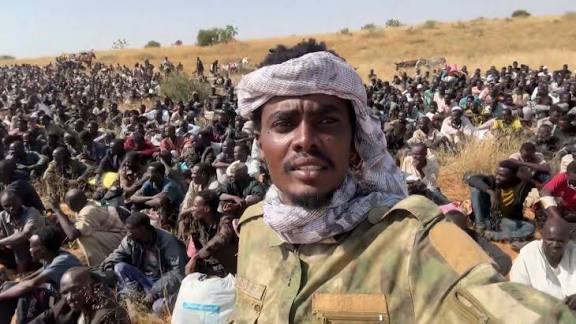
On the western road out of El-Fasher, RSF fighters detained thousands of men. One survivor, a mechanic, recounted 14 days of torture inside a sealed metal container, during which he saw two men executed in front of him before his family managed to pay ransom for his release.
Survivors expressed a deep sense of abandonment. “Everything happening now is a staged play—they want to pretend nothing happened. El-Fasher is forgotten, and the world has shut its eyes,” said Asmaa. The city has collapsed under prolonged siege and continuing atrocities with no accountability in sight.