Government’s Return to Khartoum: A Phase of Resetting Priorities
Report – Sudan Events
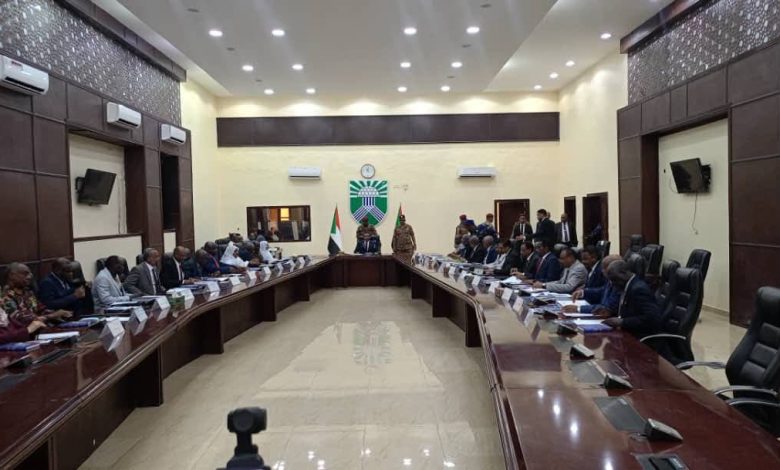
Serious steps are under way in Khartoum to receive the government relocating from Port Sudan to the capital, or at least the ministries specified in the recent decision issued by the Prime Minister. Several ministries have already begun dispatching their vehicle convoys and a number of their employees to Khartoum, while the movement of government vehicles has become increasingly visible across the city. These ministries had been headquartered and operating in Khartoum prior to the outbreak of the war.
Alongside efforts exerted in Khartoum to reopen roads, remove obstacles and clear debris, signs of life have gradually begun to return to the capital. Intermittent bus services have resumed, transporting passengers from Omdurman to southern Khartoum and to Al-Jazira State. This comes at a time when the State Labour Bureau—let alone the federal bureau—requires substantial reorganization, in light of figures presented by the Director of the Civil Service Affairs Bureau, Omar Khalafallah.
Khalafallah stated that the number of state employees stands at 70,800, of whom 10,000 have applied for unpaid leave, while 5,000 have retired. In addition, there have been 989 recorded deaths and 6,800 cases where employment status has not been regularized. This means that losses within the state’s government apparatus amount to nearly 20,000 workers—some retired, some deceased, and others whose status remains unresolved, with uncertainty over whether they will return to service.
Khartoum State Governor Ahmed Othman Hamza has directed the need to strengthen coordination between the Civil Service Bureau and internal auditors within government units to conduct comprehensive job reviews, ensure employees perform their duties professionally, and curb irregularities related to specialization and assignments.
In a move reflecting the government’s seriousness in implementing its decision, the General Commercial Registrar has suspended the acceptance of any new company registration transactions or applications from Port Sudan, in preparation for the official resumption of operations from Khartoum on December 20. The decision comes in implementation of Cabinet directives concerning the relocation of ministries and government bodies back to Khartoum, as part of a broader plan to reactivate state institutions from the national capital.
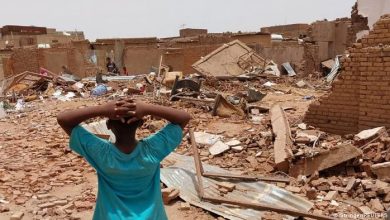
Khartoum currently faces major challenges related to security, basic services, the spread of foreign nationals, the proliferation of weapons, and sporadic lawlessness. In its most recent meeting, the Khartoum State Security Affairs Coordination Committee issued decisions aimed at restoring the authority of the state, eliminating negative phenomena, and enhancing stability to enable citizens to return and resettle. The committee also formed a task force to follow up on the restoration of electricity, in coordination with relevant authorities, oversee the distribution of new transformers according to population density, and establish hotlines for vital facilities.
The committee noted the continued arrival of new transformers and stressed the importance of regulating the presence of foreign nationals in violation of residency laws and deporting them. Ultimately, the success of the return to Khartoum remains largely contingent on the restoration of services—foremost electricity and water—alongside the provision of security, a critical factor for citizens’ return and stability.
Hashim Sayed Mohammed Al-Hussein, one of those who have returned to the Al-Rumaila area in Khartoum, says the return was difficult due to numerous obstacles surrounding residents. “Had we not returned, water services would not have been restored,” he said. “They made efforts with us, but without our persistence—and the support of our children abroad—we would not have succeeded in bringing the service back or cleaning the area of the waste and filth that had completely taken over.”
He added, “We have no electricity, of course, and even water supply weakens at times. We continue to suffer from mosquitoes and the spread of dengue fever and malaria.” He continued, “Imagine that here, in the heart of Khartoum, we have forgotten what electricity means. Were it not for a few places whose owners resorted to solar power, you wouldn’t find a phone to make a call, and we would be forced to travel long distances just to charge our phones.” He noted that “conditions have improved over time, but very slowly.”
Meanwhile, Hashim Badouba, a government employee who returned to assess conditions ahead of relocation, said that the presence of the federal government in Khartoum will help the state government resolve many problems and reorganize the overall situation in the capital. “The damage is extensive, but we will rise again—nothing will stop reconstruction here,” he said.
He acknowledged that the government will initially face transportation challenges and may not be able to provide all services in full, but added that, drawing on the experience gained in Port Sudan—where government institutions relocated after the war under extremely complex conditions—it will be possible to eventually deliver full government services. “The return of the government to the capital is, in essence, a return of life,” he concluded. “It will significantly accelerate the reconstruction of Khartoum and the return of its residents.”