Burma Nasser… Standing by the Perpetrators of Treason
Report – Sudan Events
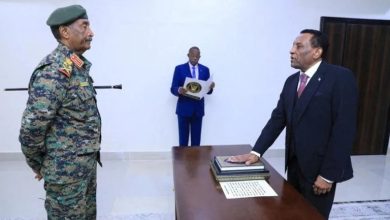
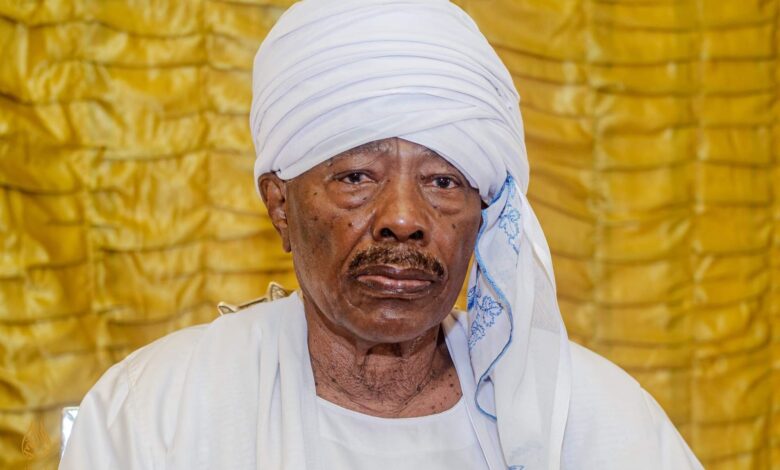
The National Umma Party has resurfaced once again amid a new internal dispute and a fresh statement issued by the party’s Presidential Council, in which it decided to dismiss its current chairman, Fadlallah Burma Nasser, and appoint Mohamed Abdullah Al-Douma as his replacement.
The statement presented what amounted to a detailed narrative of what has transpired and continues to unfold within the party. It explained that the late leader of the National Umma Party, Sadiq Al-Mahdi, pursuant to Article 14 of the party’s constitution of 1945 as amended in 2009, established the Presidential Institution by appointing deputies, assistants, and advisers in a manner that ensured regional, generational, and gender balance. This institution continued to exercise its duties by participating with the party leader in managing party affairs and making presidential decisions in harmony and coherence, a model established by the elected leader and followed by those entrusted with leadership during his absence until his permanent departure.
The statement added that, due to the absence of an explicit constitutional provision regulating succession, the Presidential Institution convened and, following the late leader’s approach during his temporary absences—namely assigning his deputies according to the order of their appointment—unanimously tasked Major General Fadlallah Burma Nasser with assuming the party’s leadership.
It continued that this decision preempted hasty moves by some individuals to select a successor to the late leader according to their personal inclinations, a project rejected by the Political Bureau, which continued to receive briefings from Dr. Ibrahim Al-Amin.
According to the statement, Burma Nasser initially demonstrated commitment to his mandate and worked through the Presidential Institution for a short period. However, under the influence and misinformation of others inside and outside party structures, he later denied the existence of the Presidential Institution and exceeded his mandate, claiming that he was elected by the General Conference and that his powers were not restricted by the Presidential Institution—contrary to reality. As a result of this stance, which violated the party’s constitution and the decision appointing him, the Presidential Institution convened on December 16, 2025, withdrew his mandate, and assigned the leadership of the party to Mohamed Abdullah Al-Douma.
The statement further noted that the late Sadiq Al-Mahdi had foreseen the existence of crises that could lead to war and therefore established an internal mechanism within the party for monitoring and early intervention to contain the situation, headed by Burma Nasser. However, Nasser dismantled this mechanism and, along with others, engaged in activities not approved by party institutions with advocates of discord within the Forces of Freedom and Change. This led to widening rifts between the Sudanese Armed Forces and the Rapid Support Forces.
The matter went further, as he obstructed all steps taken by the party and political forces that aligned behind it within the committee tasked with preventing the outbreak of war—a committee he himself chaired. He continued to procrastinate and maneuver until the situation exploded. When he realized the gravity of his position, he left the country without informing most party leaders, before later declaring his allegiance to the aggressors. He eventually went so far as to publicly announce that the National Umma Party, with its mass base, stood alongside the perpetrators of “great treason,” conspiring and seeking support from foreign powers.
These statements resulted in the targeting of party leaders and members, with some being placed on wanted lists despite having no sympathy whatsoever with the aggressors. Party headquarters in the capital and states were also targeted in attempts to seize them, exposing party supporters to confrontations that could have caused significant harm had it not been for the wisdom of aware leadership.
The report raises questions: Is this another maneuver in line with the party’s so-called golden rule of entering the “box of power” through multiple turns? Is it a genuine struggle over party leadership? Or an attempt to protect the party’s role from confiscation and remove its leaders from wanted lists? And given the clarity of the narrative presented by the group that ousted Burma Nasser, where do Maryam Al-Mahdi, Al-Wathiq Al-Bareer, and others stand within the Presidential Office?
Sadiq Salah Al-Din, an activist in the National Umma Party, said that the stance of Al-Douma’s group would not change anything, as influence within the party is divided between Burma Nasser and the group led by Al-Wathiq Al-Bareer. “These moves will not change anything,” he added. He further stated that Burma Nasser’s position is not far from that of most party leaders regarding the war, noting that both sides unfortunately support the militia. Any differences, he said, are merely political assessments and differing readings of the future of the conflict and its implications for the party.
Dr. Osama Hanfi, Professor of Political Science at Sudan University, believes that groups of young party members have views on the current policies of the National Umma Party, but lack the mechanisms to change their party’s reality, as they have not been accustomed to consultation or transparency, but rather to token inclusion. As a result, they have not developed tools to convey their voices or effect change.
Regarding the statement issued by the Presidential Council group led by Al-Douma, he said: “They are paying the price for the choices of those who left the country. Unfortunately, they see the National Umma Party—its role and leadership—now in a deep crisis that cannot be resolved through statements or ambiguous positions. The continuation of the current leadership will only deepen the party’s crisis.”