Marco Rubio’s Remarks: Dancing on Tiptoes
Report – Sudan Events
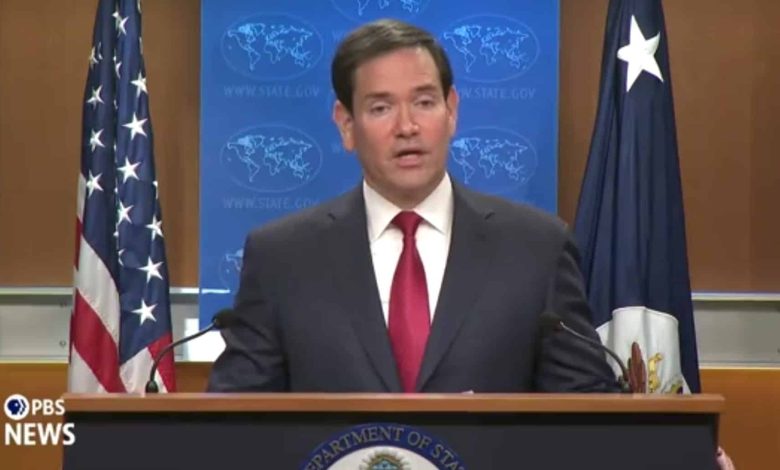
Once again, U.S. Secretary of State Marco Rubio has reiterated his country’s interest in ending the war in Sudan and working with partners he identified as Saudi Arabia and Egypt. This time, however, he pointed to a specific timeframe, saying that Washington is seeking to impose a truce and halt the fighting before the end of the year—just days before the start of the new year 2026—placing fresh pressure on the shoulders of all parties involved in the conflict.
News agencies quoted Rubio on Friday as saying that the United States’ immediate goal is to stop hostilities before the new year, allowing humanitarian organizations to deliver aid. Speaking at a press conference, according to Reuters, Rubio noted that there are countries providing support, weapons, and equipment to the parties to the conflict. He added that President Donald Trump has communicated with the United Arab Emirates, Saudi Arabia, and Egypt regarding Sudan.
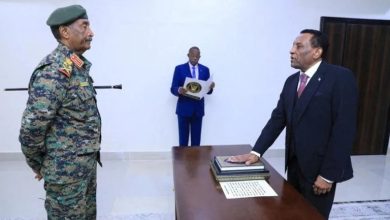
In the same context, the Chairman of Sudan’s Sovereignty Council and Commander-in-Chief of the Armed Forces, General Abdel Fattah al-Burhan, received a message from the Chairperson of the African Union Commission, Mahmoud Ali Youssouf. The message was delivered by the AU’s envoy to Sudan, Mohamed Belaïche, who said that the Commission and the African Peace and Security Council are committed to supporting Sudan’s unity. He stressed that “there is no room for the existence of any parallel institution on Sudanese territory,” underscoring the importance of a peaceful solution through an inclusive dialogue via the Quintet Mechanism, comprising the African Union, IGAD, the United Nations, the Arab League, and the European Union.
Regional and international backchannel efforts are currently intensifying on the Sudanese file in an attempt to halt the fierce fighting in Kordofan and the widespread violations against civilians in Darfur. Multiple sources reported yesterday heavy artillery shelling by al-Hilu’s forces and allied militias against civilians in the city of Dilling, killing 16 people and injuring others, further compounding the hardship of life in the city. This raises serious questions about the credibility of the pressure exerted by international and regional actors on the militia, which continues its abuses, receives weapons from the UAE, and aggressively pursues the displacement of populations and the creation of demographic change—now clearly evident through persistent forced displacement, systematic killings, and the arrival of daily convoys of settlers from Chad, Niger, and the Central African Republic, along with thousands of southern mercenaries flowing into the area.
Al-Alami Kinda, an activist from the Nuba Mountains, says what is happening amounts to a concerted effort to engineer a comprehensive demographic transformation. “Granting the militia time through a ceasefire will expand this settlement process and make it irreversible,” he said. “They currently fear drone strikes and cannot remain in open areas without cover. But if military operations are halted, the situation will change: more convoys will arrive safely and settle in cities whose residents have been displaced. After a ceasefire or settlement is signed, no one will be able to remove them. This is a reality we see expanding by the day.”
Security expert Salah al-Din Khalid argued that a ceasefire at this stage would be a lifeline for the militia. “While it moves around and its artillery targets some cities, it will not withstand the army’s military strategy and will be forced to abandon this spread, which has left it fragmented into isolated pockets. This situation cannot continue,” he said. “I believe a ceasefire would be a gift to the Janjaweed.” He added, “I do not understand why the world insists that humanitarian corridors are the primary obstacle when most displaced people are already in safe areas. If there were a genuine desire to provide humanitarian support, it could be done at lower cost. Why the insistence on El Fasher, for example, when everyone knows that most of its residents have left and those remaining are largely Janjaweed? And why do these international and regional efforts not provide security for Sudanese refugees in Chad, whose camps are subjected daily to attacks by Chadian gunmen who kill and loot them—attacks that continue unabated?” He concluded, “They care about geography, not people.”
Abdel Nabi Moussa, a researcher in the history of conflicts in Sudan, said that the notion of resolving the crisis and stopping the fighting before the new year illustrates how the United States, for example, approaches the Sudan file with a sense of superiority and a power-based mindset, rather than seeking root solutions that would prevent a return to war. “This war has grown increasingly complex, striking deep into ethnic and regional fault lines and threatening the country’s identity and existence,” he said. “It is naturally impossible to find solutions to such complexities within days. I believe these are merely statements aimed at reviving the process and exerting pressure on the parties.”