Crime: When Criminals Take Shelter Behind “Official Uniforms”
Report – Sudan Events
As the war enters its third year, the pattern of crime in Khartoum and beyond has undergone a profound shift. Crime was widespread even in the months preceding the war, but it followed familiar patterns. The so-called “night visitors” were active—true, their methods had evolved, but they largely adhered to known tactics. There were also the “Nine Long,” motorcycle riders who roamed the streets snatching valuables from passersby at high speed before disappearing.
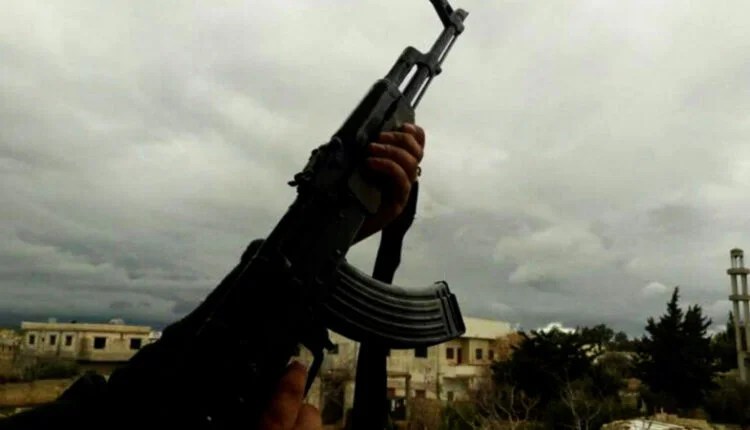
Today, crime has become far more violent, unrestrained by considerations of place or time. Armed individuals—often dressed in what appears to be official security force uniforms—ride motorcycles with weapons slung over their backs. They stop civilians at random, rob them of their phones and money, and open fire if there is the slightest resistance. Even minimal protest, or a mere expression of displeasure, can result in instant death. The phenomenon has escalated further to include climbing into homes, forcing families to hand over cash, and, in extreme cases, raping a young woman in front of her family.
Daily, there are reports of killings and injuries caused by what can only be described as armed gangs that have entrenched themselves in cities, threatening people’s lives. Numerous accounts circulate of individuals being shot dead and of belongings seized at gunpoint. Most crimes are now linked to firearms and lethal violence, with the majority of victims being unarmed civilians who are killed, injured to varying degrees, or who simply disappear—without anyone knowing their fate.
The perpetrators exploit the uniforms they wear to terrorize citizens and achieve their aims without resistance. Those who resist often receive a bullet to the head, as happened to a young man in the Jereif area, or are shot and hospitalized, as in the case of a youth from Al-Thawra’s Fifth District. Authorities in Khartoum speak of measures that citizens rarely see reflected on the ground. Earlier, officials announced a ban on indiscriminate gunfire, yet it continues openly at celebrations and social events. Foreign nationals move about freely without being questioned, while armed men on motorcycles remain active, their crimes ongoing.
Recently, in a notable development, police arrested an Egyptian national driving a truck carrying large sums of counterfeit money. He claimed he intended to buy cattle with the forged cash. Police in East Nile also dismantled a criminal network specializing in counterfeiting currency and official documents. These crimes strike citizens harshly and shake the country’s economy. Crime has grown more violent, more dependent on firearms, and more professional and overt—complete with large-scale factories and printers used to forge currency, documents, official correspondence, arrest warrants, and even court communications.
Military and security expert Yasser Saad Al-Din says the exploitation of official uniforms by criminals has caused widespread confusion. Amid the chaos of military operations in Khartoum, uniforms, insignia, and even weapons fell into the hands of thieves, who took advantage of the disorder to wreak havoc under the guise of military attire. However, with improved security conditions following the liberation of Khartoum, police deployments and the army’s military police have helped curb these phenomena to a significant extent—though this does not mean they have disappeared entirely.
Some criminal groups have moved from the current seat of government in Karari locality to other areas in old Omdurman, Bahri, East Nile, and Khartoum, while others remain active in Karari. Nevertheless, increased police presence and the visibility of security agencies on the streets have reduced—and will continue to reduce—their impact on citizens. Al-Din adds that crime has become dominated by firearms, first because weapons proliferated due to the war, and second because the chaos it produced created opportunities for opportunists to profit and impose zones of influence—an effort authorities are now countering by removing informal settlements and tracking criminals who escaped from prisons, among other measures.
He agrees that criminals disguising themselves in official security uniforms has greatly complicated the situation. Citizens typically assume that anyone in such attire is a legitimate officer, prompting them to engage with trust—only to face death, robbery, theft, and, in some cases, rape, as in the incident where a girl was assaulted after armed men stormed her family’s home.
Social researcher Samah Youssef argues that what is happening is a logical outcome of the raging war—a conflict unlike any the country has experienced in its modern history. It has witnessed killing, mutilation, rape, looting, and all forms of crime, while introducing advanced weaponry that has spread widely across the country. Such conditions inevitably give rise to brutal criminality. She points to shocking cases, including a father killed by his son with the mother’s incitement, a child murdered by his aunt’s husband with the uncle’s knowledge and buried inside the uncle’s home, and the killing of a female doctor by her ex-husband in front of people at a hospital.
“These are heinous crimes,” Youssef says, noting that some involved firearms while others involved strangulation. She adds that the social disintegration caused by the war is evident on many levels, and crime has become one of the clearest indicators of the damage inflicted on families and society as a whole.