Neither a Passing Moment nor a Slogan: Egypt’s Statement Is a Structure Anchored by Context
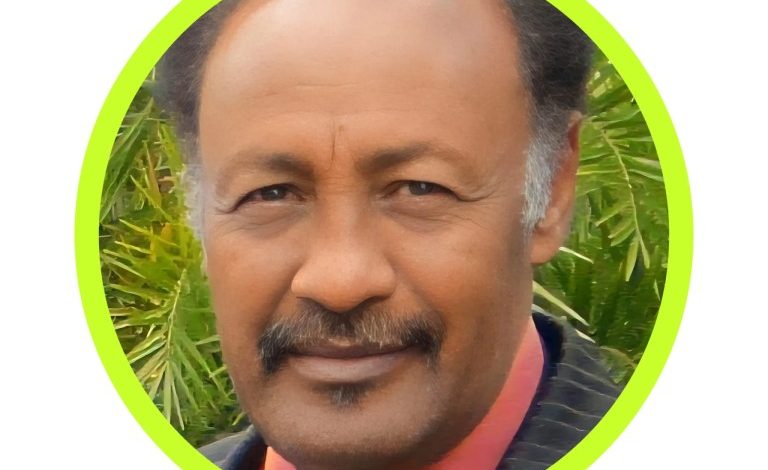
Saif Al-Din Al-Bashir
• As President Abdel Fattah El-Sisi inaugurated it, the Grand Egyptian Museum sent a clear message to the world: Egypt is not a newborn state, nor a transient phenomenon. It is a state—one whose pyramids have inspired civilizations with the value of building upon foundations immune to upheaval.
• The same applies to the Egyptian presidency’s statement following the visit of Sudanese President Abdel Fattah Al-Burhan and his talks with President El-Sisi.
• Perhaps channels such as Al Arabiya, Al Jazeera, and Al Hadath—and many who covered the “event”—were taken by surprise, their eyes wide with astonishment, not only because their archives lack a proper understanding of Sudan’s place in the Egyptian strategic mind, but also due to their weak grasp of the historical contexts of Egypt’s experiences with Sudan.
• Even some who were convinced that this position represented Egypt’s natural stance were stunned by the firmness and candor of the statement—an unequivocal clarity that bows to no restraint—drawing red lines and warning, in an unmistakable tone: “This is the limit—no joking beyond it.”
• It is therefore natural that the diaspora and its leaderships, along with live broadcast studios, should tremble; that the resilience of the militia’s political wing should be complicated; that their illegitimate offspring, “Ta’sis,” should be shaken; and that a message be sent to all actors in the crisis—regional forces and mediators alike—that Egypt says: “Yes, we support the Quartet and President Trump’s role, but the ceiling remains Egypt’s red lines.”
• The context here is the solidity of the pyramid: Egypt is a state whose positions are never infiltrated by fragility, slogans, or arbitrariness.
• Egypt has never hosted camps for Sudanese rebels—not since the era of John Garang, whose movement established camps across all neighboring states from eastern to western Sudan, except Egypt. Garang himself traveled and opened offices in neighboring and Arab countries—except Egypt.
• Throughout our modern history, not a single rifle shot has been fired against the Sudanese state from Egyptian soil, let alone the erection of platforms welcoming hostility toward the state and its institutions. Is this context not sufficient to conclude that Egypt’s statement is far from being a momentary outburst?
• Egypt knows the Sudanese internal landscape better than anyone—its positions, dynamics, what it accepts and rejects, and what consolidates its security and stability, which are inseparable from Egypt’s own security.
• These, today, are Egypt’s red lines—disturbing the sleep of militias and their supporters alike. Before them lies nothing but the lamentations of aging rhetoricians, echoed through the outlets of Al Jazeera, Al Arabiya, and Al Hadath. Perhaps now these platforms will reconsider their stances, their language, and their reprehensible targeting of Sudan’s national institutions, mindful that “red lines” are being monitored by watchful eyes.
• Egypt and Sudan share values, virtues, language, and a way of life.
• When we speak of Egypt, we recall Ahmed Shawqi—who sang for all Arabs and all Arab lands: Zahle, Damascus, Omar Al-Mukhtar, the Nile. And when Shawqi sang of the Nile, he surpassed all who came before and after him, including Sudanese poets.
• Egypt is a citadel of knowledge and scholarship. Al-Azhar alone stands as testimony—so revered by Sudanese that they named their sons after it, as exemplified by the enduring national leader Ismail Al-Azhari.
• Egypt’s majestic past is embodied in the Grand Museum and all it holds. Egypt’s present is Ahmed Shawqi, Abbas Al-Aqqad, Mahmoud Yassin, Taha Hussein, Umm Kulthum, Ali Al-Jarim, Adel Imam, Zahi Hawass, Hafez Ibrahim, Cairo University (branch and main), Zagazig University, Ain Shams University, the Sixth of October, the Tenth of Ramadan—and crowning all of this stands Egypt’s president, Abdel Fattah El-Sisi.
• This is Egypt’s audacity: calling things by their names and imposing its red lines with authority and resolve. Egypt does what it says.
• What is required now:
1. Consolidating a sustainable strategic partnership by granting Egypt all preferential investment advantages.
2. Presenting investment opportunities in mining, industry, agriculture, livestock, and infrastructure to Egyptian investors first and foremost.
3. Establishing a modern rail link between the two countries, along with all necessary infrastructure to facilitate transportation.
4. Creating major joint state-owned companies in mining, agriculture, and processing industries.
• In conclusion, we continue to call for practical bonds that strengthen all shared ties and mobilize all available assets toward a relationship that defies time and propels both countries forward.
• And we repeat the words of the Sudanese president:
Thank you, Egypt. Thank you, President Abdel Fattah Al-Burhan. Thank you to the people of Egypt—from Aswan to Alexandria, and from the Eastern Province to the oases.