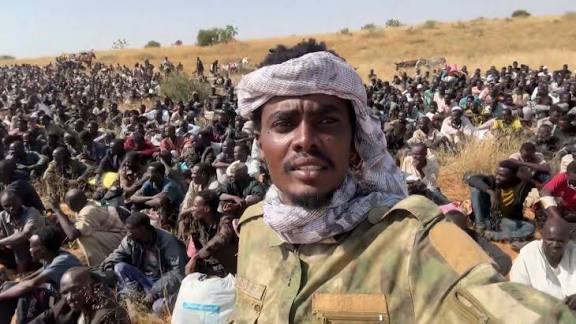
The Rapid Support Forces have detained hundreds of civilians traveling from Darfur in the Um Badr area of North Kordofan, preventing families and patients from reaching Al-Dabba in Northern State, which is under government control.
Salwa Mohammed Noor, one of the hundreds of families detained in Um Badr, recounted her ordeal to Darfur24. She described spending over two weeks with hundreds of other families detained on the Um Badr–Al-Dabba route.
Salwa said she was traveling with her mother, who suffers from complications related to diabetes, after losing hope of receiving treatment in Darfur cities. She reported being forcibly detained near Um Badr, unable to continue their journey or return to Al-Duwayn.
She added that the RSF demanded a payment of one million Sudanese pounds for their release, and they were detained a second time by another group, with their phones confiscated.
Most detainees were patients or students seeking education, with daily fatalities reported among traveling patients due to prolonged detention and depleted resources.
A driver from Al-Duwayn told Darfur24 that three vehicles carrying 30 passengers had to return to Adila after traveling hundreds of kilometers, while approximately 55 vehicles remained detained. Other travelers arriving in East Darfur from Al-Dabba confirmed that dozens of vehicles were detained in Al-Naeem, Um Badr, and Al-Munjam, with passengers enduring weeks of illness and hunger while awaiting RSF decisions on medical exceptions.
Citizen Nour Eldin Ahmed told Darfur24 that he lost contact with his wife, daughter, daughter-in-law, and son’s wife, who had been traveling to Al-Dabba two weeks ago for education and official documentation. The last contact was in Al-Naeem, where they were detained at a military checkpoint, released, and then detained again by another group. Their current whereabouts remain unknown.
An RSF commander in West Kordofan confirmed that checkpoints on routes to Al-Dabba were instructed to prevent young travelers from reaching government-controlled areas, enforcing strict travel restrictions, particularly on youth.
Civilians traveling from western Sudan under RSF control face severe humanitarian challenges, including forced detention, extortion, and denial of access to essential services such as healthcare, education, and official documentation, available only in government-held cities.