Kamel Idris in New York… Open Confrontations
Report – Sudan Events
A brief statement by the Minister of Cabinet Affairs, Dr. Limiya Abulghafar, indicating that negotiations with the United Arab Emirates over the Sudanese war could be possible during Prime Minister Kamel Idris’s visit to New York to attend the United Nations General Assembly, was enough to set off widespread speculation. Many began reassessing their agendas, sensing that something significant might occur before the end of the year, and that behind-the-scenes movements could pave the way for sidelining weapons in favor of diplomacy to put the final touches on halting the fighting.
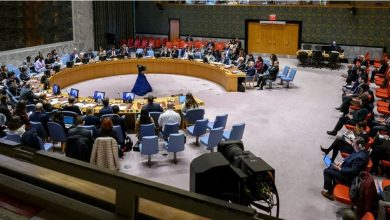
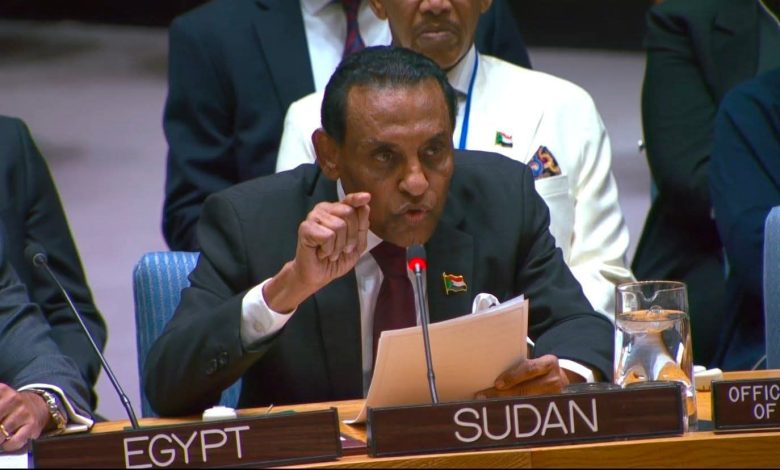
However, what stood out was that Kamel Idris’s speech—outlining steps the Sudanese government believes are necessary to stop the war—strongly provoked the state backing the militia. The Emirati delegate reacted angrily while responding to the Sudanese government’s proposals, particularly its vision for any settlement to the crisis. At the core of this vision is what the Chairman of the Sovereignty Council and Commander-in-Chief of the Armed Forces, General Abdel Fattah al-Burhan, has reiterated for years: any initiative to end the fighting must include the militia’s withdrawal from occupied areas, disarmament, facilitation of displaced persons’ return, reintegration and rehabilitation of fighters, and a Sudanese-Sudanese dialogue leading to an agreement that paves the way for democratic transition. These points were echoed by Kamel Idris in his address, in which he also thanked Saudi Arabia and the United States, specifically Saudi Crown Prince Mohammed bin Salman.
Idris also presented to Samuel Žbogar, President of the UN Security Council for the month of December, Sudan’s vision for peaceful resolution and stability. This raises questions: what is happening behind the scenes? Did a meeting actually take place? And can such meetings yield tangible outcomes affecting the military landscape in Sudan, as many expect?
A source close to the Prime Minister, who requested anonymity, said the issue was discussed with senior U.S. officials, and that Sudan did not object to direct negotiations between Khartoum and Abu Dhabi over contentious files—provided those files are clearly defined, discussed in the presence of regional and international actors, and go beyond superficial talks to address the core accusations Sudan has repeatedly raised and which the UAE continues to deny. “I believe these files were carried by the Prime Minister himself,” the source said.
Regarding the impact of the verbal clashes during the session, the source added: “I do not think they are influential enough to prevent meetings. International and regional parties are exerting intense pressure to reach a ceasefire. I believe the meeting will take place under U.S. sponsorship, though no official news will emerge beyond the leaks we have already seen. This meeting would be decisive not only for a settlement, but also for determining the militia’s options. If the UAE halts its adventure in Sudan, the impact on the militia would be immediate—it could not survive for weeks without Emirati support. This support is not limited to vehicles and weapons, but includes fighters, technology, and political and media backing. If you look at money, arms, and influence, this war is Emirati through and through.”
Dr. Bakri Mohamed Al-Sir, a lecturer at Sudanese universities, disagrees with the view that the recent confrontations would not affect potential negotiations with the UAE. He argues that statements by Emirati officials clearly deny any role in the war and reflect a detachment from reality—one that emboldens them to demand a form of democracy in Sudan tailored to their preferences, and even to control the Sudanese political scene. “In this state of denial, despite clear evidence, and amid arrogance toward the accusations, bloodshed, and violations of sanctities, I see no horizon for reaching a solution with the UAE,” he said. “They see nothing in Sudan but their own interests and those of their proxies. I do not believe they will stop because Sudanese have been killed, violated, or displaced—this does not factor into Emirati calculations.”
He added that what matters to the UAE is achieving its objectives and controlling resources and ports, either through domination of the country or via a settlement that guarantees their agents’ presence in power. “That is why they are now pushing strongly in this direction and resisting any attempts to expose them or speak about their role. This is what enraged them and triggered their loud outburst against Prime Minister Kamel Idris—they do not want this voice to reach the world or to reveal their true image as killers, violators of sanctities, looters, and profiteers from people’s suffering. In my view, the UAE is no better than the ‘Shafshafi’ who steals Sudanese belongings, kills them, and violates their dignity.”
He concluded: “Any dialogue with the Emiratis without real U.S. pressure on them will lead nowhere, because they deal with issues they themselves created with arrogance and contempt.”