Why Did the Sudanese Initiative Spark Controversy?
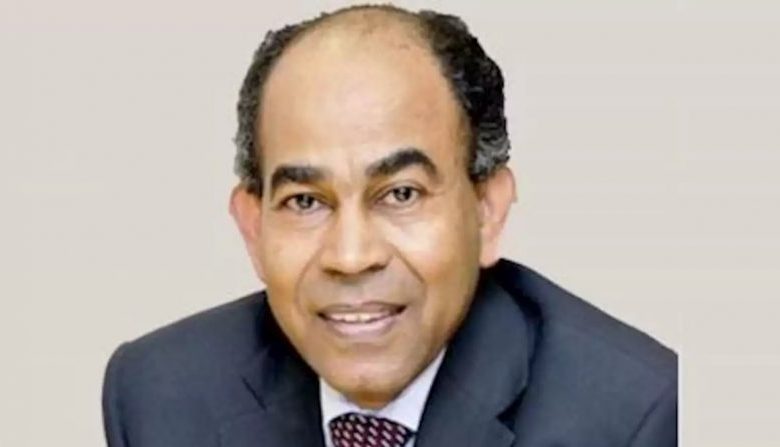
Othman Mirghani
It was only natural for Sudanese circles to be preoccupied with the initiative presented by Sudanese Prime Minister Dr. Kamil Idris before a special session of the UN Security Council earlier this week. The initiative outlines the Sudanese government’s vision for ending a war that has dragged on for far too long, compounding human suffering at a time of accelerating developments and diplomatic moves surrounding the conflict.
At its core, the initiative sets out the government’s approach to ending the war through a package of security and political measures. Rather than proposing a short three-month truce, as suggested in the Quartet initiative, it moves directly toward a comprehensive ceasefire under UN, Arab, and African monitoring. This would coincide with the withdrawal of the Rapid Support Forces (RSF) from areas under their control, their assembly in designated camps under international supervision, and the registration and screening of their fighters to exclude foreign elements—ultimately leading to disarmament, demobilization, and reintegration in line with established standards, alongside a firm commitment to accountability and justice. The initiative also addresses facilitating the safe return of internally displaced persons and refugees, reconstruction efforts, the convening of conferences to consolidate social peace, and, finally, the launch of a Sudanese-Sudanese dialogue to agree on how the state should be governed, paving the way for a democratic transition through internationally monitored general elections.
However, reactions to the initiative—particularly from forces opposed to the government and the army—have largely avoided serious discussion of its provisions. Instead, they have tended toward outright rejection and attempts to dismantle it based on preconceived political positions. This raises a legitimate question: does the problem lie in the substance of the initiative, or in the political reading of it?
In reality, the government’s initiative is grounded in a principled stance that any sustainable solution cannot be built on rewarding the RSF, treating it as an equal counterpart to the national army, or overlooking the destruction it has wrought and the atrocities it has committed. From this perspective, the initiative does not view the RSF as a permanent actor in Sudan’s political landscape, but rather as a temporary armed phenomenon that must be dismantled as part of a broader effort to end the existence of parallel armed forces and restore the state’s monopoly over the legitimate use of force.
This approach aligns, in principle, with one of the central slogans of the December Revolution: “The army to the barracks, and the Janjaweed to be dissolved.” It also resonates with the sentiments of a broad segment of Sudanese society that now rejects any future political or military role for the RSF. Yet some critics of the initiative avoid confronting this issue directly, focusing their criticism on the army and the government while failing to take a clear stance on dismantling and disarming the RSF. The disagreement here is not merely over the mechanisms for ending the war, but over a deeper question regarding the nature of the state Sudanese aspire to after the conflict: a state with one army and one weapon, or a state governed by militia balances and the legitimization of their existence.
The initiative has also helped refocus attention within the Security Council itself on the external factors sustaining the war, particularly the flow of weapons, funding, and mercenaries. Notably, most interventions linked the influx of arms to the expansion of the conflict, with some speakers going so far as to hold the principal backer of the RSF directly responsible for prolonging the war and for the grave violations and acts of genocide committed by these forces. Perhaps the clearest expression of this view came from the current President of the Security Council, Slovenia’s representative, who stated: “In a war marked by mass atrocities, there is no neutral supply chain.”
Admittedly, the initiative proposes an ambitious path and raises the bar in certain respects. Yet, in essence, it contains nothing that could reasonably be deemed shocking or unacceptable. It speaks of the safe return of displaced persons and refugees, accountability for crimes, reconstruction, the disarmament of weapons outside state control, and a Sudanese-Sudanese dialogue leading to general elections under international supervision. These are demands that are difficult to oppose on logical grounds—unless the objection stems from political calculations rather than principled disagreement.
The crux of the issue, therefore, lies not so much in the initiative itself as in the fact that it has reopened, in a direct and unavoidable manner, the question of the state, weapons, and legitimacy—placing certain political forces before a reckoning they would rather avoid. Consequently, the rejection appears closer to a rejection of the initiative’s potential outcomes than to an objective critique of its content.
In sum, while the initiative may require further development, guarantees, and realistic implementation mechanisms, dismissing it as a mere maneuver or a public-relations document does not advance the serious search for an end to the war. The real debate should not be about who presented the initiative, but about which path genuinely leads to a stable, sovereign Sudan with a single army and a single weapon. Any sustainable peace in Sudan cannot be achieved without decisively addressing the problem of uncontrolled arms and parallel forces—a matter that cannot be postponed, diluted, or sidestepped through political maneuvering.