Haftar… The Same Medicine as Gaddafi, Only from a “Different” Company
Report – Sudan Events
Since the early days of the rebellion in Darfur, southern Libya has remained a persistent security concern. Former Libyan leader Muammar Gaddafi was the principal backer of the instability that afflicted Sudan—ranging from coups to what were then known as “mercenaries”—during the era of President Jaafar Nimeiri, and later through his support for Darfur rebel movements over several decades. Gaddafi provided these groups with money, weapons, recruitment and training centers, as well as fuel and food supplies.
Despite this, the media largely failed to hold him accountable or to explain his pivotal role in spreading chaos and weapons across western Sudan. The Bashir government, for its part, dealt with the matter quietly, despite the devastation caused by Gaddafi’s backing of armed militias—Zarqa and Arab groups alike—the incursion of Khalil Ibrahim’s forces into Khartoum, and other events. From Khartoum, Gaddafi was met mostly with silence in the face of what many described as major crimes against Sudan and its people.
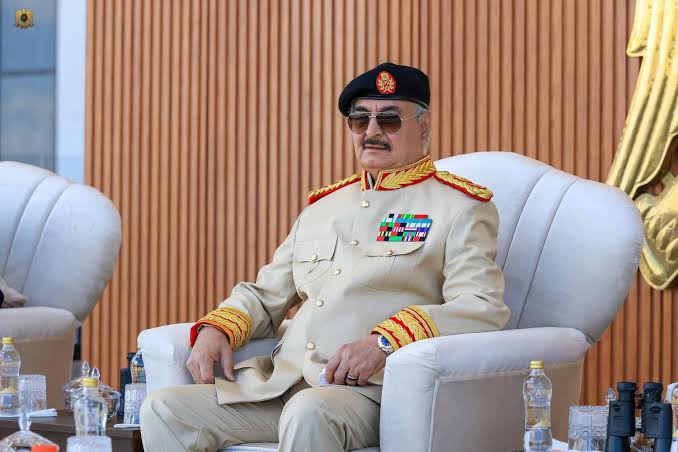
This same approach, the report argues, has been continued by Khalifa Haftar. Since the outbreak of the current war, Haftar has allegedly supported the militia, provided it with safe havens, opened Emirati supply routes, established recruitment camps, and reinforced it with fighters. He is accused of doing everything that threatens Sudan’s security, without facing exposure of this role by a government that speaks primarily about the UAE’s involvement while overlooking what is described as the central role played—and still being played—by Haftar, who is backed by the UAE and controls southern Libya through what he claims is the Libyan National Army.
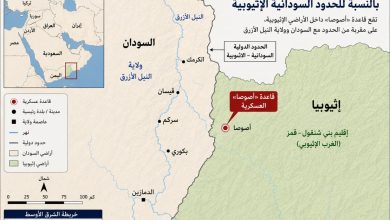
A recent Reuters report pointed to Kufra Airport as one of the most important pillars of external support. According to more than a dozen military, intelligence, and diplomatic officials, the airport has served as the main artery for militia supplies. Located about 300 kilometers from the Sudan–Libya border, the airport has played a key role in transporting weapons and vehicles and facilitating the entry of mercenaries into Darfur. Over time, this route reportedly became the primary gateway for Ukrainians and Colombians, as well as Emirati officers. As fighting intensified, the airport and its surroundings evolved into what resembles a logistical base providing support to the militia, and a gathering point for Arab groups from Chad, Niger, the Central African Republic, and southern Libya—including Tebu tribes—where they are trained and then sent to Sudan to fight alongside the Rapid Support Forces militia.
Retired Major General Salah Mohamed Khaled said that what is happening is well known to Sudan’s sovereign authorities, and that engaging Haftar or others in direct confrontation depends on their strategic calculations. However, he stressed that Haftar has intervened in Sudanese affairs in a blatant manner, providing logistical lines that helped the militia kill Sudanese civilians, seize cities, loot and destroy them, and commit mass atrocities. “Haftar, and behind him the Emirati sponsor, played a major role in these crimes,” he said, adding that Haftar is complicit in the militia’s actions, has committed war crimes, and even assisted the militia in occupying the Tri-Border area—not only with vehicles, but also with warplanes, drones, and troops—“playing a major role in prolonging the war.”
Khaled added that “what Haftar is doing is an extension of Muammar Gaddafi’s role, who fueled the conflict in Darfur and provided millions of dollars in supplies to rebel movements, contributing to the killing of Sudanese—exactly as Haftar is doing now.” He questioned why the state does not expose what he described as Haftar’s “dirty roles” in the war, saying these actions are clear and require little effort to document and substantiate. “The man openly runs camps for Arab groups, trains them, and sends them to fight in Sudan, and he receives all mercenaries coming from Colombia, Ukraine, and elsewhere before dispatching them to Sudan,” he said, concluding that “Haftar’s role is very clear and cannot be denied.”
Military and security expert Yasser Saad Al-Din echoed this view, saying Haftar’s role is fully known to Sudanese security and military institutions, which are aware in detail of his involvement. He added that Haftar does not actually run Kufra Airport, saying it is now operated by Emiratis who also manage the camps attached to it. “There was an old camp, and new ones have since been added. There is also a camp in Ajdabiya—all part of a logistical support chain for the militia stretching from Benghazi to Kufra, and then extending to the Tri-Border area,” he said.
Al-Din noted that while Haftar provides logistical support, transports weapons, and protects some camps, they are entirely under the management of Emirati officers. “In the end, Haftar is an agent of the Emiratis and operates within their system,” he said. “He is therefore fully involved in the war and is one of its active players—by providing territory and logistics, and by dealing with tribes in Chad, Niger, and elsewhere to recruit young men and send them to fight in Sudan.”