Kamil Idris Initiative: Opposition to—or Complementarity with—the Quartet?
Report – Sudan Events
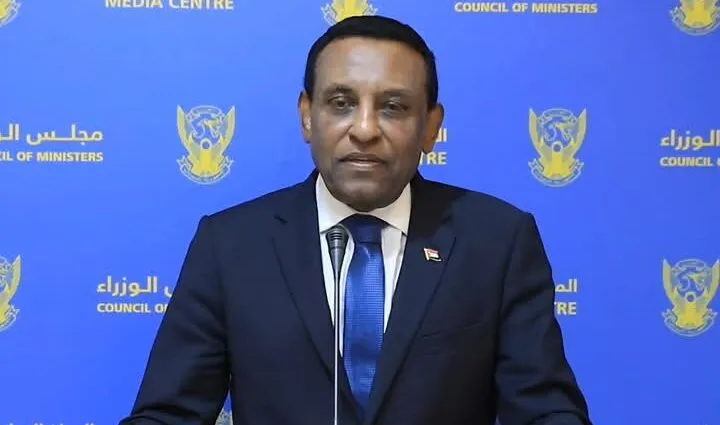
Prime Minister Dr. Kamil Idris said that any truce not accompanied by disarmament and the assembly of militias in designated camps would inevitably lead to a renewed war. At the same time, he stressed that Sudan had clearly affirmed within the halls of the United Nations that Sudanese are advocates of peace, not war, rejecting the prevailing perception that Sudan rejects peace. He emphasized that peace is a firm and deeply rooted principle for the Sudanese people.
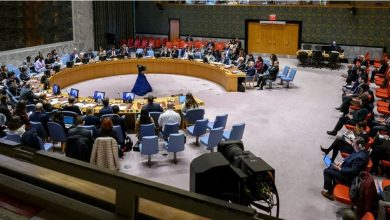
Following his return to Port Sudan from New York, the prime minister had met with the UN Secretary-General, the President of the Security Council, as well as holding meetings with the African Group and representatives of Egypt and Turkey, in addition to members of the Sudanese community in New York. Idris underscored that the “Sudanese Government’s Peace Initiative” is a national initiative with purely Sudanese ownership, whose rightful owners are the Sudanese people in all their components. He clarified that Sudan stressed during the briefing held ahead of the Security Council session that its efforts are complementary to international peace-support initiatives and not a substitute for them.
In a related context, Deputy Chairman of the Sovereign Council Malik Agar, in a speech addressed to the Sudanese people on the occasion of Christmas and the anniversary of the revolution, said that Sudan is not a testing ground and that its land is not open to those who believe that weapons confer legitimacy or that violence can build a state. He added that the recent mobilization of militias and the so-called “Ta’sis Alliance,” along with their futile attempts—together with their external allies—to attack Sudanese cities, represents nothing more than a new chapter in a destructive project targeting national security, territory, and the future of generations to come.
Agar continued: “To those who mobilize their militias and the mercenaries of the so-called Ta’sis Alliance, and to anyone who dares to violate the sanctity of Sudanese soil and the dignity of its people, you have chosen the wrong address. Sudan, whose land has been nourished by the blood of martyrs over decades of struggle for freedom and dignity, will not be an easy prey for your paid adventures.” He noted that their desperate attempts to occupy Sudan will be met with resistance, sacrifice, and lives, stressing that the armed forces, popular resistance, and supporting forces will stand as an impenetrable barrier against illusions of control and expansion.
Agar reaffirmed that resistance is a defense of rights and a national duty, underscoring the consistency of official positions that emphasize the Sudanese initiative, which links a ceasefire and the entry into a truce to the assembly of rebel militia forces in specific camps, the establishment of timelines for integration and demobilization, and other details outlined in the initiative.
This raises the question of whether there is a horizon for this initiative to become the basis for a solution at a time when the world continues to frame the conflict in terms of two warring parties. It also raises the question of whether it is indeed possible to form blocs outside the Western camp capable of reshaping the political landscape.
Professor of Political Studies Mohamed Fath Al-Rahman Karmano said that the initiative put forward by the prime minister essentially summarizes the government’s positions over the past period. He noted that Idris was astute in emphasizing that the initiative is not an alternative to existing proposals but rather an addition to them. However, he argued that the insistence of regional powers on the Quartet initiative complicates matters, particularly given that the Quartet itself lacks a unified and clear vision for resolving the crisis, making progress difficult.
He added that there is a narrow margin for maneuver, but it requires time and political space. If the government is able to secure these conditions, it could achieve breakthroughs, noting that experience has shown that General Abdel Fattah Al-Burhan is adept at leveraging time and space to effect shifts. He said that Burhan’s recent visits to Saudi Arabia, Egypt, and Turkey, as well as his anticipated visit to Qatar, fall within this context.
Karmano further stated that the government’s position has become clear, whether through its responses to proposed initiatives or through the initiative it has put forward, and that this position aligns fully with a public mood that rejects any settlement that would return militias to the political scene without ensuring their disarmament, assembly in camps, integration, and demobilization.
He concluded by saying that Sudan is generally approaching some form of resolution amid the intense diplomatic activity currently underway and the pressures being exerted on all parties.
For his part, Dr. Osama Hanfi, Professor of Political Science at the University of Sudan, said that the current approaches proposed to resolve the crisis do not appear capable of achieving meaningful breakthroughs. He noted that the prime minister’s visit to New York allowed the government to present its perspective directly and correct misconceptions—particularly the belief held by some regional and international actors that the Sudanese government is opposed to peace, a perception resulting from limited communication with influential actors not directly engaged with the Sudanese crisis.
Hanfi added that, overall, he expects the current political movement to produce a solution to the crisis, though it may not fully satisfy all parties.