Sudan: Protecting Civilians as the Gateway to a Solution
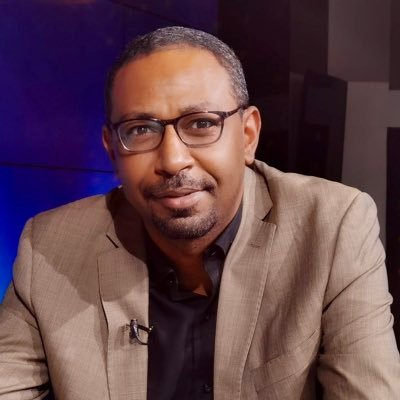
Amjad Farid Al-Tayeb
In moments of major national testing, moral questions become sharper than political statements. In Sudan today, amid the thick smoke of war, the most fundamental question in any armed conflict emerges as the core entry point to resolving the crisis: the protection of civilians from the ravages of war.
This question—seemingly simple—is in fact the master key to everything unfolding. The primary driver behind calls to end the war lies in its catastrophic consequences for Sudanese civilians, consequences that have turned Sudan into the world’s largest humanitarian catastrophe of our time. Nearly 14 million people have been displaced inside and outside the country; hundreds of thousands have been killed; and there are staggering numbers of victims of sexual violence, rape, torture, and enforced disappearances, in addition to unprecedented destruction of infrastructure and civilian facilities.
Yet it is impossible to speak seriously and honestly about civilian protection without clearly identifying who is actually threatening civilians, from whom and from what they must be protected, and without acknowledging that some of the very actors claiming to provide protection are themselves the source of danger. While the simple compass of civilian flight—from areas controlled by the Rapid Support Forces (RSF) militia to those under the control of the regular army—offers a direct answer to this question, the discourse of mediators in the Sudanese crisis remains ambiguous and evasive.
The challenge of protecting civilians in Sudan is further compounded by the influx of foreign fighters and mercenaries into the ranks of the RSF militia, facilitated through foreign companies and intermediaries that reportedly contracted mercenaries from Colombia to fight alongside the RSF.
Historical experience—from Sierra Leone to Libya—shows that the presence of foreign fighters and mercenaries in internal conflicts opens the door to the most extreme and unrestrained forms of violence. A fighter who has no social or moral attachment to the community in which he operates is not restrained by collective conscience, nor deterred by concerns for future accountability or social standing. In the absence of belonging, crime carries no stigma, violence becomes an act without memory, and abuse an act without political or social cost. This is where the catastrophe of total irresponsibility toward local populations begins.
However, the violence unfolding in Sudan presents an even more complex case than the mere presence of mercenaries. The violence here is not rootless; it is ideologically driven, infused with a fascistic worldview and charged with a discourse of racial superiority inherited from the early years of the Janjaweed. The RSF is not simply an undisciplined regular force, but a fascist organization steeped in the belief of one group’s supremacy over others, and in the conviction that killing and terrorizing civilians are legitimate tools of domination rather than crimes to be condemned. This is what elevates its battlefield conduct from individual indiscipline to violence as ideology.
Replicas of a Single Tragedy
From El Geneina to Khartoum, from Al-Jazira to El Fasher, the same scenes have been repeated as if copied from a single template of tragedy: villages burned, women raped, civilians killed in cold blood. These acts do not appear random; they are woven together by a single thread of organized hatred. What occurred in El Geneina in May and June 2023 against the Masalit community was not an isolated battlefield excess, but an act of genocide driven by clear racial motives. What followed in El Fasher after the RSF entered the city in October 2023 confirms that this violence is not an exception, but a rule. At its core, the RSF’s discourse is built on ethnic mobilization against the “other” and the justification of violence and abuses—whether in Khartoum, Al-Jazira, Darfur, or Kordofan.
What makes these crimes particularly dangerous is not only their brutality, but the political and diplomatic cover that shields them from accountability and allows them to continue under a veil of institutional immunity. When the international community chooses silence or ambiguity in describing crimes, it becomes an implicit partner in their continuation. A clear example is a tweet by U.S. Ambassador John Godfrey in the early days of the war, in which incidents of rape and sexual violence were attributed to “unspecified armed actors,” despite the fact that all available reports clearly pointed to RSF involvement in systematic sexual violence and looting. Such ambiguous language is not a mere rhetorical lapse; it is complicity dressed in legal language, as it grants perpetrators a sense of safety by refusing to name them and hold them accountable.
When responsibility is blurred and political actors are not explicitly identified, deterrence disappears. Accountability dissolves into generalized statements directed at “all parties,” and crimes are repeated as if by fate, without perpetrators. Impunity does not merely encourage criminals—it produces an entire culture of normalized violence, where killing, rape, and looting become implicit bargaining tools in a power struggle.
In El Fasher, this normalization manifested in its most horrific form. The city, which had endured an 18-month siege under the protection of the regular army, witnessed one of the worst massacres the moment the RSF entered. At the Saudi Hospital alone, more than 460 civilians receiving medical treatment were killed—not because they were combatants, but because they were in the wrong place when the wrong weapons arrived. This is not a case of two equal parties committing violations. One weapon protected civilians; the other slaughtered them in their hospital beds.
This brings us to the heart of the debate: civilian protection is not an abstract or rhetorical concept to be manipulated through polished language. It is a concrete, material demand that depends on clearly identifying the source of danger and the actor perpetrating violence against civilians.
In Sudan today, there is no ambiguity: the greatest threat comes from the RSF, which has repeatedly committed massacres against civilians. According to documented statistics, this militia is responsible for approximately 80 percent of violations against civilians since the outbreak of the war. Any talk of civilian protection that fails to outline clear mechanisms for dealing with the RSF is therefore a linguistic maneuver designed to obscure the truth in the name of political balance.
Accordingly, the first condition for protecting civilians is not a ceasefire, but the withdrawal of the RSF from civilian areas. The continued presence of the militia within neighborhoods and residential zones means nothing but the perpetuation of danger and the transformation of civilians into hostages in the hands of a force devoid of any ethical commitment.
More dangerous still is the attempt by some political and international actors to legitimize the RSF’s control over civilian areas seized by force. This path does not produce peace; it seeks to normalize crime and impose its outcomes as acceptable facts. It is tantamount to handing victims over to their executioners in exchange for a false promise of stability. Those who embrace this logic are not pursuing peace—they are seeking to make the killing of victims quiet and unremarkable.
True protection begins with justice and with removing the perpetrators from those who remain alive, not by leaving civilians under their control. When crimes are named for what they are, and perpetrators are identified without equivocation, the path toward genuine peace begins. Claims of political neutrality between unequal parties are merely a refined form of moral complicity with criminals.
What Sudan is experiencing is not simply a war over power; it is a test of humanity’s core values. Can the world stand against fascism when it wears a local cloak? Does it have the courage to name those killing Sudanese civilians without evasion? Or will it continue to allow this militia to expand and commit massacres under the cover of its own claims?