Students in Khartoum: A Compressed Academic Year and Families Crushed by Profit-Driven Education
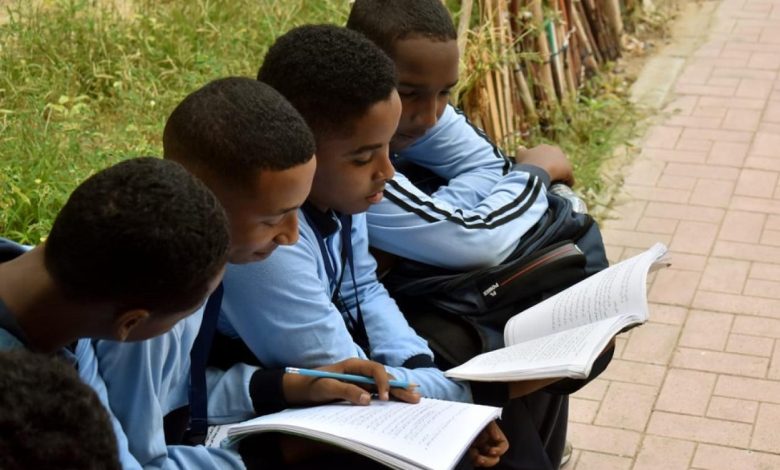
Report – Sudan Events
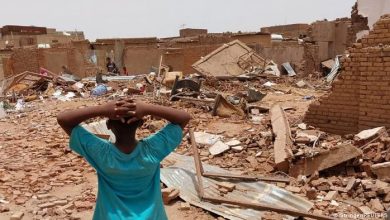
Families returning to Khartoum are facing serious challenges in enrolling their children in schools, amid severe economic hardships—most notably housing and living costs. Many homes in areas previously entered by militia forces were either destroyed or completely looted, rendering them uninhabitable. In addition, these neighborhoods suffer from major service deficiencies, particularly electricity and water shortages, as well as the spread of mosquitoes carrying malaria and other fevers.
As a result, many returning families have opted to reside temporarily in Karari locality until their homes in Bahri, Khartoum, and other areas can be rehabilitated. This option, however, comes at a high cost, with rental prices in Karari ranging from 800,000 Sudanese pounds to one billion pounds. Beyond these challenges, residents now find themselves grappling with the difficulty of enrolling their children in schools, especially after the state announced a highly compressed academic calendar that has forced families into difficult and often painful choices: either enroll their children and continue their education, or admit their inability to keep pace with a government timetable that fails to account for the profound social changes and the devastating impact of war on household finances.
Schools in Karari—already few in number—have become overcrowded, placing additional pressure on the education system. Classrooms now accommodate between 80 and 100 students, as most public and private schools in Bahri and Khartoum are either unfit to receive students or located in areas not yet ready for the return of families. As a result, public schools have exceeded their capacity and introduced what they term “contribution fees”—payments required for student admission. School administrations say these fees are used to cover basic operational needs such as chalk, water, electricity, and other expenses.
Private schools, meanwhile, have imposed fees ranging between one billion and 1.2 billion Sudanese pounds for study periods lasting only three to four months.
The Khartoum state government has announced that classes for primary and middle school students will begin on Sunday, February 22 of the coming year, while secondary schools will start on March 29. The academic year is set to conclude on August 31. Primary school certificate examinations will be held on Sunday, August 3, and middle school exams on Sunday, September 13.
Parents in Khartoum say the current education situation raises serious questions, arguing that those who design the academic calendar fail to consider the realities facing families. “They act as if people’s living conditions are stable, as if salaries are being paid on time,” parents say, noting that neither returnees nor residents are in a good financial position amid job losses and economic stagnation in the capital. Most families are surviving hand-to-mouth and rely heavily on support from relatives abroad.
Al-Samani Mohamed Daw Al-Bayt, an employee at a financial guarantee company, says the company where he once held a senior position is still operating only partially, and he has been without a fixed salary for three years. He has three children who studied last year at a private school.
“Without the support of my brother, who lives in Saudi Arabia, I would not have been able to enroll them,” he said. “The entire academic year lasts only four months—it’s a compressed year, as we have become accustomed to. And I still haven’t paid all last year’s school fees, yet the Ministry of Education announces that the new academic year will start just one month after the end of the previous one, in February.”
He added: “We haven’t even paid the old fees—so how are we supposed to pay for the new ones? We’re entering another four-month period in which we’re expected to pay one billion pounds per student. Imagine paying six billion pounds in school fees over eight months, on top of transportation costs, while my work is suspended and my salary has stopped. Meanwhile, I struggle every day just to secure 10,000 pounds to buy bread, beans, and a few tomatoes.”
The situation in public schools appears no better. Yazeed, another parent, said his child was only admitted after paying what schools call a “contribution fee.” “I don’t know how the government turned a ‘contribution’ into a fixed amount that must be paid for admission, but that’s the reality,” he said.
He added that schools do not stop at the contribution fee, but also demand additional payments for daily sessions described as “reinforcement” or “revision” classes. “We pay daily for these sessions. Believe me, a student in a public school ends up paying nearly as much as one in a private school. The only difference is that private schools openly tell you the fee is 1.2 billion, while public schools collect it piecemeal through fees and extra classes.”
Students are being taught under what is known as a “compressed academic year,” which lasts only four months. During this period, only parts of the curriculum are covered, with some subjects effectively dropped. Examinations are based on selected chapters that are explained and emphasized to students, while other sections—referred to by teachers as “omitted content”—are excluded.
Under this system, private school students pay between one billion and 1.2 billion Sudanese pounds, while public schools demand contribution fees ranging from 100,000 to 150,000 pounds.