Al-Burhan’s Visit to Ankara: A Strategic Repositioning of the Sudanese State in Wartime
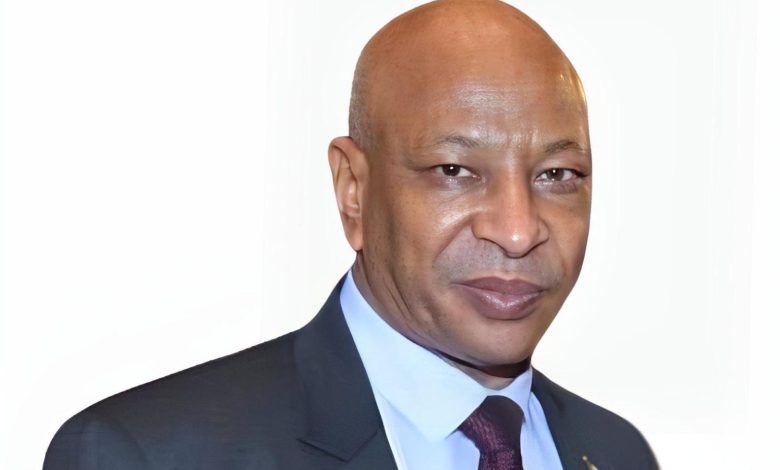
Moawia Al-Toum
Introduction: Why Ankara—and Why Now?
The visit by the Chairman of Sudan’s Sovereign Council and Commander-in-Chief of the Armed Forces, General Abdel Fattah al-Burhan, to Ankara did not come at a routine moment, nor within a conventional diplomatic context. It took place at the height of an existential war confronting the Sudanese state, and amid a complex regional landscape where interests overlap and the space between neutrality and alignment has markedly narrowed.
At this juncture, Ankara is not merely a friendly capital, but a rising regional actor with political, military, industrial, and influence-based tools capable of directly affecting the balance of conflict. Reading the outcomes of the visit therefore requires going beyond surface-level statements to examine the deeper messages, political and strategic implications, and the precision of timing. In this sense, the visit likely constituted a highly significant milestone in the context of Sudan’s war—with all its repercussions and realities—not only at the level of bilateral relations, but also in terms of Sudan’s regional repositioning and the construction of a solid support network for the state and the army at a pivotal moment, shaped by competing initiatives and winds of ambition.
First: Political Messages in the Closing Statements
What al-Burhan articulated at the conclusion of the visit was marked by three key characteristics:
1. Clear characterization of the war
Al-Burhan spoke from the position of a head of state, not the leader of a faction, affirming that what is underway is a war against the Sudanese state and its legitimate institutions. This framing found full understanding among the Turkish leadership, amounting to an unambiguous political acknowledgment of the army’s legitimacy and role.
2. The language of partnership, not solicitation
The discourse carried no tone of seeking assistance. Instead, it emphasized a balanced strategic partnership that respects Sudan’s sovereignty and choices—an important shift in the management of foreign relations during wartime.
3. Neutralizing guardianship narratives
The statements implicitly rejected external approaches that seek to impose solutions bypassing the state or equating it with a rebel militia. This aligns with Turkey’s vision of engaging with states rather than non-state armed actors.
Second: Ankara and the Military Dimension—What Did the Sudanese Army Gain?
While details of military cooperation were not publicly disclosed, Turkey’s approach in this domain is well established, allowing for the inference of several strategic gains:
1. Defense industries and battlefield balance
Over the past decade, Turkey has emerged as a major player in defense industries, particularly in:
Unmanned aerial vehicles (UAVs)
Surveillance and reconnaissance systems
Electronic warfare
Smart logistical support
In a war where militias rely heavily on drones and irregular external support, acquiring tools to balance or neutralize this advantage could represent a decisive shift on the ground.
2. Experience in asymmetric warfare
Turkey has accumulated complex experience in:
Counterinsurgency operations
Dismantling armed networks
Managing operations in dense urban environments
These experiences directly intersect with the nature of the war in Sudan, especially in major cities and contested zones.
Third: Breaking Isolation and Building a Smart Support Network
The Ankara visit carries a deeper implication related to Sudan’s external repositioning:
Turkey is an active NATO member with balanced relations with Russia, the West, and the Arab and Islamic worlds.
Strategic engagement with Ankara expands Sudan’s diplomatic maneuvering space and helps counter attempts to politically isolate it or constrain its military options.
Turkey can also play a discreet intermediary role in conveying Sudan’s position to influential circles, outside rigid Western frameworks and agendas.
Fourth: Impact on the Battlefield and Morale
The outcomes of the visit should not be measured solely by formal agreements, but also by their effects on:
Raising morale within the armed forces, reinforcing the sense that the state is not standing alone.
Strengthening the military leadership’s confidence in pursuing decisive action without yielding to pressure for an imbalanced ceasefire.
Enhancing the ability to manage the war as a long-term struggle rather than a fleeting tactical engagement—restoring the necessary balance of power and easing the suffering of the Sudanese people.
Fifth: Ankara Versus Axes of Intervention and Coercion
In contrast to regional axes that have sought to:
Invest in chaos
Fuel militias and perpetuate fragility
Dismantle the Sudanese state from within
Ankara offers a different model based on:
Engagement with the state
Respect for sovereignty
Pursuing interests through stability rather than destruction and the sponsorship of disorder
This contrast provides Khartoum with stronger negotiating leverage in any future political track, particularly within the anticipated Saudi–American initiative.
Strategic Conclusion
Al-Burhan’s visit to Ankara is not an isolated event, but part of a broader strategy to manage the war and rebuild Sudan’s regional standing.
It signals a shift from political defense to a calculated diplomatic offensive; from isolation to diversified alliances; and from reliance on imposed initiatives to the crafting of sovereign choices.
The messages conveyed in al-Burhan’s closing statements were clear and central:
Affirming the strength of the strategic partnership with Turkey and its extension beyond traditional political cooperation.
A clear indication of Turkey’s full understanding of events in Sudan as a war against the state and its institutions—not merely an internal conflict, but a proxy war.
Reference to military, security, and technical cooperation within a framework that respects Sudan’s sovereignty and national choices.
Taken together, these statements reflect a transition from seeking support to consolidating alliances, and from international uncertainty to clear partnerships grounded in mutual interests.
The Sudanese state is moving forward in defending its sovereignty, strengthening its army, and building partnerships that serve stability rather than chaos. No matter how long the war lasts, solutions are emerging on the horizon, balance is being restored, pressures will ease, and the return of battlefield victory appears increasingly near. This marks a significant shift in managing the conflict—from defensive postures under international pressure to the construction of practical strategic alliances that speak the language of power and stability, not guardianship and diktats.