Fractures in the Western Alliance: Between the Illusion of Power and the Logic of Weakness
Report – Sudan Events
Introduction
Professor John Mearsheimer’s lecture, titled “The Walls of the Western Alliance Are Cracking,” comes at an exceptionally sensitive international moment, marked by intersecting major crises: the war in Ukraine, tensions in the Caribbean, sanctions on Venezuela, escalation in traditional U.S. spheres of influence, and the eruption of long-neglected wars such as Sudan.
Mearsheimer—one of the leading theorists of offensive realism in international relations—offers a bleak yet coherent reading of the trajectory of the global order, warning that the world is not witnessing a surplus of American power, but rather the mismanagement of its decline.
First: American Behavior… Imagined Power or Disguised Weakness?
Mearsheimer rejects the prevailing interpretation that views confrontational U.S. policies as proof of hegemony, arguing that:
Genuine power does not require constant display.
States confident in their strategic position tend toward stability and consensus-building, not repeated shocks.
He contends that the policies of President Donald Trump’s administration—particularly outside the European framework—reflect deep strategic anxiety and attempts to compensate for relative decline in global influence through symbolic actions and limited military measures with marginal impact.
Second: The Caribbean and Venezuela… Coercive Signals Without Results
The report examines U.S. strikes in the Caribbean and the unprecedented hard line toward Venezuela. Mearsheimer argues that:
These policies did not topple the Venezuelan regime,
Nor did they alter regional power balances,
But they did contribute to weakening the image of the United States as a rational, leading power.
He notes that Washington has begun acting in its “backyard” with a logic of defending prestige rather than pursuing long-term interests—reflecting a dangerous shift in imperial behavior.
Third: Greenland… Politics as a Media Spectacle
The attempt to purchase Greenland from Denmark is presented as a pivotal moment in the erosion of trust within the Western alliance.
According to Mearsheimer, this move:
Was not merely a diplomatic gaffe,
But an expression of a crude, transactional approach toward allies,
And revealed disregard for the symbolic and sovereign dimensions underpinning the Western alliance.
Fourth: Ukraine and the Silent Western Divide
The report stresses that the war in Ukraine has not unified the West as commonly claimed; instead, it has exposed:
Fundamental differences between U.S. and European perspectives,
Divergences in assessing costs, sustainability, and possible endgames of the conflict.
Mearsheimer warns that if this division is not addressed politically, Ukraine could shift from a deterrence arena to a broader flashpoint within a fragile international system.
Fifth: Cracks in the Western Alliance… A Structural Flaw, Not a Passing Dispute
According to the lecture, the Western alliance:
Is no longer a solid bloc,
But an eroding network of conflicting interests,
Lacking disciplined central leadership.
Mearsheimer cautions that this fragmentation opens the door to:
Expanded Russian and Chinese influence,
Increased risks of strategic miscalculation,
And a higher likelihood of sliding into major conflicts.
Sixth: The Specter of World War III
Among the most alarming warnings in the lecture is Mearsheimer’s assertion that:
The accumulation of crises,
The absence of containment mechanisms,
And declining discipline within the Western alliance,
Make the outbreak of a third world war a realistic possibility—not merely a theoretical scenario—especially in a world riddled with multiple flashpoints.
Seventh: Sudan… Moral and Political Indictment (Minute 26)
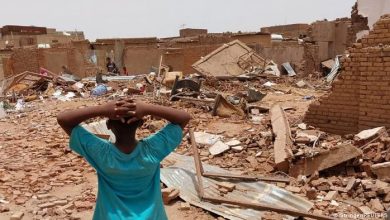
In one of the lecture’s most sensitive segments, Mearsheimer addresses the war in Sudan, describing what is happening as:
The use of advanced, lethal weaponry,
Leading to genocide and systematic mass killing,
Rather than a mere internal conflict.
He explicitly points to:
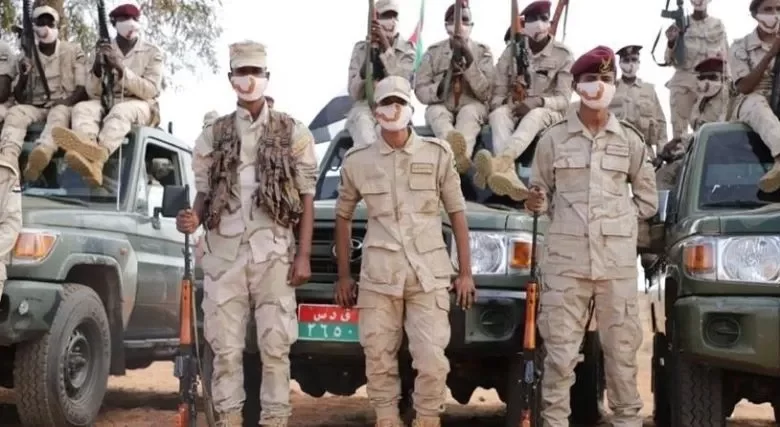
The role of the United Arab Emirates in supplying one party to the conflict with advanced weapons,
Arguing that such support amplifies the humanitarian catastrophe and prolongs the war.
Most critically, Mearsheimer notes that:
The United States, the UAE’s strategic ally, has the full capacity to halt the flow of arms,
Yet chooses silence and non-intervention.
He argues that this stance:
Undermines any Western rhetoric on human rights,
Reveals stark double standards in the application of international law,
And erodes the legitimacy of the international system itself.
Eighth: Strategic Conclusion
The report concludes that the world is not experiencing a smooth transition, but rather:
A phase of chaotic multipolarity,
Driven by major powers mismanaging either their rise or their decline.
Mearsheimer warns that:
Ignoring humanitarian tragedies such as Sudan,
And selectively engaging with wars and crises,
Will render the international system more fragile and more prone to explosion.
Conclusion
Mearsheimer’s lecture delivers a shocking yet coherent diagnosis:
The true danger lies not only in the rise of new powers, but in the failure of the hegemonic power to manage its decline responsibly.
In this context, Sudan, Ukraine, and Venezuela are not isolated crises, but symptoms of a deeper structural dysfunction in the global order.