Allegations of the Use of Chemical Weapons
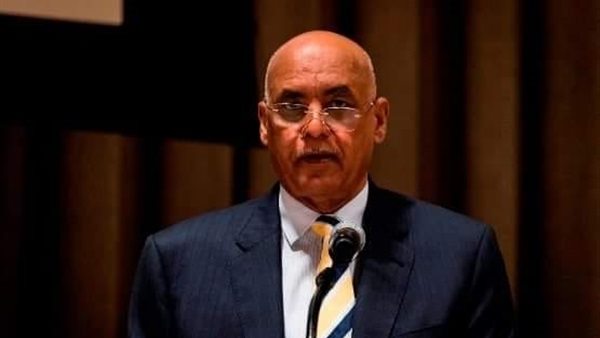
Ambassador Omar Dahab
Sudan’s obligations, as a State Party since 1999 to the 1993 International Convention on the Prohibition of the Development, Production, Stockpiling and Use of Chemical Weapons, are owed to the Organisation for the Prohibition of Chemical Weapons (OPCW), which was established pursuant to that Convention.
It is this organisation that adjudicates allegations levelled against any State Party accused of using chemical weapons listed in the Convention’s three annexed schedules, including chlorine gas—whose use the U.S. administration has alleged against the Sudanese Armed Forces in the externally driven war being waged inside Sudanese territory through weapons, financing, propaganda, and mercenaries.
In the 1990s, Baroness Cox, head of the British organisation Christian Solidarity Worldwide, accused the Sudanese army of using chemical weapons in southern Sudan. That allegation was subsequently refuted by two scientific institutions—one in the United States and another in a Scandinavian country—both specialising in chemistry, and it quickly collapsed.
Later, in 1998, the Clinton administration accused Sudan of producing internationally prohibited chemical substances under the same Convention, and proceeded to strike the Al-Shifa pharmaceutical factory with Tomahawk missiles launched from a U.S. naval vessel in the Red Sea. It later emerged that the U.S. allegations were unfounded. When the factory’s owner filed a compensation lawsuit against the U.S. government in American courts, the Clinton administration adopted a defensive posture, seeking to justify its unjustified attack on Al-Shifa.
In 2018, Amnesty International UK fabricated allegations that the Sudanese army had used chemical weapons in Central Darfur. The objective was to obstruct a UN Security Council decision that had determined the internal conflict in Darfur had ended and had set a timetable for the withdrawal of the joint United Nations–African Union Mission in Darfur (UNAMID) by June 2020.
As an aside, it is worth noting that the British plan to impede UNAMID’s withdrawal extended beyond that point. After the failure of that attempt, it continued through various means and pretexts until 2020, ultimately succeeding in replacing UNAMID with the Volker mission (UNITAMS). This was done pursuant to a letter signed by Sudan’s own Prime Minister, Dr Abdalla Hamdok, and sent—verbatim and in English—to the Security Council and the UN Secretary-General in October 2020.
As has long been the case, allegations devoid of evidence—bypassing the institutions and mechanisms agreed upon by the international community in peremptory international conventions—are routinely entertained whenever Sudan is a party to any dispute, conflict, or crisis. Throughout my service in Sudan’s diplomatic corps, I observed repeated instances in which certain states flagrantly disregarded international law, international institutions, and established international practice whenever Sudan was involved. The examples are many and beyond enumeration.
Today, we are confronted with a strange and troubling situation: the international community—through its international and regional institutions, and the intelligence agencies of states that operate in every corner of the world and are equipped with the most advanced fourth-generation technologies, including artificial intelligence—deliberately refrains from making a definitive determination as to whether the leader of the Rapid Support Forces militia is dead or alive.
The fundamental question, then, is whether states and their affiliated civil society institutions and organisations observe even the minimum standards of objectivity and reliability in the decisions they make and the positions they adopt, or whether interests dictate “facts,” bending and distorting them accordingly. This poses a grave ethical danger, because the victims of manipulated truths are innocent civilians across the world, and entire states whose very existence is imperilled.
With respect to our country, beyond the existential war of survival we are currently fighting, foreign interventions cloaked in the guise of mediation bear responsibility for the failures that followed: the 2005 Comprehensive Peace Agreement in southern Sudan, which did not bring peace; the 2006 Abuja Peace Agreement on Darfur, which did not bring peace; and the 2011 Doha Document for Peace in Darfur, which specific external powers moved to obstruct after 85 per cent of its provisions had been implemented, as documented by the report of the International Follow-Up Commission. The agreement was then completely derailed following the outbreak of the “revolution” in April 2019.
In this context, I would draw attention to a study prepared by the International Institute for Democracy and Electoral Assistance (International IDEA), a global intergovernmental organisation based in Stockholm, which states: “External mediators in conflicts are always driven by their own interests and become spoilers.”
Within this framework—and not outside it—allegations against Sudan’s national army continue to surface, persistently and under varying circumstances: at times accusing it of deliberately targeting civilians with aircraft in an effort to neutralise air power; at other times accusing it of using chemical weapons. Meanwhile, mediators—disregarding the requirements of international law, which recognises the exclusive duty and responsibility of national armies to defend their peoples, territorial integrity, and sovereignty—equate an outlaw militia committing genocide in plain sight of the world with a state’s regular armed forces, portraying them as two parties locked in combat. This type of characterisation is applied to Sudan alone, to the exclusion of all other 192 countries in the world.
As for the anonymous journalistic group that claimed to have investigated the alleged use of chemical weapons by the Sudanese army at the Jili refinery and produced what some described as a “serious” report, there is nothing in what it presented that warrants objective or scientific consideration.